Concrete contractor insurance
One application, multiple quotes.
All in one place.
Essential Protection
From
$45
/month*
Could help cover claims against your business for property damage and injuries to others.
What’s included:
General Liability
Coverage limits: $1M to $2M†

Get multiple quotes in less than 10 mins
Essential Protection
From
$45
/month*
Could help cover claims against your business for property damage and injuries to others.
What’s included:
General Liability
Coverage limits: $1M to $2M†
Get multiple quotes in less than 10 mins
Would you rather pick and choose your coverage? Explore all options
Over 1 million customers worldwide.


Buy instantly online.

Written by
Why Do Concrete Contractors Need Insurance?
Concrete work is heavy, fast-moving, and unforgiving. Whether you’re pouring foundations, placing slabs, or finishing driveways, every job puts a powerful mix of heavy equipment and tight deadlines in play — and costly mistakes can happen fast.
Concrete splatter ruins a customer’s new siding. Expensive tools disappear from a jobsite. A crew member gets hurt working on a fresh pour. Concrete contractor insurance can help soften the financial hit, so one bad day doesn’t potentially chip away at everything you’ve built.
Below are some of the most common insurance policies concrete contractors typically carry to stay protected.
What Type of Insurance Does a Concrete Contractor Typically Need?
Below is a list of common types of insurance concrete contractors may need and how much they might cost.

General Liability
Foundational insurance for concrete contractors to help handle costs from third-party accidents, property damage, and bodily injury.
From
$45
/month*

Business Owner’s Policy (BOP)
General Liability, Property insurance, and more all in one convenient package.
From
$33.75
/month*

Professional Liability
Professional Liability, also known as Errors & Omissions (E&O) insurance, typically helps cover the costs of claims arising from professional errors, negligence, or unintentional omissions in your work.
From
$25.83
/month*

Contractor’s Equipment and Small Tools Insurance
Also known as Inland Marine insurance, this coverage can help protect your gear and equipment in transit or at a jobsite.
From
$20.83
/month‡

Workers’ Comp
Coverage for employees who suffer a work-related injury or illness. Most states require this for small businesses with full- or part-time employees. It also can benefit business owners who don’t have employees.
From
$38.91
/month*
Business insurance —
a quick explainer
Learn more about policies for small businesses, what they cover, why you might need them, and how we can help – all in just 60 seconds.
Business insurance is often made up of different types of policies to cover different things, similar to how your health insurance can be made up of medical dental and vision coverage. Here are some of the ones small business owners need. General liability is kind of the Swiss army knife of insurance. It can do a lot, like help handle costs from third party accidents, property damage, bodily injury, and more. Nobody’s perfect, right? That’s what professional liability is for. It could come in handy in the event of honest mistakes or claims of negligence. Workers’ comp can protect your business and help take care of employees who get sick or injured on the job. Small businesses are big targets for cyber criminals. Cyber Insurance can help cover costs associated with stolen customer data, cyber attacks, breaches, and fraud. BOP or a business owners policy combines different types of coverages like general liability and commercial property insurance. Putting them together for you is where we come in. You tell us a bit about your business online or on the phone, and we customize the coverage options for what you do and what you need. It’s your business, it should be your insurance as well. That’s why we’re here.
What Does Concrete Contractor Insurance Typically Cover?
From residential flatwork to large commercial pours, here’s how a combination of coverages can help when a job takes an unexpected turn.
You’re pouring a new patio when wet concrete spills past the forms, coating part of the homeowner’s driveway and landscaping. Suddenly, a routine pour comes with a clean-up and repair bill. General Liability insurance can help cover third-party property damage claims, legal costs, and bodily injury resulting from your operations.
A severe storm damages the roof of your shop, and rain soaks your office equipment, stored forms, and supplies. With jobs already on the calendar, the damage places more than your property at risk.
Depending on your policy, a Business Owner’s Policy (BOP) typically bundles General Liability, Commercial Property protection, and Business Interruption coverage to help pay for damages, repairs, and lost income so you can get back to work quickly.
You finish a slab pour and leave your concrete saw, laser level, and cordless tools secured in a locked job box. The next morning the box has been pried open and thousands of dollars in equipment is missing. Contractor’s Equipment and Small Tools coverage, also known as Inland Marine insurance, can help pay to replace or repair your gear when it’s stolen or damaged at a jobsite or in transit.
Wet concrete gets inside a crew member’s boot during a long pour. Hours later, the skin on their foot and ankle is badly burned, requiring medical treatment and time away from work. Workers’ Compensation insurance can help cover their medical bills and replace a portion of their wages as they recover.
Workers’ Comp is often legally required and can protect your business from costly claims, as well as taking care of your crew if they sustain a work-related illness or injury on the job. Even if you operate solo, workers’ compensation insurance is highly recommended, because many personal health insurance policies don’t cover work-related injuries.
Who Needs Concrete Contractor Insurance
Concrete work can cover a wide range of specialties, and each comes with its own mix of jobsite risks. You may want to consider concrete contractor insurance if you’re a:
Concrete contractor forming, pouring, or finishing concrete on residential and commercial jobs, where heavy equipment often operates within feet of customer property and other trades.
Flatwork contractor installing driveways, sidewalks, patios, and parking areas, where unexpected rain or foot traffic can lead to injuries or damage surrounding property.
Foundation contractorpouring footings and foundation walls, where form failures or equipment contact can damage nearby structures and bring a job to a halt.
Slab contractor forming and pouring larger residential or commercial slabs, where pumps, screeds, and large pours can make even a small mistake expensive to correct.
Concrete cutting and coring contractor sawing, drilling, or trenching through reinforced concrete, where diamond blades, wet slurry runoff, and hidden utility strikes can lead to severe injuries or expensive property damage.
Decorative concrete contractor stamping, staining, polishing, or sealing patios and floors, where grinders, stains, and sealers can damage nearby finishes or create slick surfaces.
Masonry contractor working with concrete block, mortar, and masonry materials, where heavy lifting, saw cuts, and silica-producing dust can mean strains, cuts, and respiratory exposure.
Concrete finishing contractor using power trowels, edgers, and grinders, where moving equipment and slick work areas can quickly lead to worker injuries or property damage.
Concrete subcontractor working under general contractors on larger projects, where proof of insurance, additional insured status, or other contract requirements may be required before you can begin working.
Whatever your specialty, if you work on client property, transport valuable tools and equipment, or employ a crew, insurance can help protect what you’ve built.
How Much Does Concrete Contractor Insurance Cost?
Concrete Contractor insurance that combines core policies like General Liability, Business Owner’s Policy (BOP), Contractor’s Equipment & Small Tools, and Workers’ Comp insurance typically can cost¹ between $27 and $131 per month, depending on which policies you buy.
Your final premium will depend on factors such as your location, the type of work you do, the number of employees you have, your annual revenue, and your claims history.
Median Monthly Costs1
| Coverage Type | Median Monthly Cost |
| General Liability Third-party property damage claims, legal costs, and bodily injury resulting from your operations. | $85 per month |
| Business Owner’s Policy Bundles General Liability, Commercial Property protection, and Business Interruption coverage to help pay for damages, repairs, and lost income so you can get back to work quickly. | $47 per month |
| Workers’ Compensation Protects your business from costly claims, and takes care of your crew if they sustain a work-related illness or injury on the job. | $131 per month |
| Tools & Equipment Helps pay to replace or repair your gear when it’s stolen or damaged at a jobsite or in transit. | $27 per month |
1 Pricing based on general liability, BOP, contractor’s equipment and small tools, and workers’ comp policies purchased from Simply Business by customers identifying as a “concrete contractor” between July 1, 2025 and December 31, 2025.

Try Our Concrete Contractor Insurance Calculator
Get a quick estimate in just 3 steps.

Answers to More Questions About Concrete Contractor Insurance
Concrete contractor insurance is a collection of separate policies commonly bought by concrete businesses to help protect against risks such as third-party injuries and property damage, employee injuries, and stolen or damaged tools and equipment.
Depending on your operation, you may also want to consider getting a separate Professional Liability, Commercial Auto, or Cyber policy.
As of the date of this article, Simply Business doesn’t offer Commercial Auto insurance, but our licensed insurance agents can help you find trusted providers who do.
If you have employees, even part-time, Workers’ Compensation insurance is often required. Additionally, for high-risk construction trades like concrete, some states mandate coverage even for solo owners. General contractors and project owners may also require General Liability and a certificate of insurance before you can begin working. In addition, project contracts often require subcontractors to include an additional insured endorsement or a waiver of subrogation.
Requirements can vary by project, so check your state and local rules, along with the insurance requirements in each contract or bid before work begins.
An additional insured endorsement can extend certain liability protection under your insurance policy to another party, such as the general contractor or project owner.
A waiver of subrogation generally limits your insurer’s ability to pursue recovery from the party named in the waiver after certain covered losses. Requirements and endorsements vary, so review the contract with your agent before work begins.
It can. If your work accidentally damages a client’s property — for example, wet concrete spills past the forms and damages a homeowner’s driveway — General Liability may help cover the resulting third-party property damage claim, subject to your policy terms and exclusions.
If a slab cracks because of faulty workmanship, General Liability typically won’t pay to tear it out and repour it. But if a defect causes accidental bodily injury or damage to a client and their property, the resulting claim may be covered depending on the facts, policy language, and applicable law.
Concrete work is physically demanding. Employees lift heavy forms and materials, work around moving equipment, handle caustic wet concrete, and may generate silica dust while cutting or grinding cured concrete.
OSHA warns that wet Portland cement can cause burns and that cutting, grinding, drilling, or crushing concrete can expose workers to respirable crystalline silica. These hazards can lead to serious injuries or occupational illnesses, which can make concrete work more expensive to insure than lower-risk occupations.
Workers’ Comp premiums can also be affected by payroll, employee classifications, claims history, location, and other rating factors.
When concrete operations generate respirable dust, employers must comply with OSHA’s Respirable Crystalline Silica standard for Construction. This standard requires employers to limit worker exposure, implement a written exposure control plan, and provide necessary training and safety controls.
Concrete contractors move expensive gear from job to job — power trowels, concrete saws, vibratory screeds, laser levels, compactors, and other specialized tools.
Contractor’s Equipment and Small Tools coverage, also known as Inland Marine insurance, can help protect covered mobile equipment from risks such as theft or damage while it’s in transit or at a jobsite.
If your business owns pick-ups, dump trucks, trailers, or other vehicles used on public roads for work, you are typically legally required to carry Commercial Auto insurance.
Ask your insurer how your vehicle’s business use is classified. Trucks, trailers, and equipment being hauled may have different coverage needs. And don’t assume your personal auto policy adequately covers your pick-up when used for business.
As of the date of this article, Simply Business doesn’t offer Commercial Auto insurance, but our licensed insurance agents can help you find trusted providers who do.
Every concrete contractor may not necessarily need Professional Liability coverage for alleged negligence, errors, and omissions. But if your concrete business also provides design, engineering, structural calculations, or other professional services, Professional Liability, also known as Errors & Omissions insurance, may be worth considering.
If you use email for bids and invoices, process digital payments, run payroll online, or store customer and employee information, a cyberattack can disrupt your business. Cyber insurance can help with certain costs from data breaches, ransomware, data recovery, and business interruption, depending on the policy.
Generally, yes. COIs for most policies from Simply Business are typically available soon after you purchase your coverage. You can download and share your COI instantly through your online account or right from your phone — useful when a general contractor needs proof of insurance before you can begin working on a job.
Your insurance premium depends on several factors, including, but not limited to:
- The type of concrete work you perform
- Whether you primarily work on residential or commercial projects
- The size and value of your typical jobs
- Your annual revenue and total payroll
- The number of employees or subcontractors you use
- The value of your tools and equipment
- Your business vehicles and how they’re used
- Your claims history and how many years you’ve been in business
- Your chosen policy types, coverage limits, and deductibles
Larger projects, higher payroll, more expensive equipment, and higher-risk operations can all affect what you pay.
Before purchasing, consider asking:
- Does my general liability policy cover the types of concrete work I perform?
- Does my policy meet the insurance limits required by the general contractors I work for?
- Can I add a general contractor or project owner as an additional insured when required?
- Can my policy provide a waiver of subrogation if a contract calls for one?
- What does the policy consider faulty workmanship versus covered property damage?
- Are my power trowels, concrete saws, laser levels, and other tools covered in transit and at a jobsite?
- Do my trucks and trailers require separate Commercial Auto coverage?
- Can I download a COI immediately when I need one for a bid or jobsite?
Our licensed agents can walk you through these questions — give us a call.

Written by
Why Small Businesses Choose Simply Business
Small business insurance is what we do. Whether it’s covering you for accidents and errors, meeting workers’ comp requirements, or financially protecting your business from the unexpected, we can help find the coverage you need for your business.

Start your quote
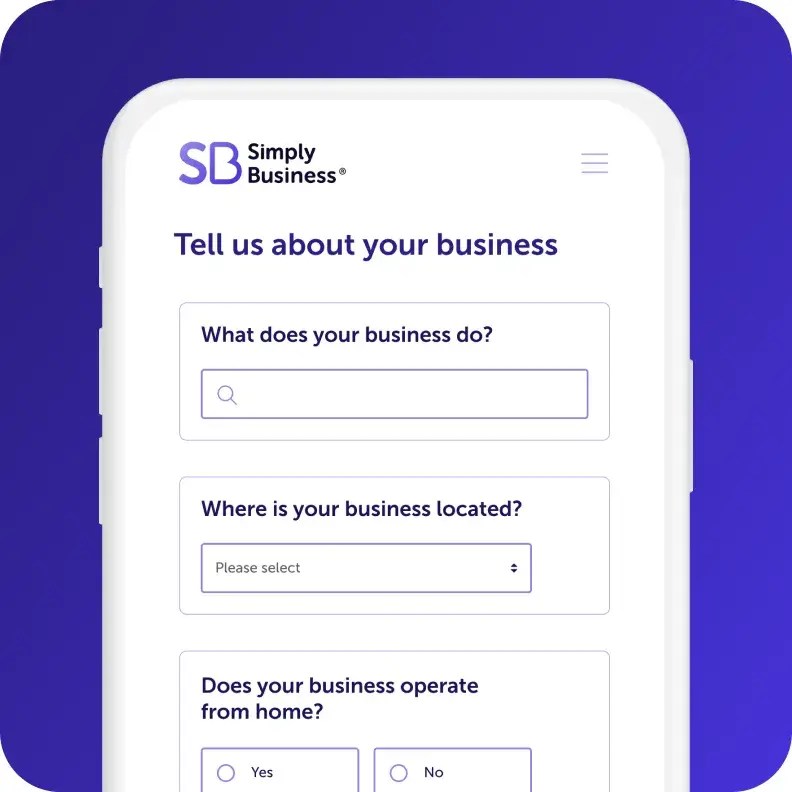
Answer a few questions about
your business in one form.

Review quotes
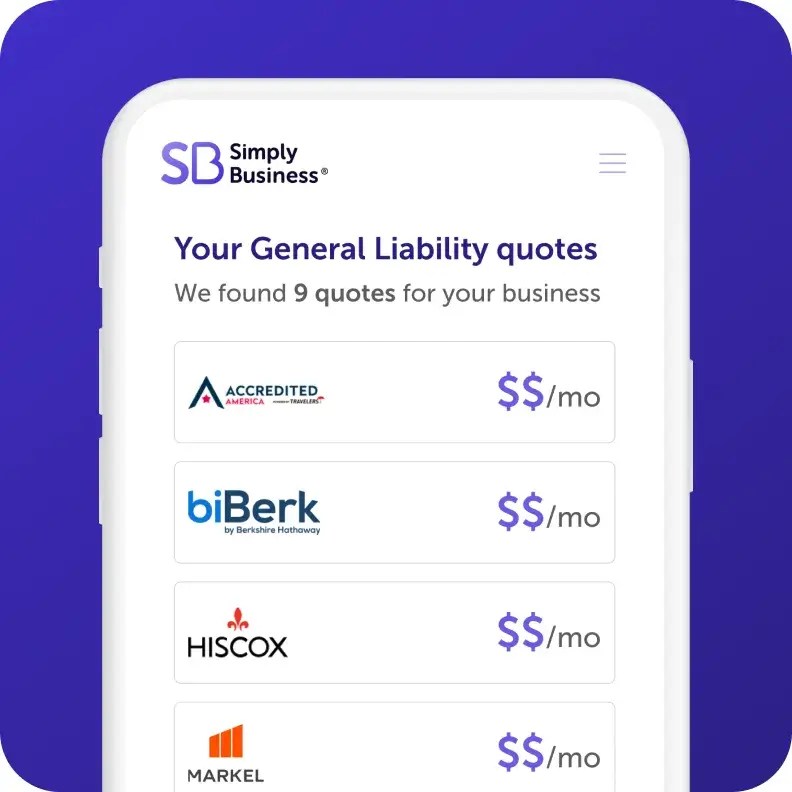
Compare quotes side by side from top-rated insurers and customize your coverage.

Get protected in minutes
Purchase your policy, and get instant proof of insurance – all online, and all within 10 minutes.

Our +1 million customers worldwide are big fans. And you will be too.

I went online, looked around, and found Simply Business. The process was so seamless. I got my certificate within minutes. It was just phenomenal.

Karen
Owner of Tangaza Bath & Body Studio LLC
With Simply Business I know I can look at different carriers, but also see all my stuff in the same place… a lot of [insurance] providers don’t offer a variety of coverage, all in one place.

Jef
Owner of Bunker83 LLC
It wasn’t overwhelming to figure out what was covered and what wasn’t covered. And the cost was competitive.

Kim
Owner of Room to Breathe Professional Organizing
Feel confident in your choice.
We partner with a range of top-rated carriers and use smart technology to match you with policies that fit your specific business, your risks, and budget.

400+
business types covered

1M+
customers worldwide

18
top-rated carriers


















We’ve Got More Helpful Information



*The displayed price for each product is a monthly estimate calculated from the 10th percentile of relevant policies sold by Simply Business (e.g., General Liability data is used for General Liability estimates). This estimate uses data from relevant policy sales between July–December 2025. Final price and payment terms, which may include an initial down payment, are subject to change based on your state, selected insurance provider, and specific business details.
† Limits may vary by state and nature of your business.
‡ Displayed price is based on the lowest available coverage limit for Equipment and Small Tools policies.
Page last updated: