Flooring contractor insurance
One application, multiple quotes.
All in one place.
Essential Protection
From
$36
/month*
Could help cover claims against your business for property damage and injuries to others.
What’s included:
General Liability
Coverage limits: $100K to $2M†

Get multiple quotes in less than 10 mins
Essential Protection
From
$36
/month*
Could help cover claims against your business for property damage and injuries to others.
What’s included:
General Liability
Coverage limits: $100K to $2M†
Get multiple quotes in less than 10 mins
Would you rather pick and choose your coverage? Explore all options
Over 1 million customers worldwide.


Buy instantly online.

Written by
Why Do Flooring Contractors Need Insurance?
Whether you’re installing hardwood in a family home or prepping a busy commercial space, flooring jobsites are high-risk zones.
A customer trips over an exposed subfloor. Adhesive ruins a newly finished wall. A stolen floor nailer brings your install to a complete standstill. When you’re managing tight spaces and tough materials, accidents can happen fast. Flooring contractor insurance can help shield your business from the cost of customer injuries, property damage, and stolen or damaged equipment.
Below are some of the most common insurance policies flooring contractors carry to stay protected.
What Type of Insurance Does A Flooring Contractor Typically Need?
Below is a list of common types of insurance flooring contractors may need and how much they might cost.

General Liability
Foundational insurance for flooring contractors that cover costs from third-party accidents, property damage, and bodily injury.
From
$36
/month*

Business Owner’s Policy (BOP)
General liability, property insurance, and more all in one convenient package.
From
$33.75
/month*

Workers’ Comp
Coverage for employees who suffer a work-related injury or illness. Most states require this for small businesses with full- or part-time employees. It also can benefit business owners who don’t have employees.
From
$38.91
/month*

Contractor’s Equipment and Small Tools Insurance
Also known as inland marine insurance, this coverage protects your gear and equipment in transit or at a jobsite.
From
$20.83
/month‡
Business insurance —
a quick explainer
Learn more about policies for small businesses, what they cover, why you might need them, and how we can help – all in just 60 seconds.
Business insurance is often made up of different types of policies to cover different things, similar to how your health insurance can be made up of medical dental and vision coverage. Here are some of the ones small business owners need. General liability is kind of the Swiss army knife of insurance. It can do a lot, like help handle costs from third party accidents, property damage, bodily injury, and more. Nobody’s perfect, right? That’s what professional liability is for. It could come in handy in the event of honest mistakes or claims of negligence. Workers’ comp can protect your business and help take care of employees who get sick or injured on the job. Small businesses are big targets for cyber criminals. Cyber Insurance can help cover costs associated with stolen customer data, cyber attacks, breaches, and fraud. BOP or a business owners policy combines different types of coverages like general liability and commercial property insurance. Putting them together for you is where we come in. You tell us a bit about your business online or on the phone, and we customize the coverage options for what you do and what you need. It’s your business, it should be your insurance as well. That’s why we’re here.
What Does Flooring Installers Insurance Typically Cover?
Flooring work puts people, property, and expensive equipment in close quarters. Here’s how a combination of coverages can help when a routine job takes an unexpected turn.

After removing the old flooring, you step outside to grab underlayment from the van. But before you return, your customer walks into the room, catches a foot on the exposed subfloor, and falls hard. General liability insurance can help cover medical expenses, legal costs, and other third-party bodily injury or property damage claims, up to the policy limits.

An electrical fire breaks out overnight in your warehouse shop. By morning, your expensive hardwood flooring inventory, LVP pallets, office computers, and tile supplies are completely destroyed. A business owner’s policy (BOP) typically bundles general liability, commercial property protection, and business interruption coverage to help pay for damages, repairs, and lost income so you can get back to work quickly.
Many flooring contractors choose a BOP because it offers more protection than a stand-alone general liability policy without costing much more — a great option if you’re established or planning to grow.

A crew member twists their knee while carrying a heavy pallet of natural stone tile. Workers’ compensation insurance can help to cover the medical bills and provide wage replacement for their work-related injuries as they recover.
Having workers’ comp insurance is often legally required and can protect your business from costly claims, as well as taking care of your crew if they suffer a work-related illness or injury. Even if you operate solo, we recommend workers’ comp, because many health insurance policies won’t cover work-related injuries.

Halfway through a hardwood install, you head outside for the floor nailer and moisture meter you left locked in the van. The side door has been forced open, and both are gone. Your crew is standing by, the customer is waiting, and the job can’t move forward. Contractor’s equipment and small tools coverage, also known as inland marine insurance, can help pay to repair or replace your gear when it’s damaged or stolen at a jobsite or in transit.
Who Needs Flooring Installers Insurance
Flooring installation work covers a range of specialties, and many face similar risks. You may want to consider flooring contractor insurance if you’re a:
- Hardwood installer or refinisher operating heavy drum sanders and nailers inside occupied homes, where a single nicked baseboard or dust containment failure can trigger a costly claim.
- Tile, stone, and grout specialist handling heavy slabs, wet saws, and mortars, where a cracked subfloor, uncoupled membrane failure, or a dropped tile can cause damage to expensive underlying property.
- Carpet installer moving heavy furniture and stretching carpet, where exposed tack strips, razor-knife slips, or loose seams create immediate trip-and-fall hazards for homeowners.
- Laminate, vinyl plank, and LVP installer prepping subfloors and cutting around intricate door casings, where a dropped tool or errant cut damages existing baseboards, cabinets, or subfloors.
- Commercial flooring contractor laying high-traffic surfaces in offices, retail spaces, or schools, where working alongside other trades or the public increases your liability.
- Big-box installation subcontractor delivering and installing for major home improvement retailer programs, which requires a current Certificate of Insurance (COI) before dispatching jobs.
- Independent subcontractor partnering with general contractors or property management groups that mandate verified liability coverage before you can step onto the jobsite.
Whatever your specialty, if you work on client property, handle expensive tools and equipment, or employ a crew, insurance can help protect what you’ve built.
How Much Does Flooring Contractor Insurance Cost?
Flooring contractor insurance that combines core policies like general liability, business owner’s policy (BOP), contractor’s equipment & small tools, and workers’ comp insurance typically costs¹ between $27 and $132 per month, depending on which policy or policies you buy. Your final premium will depend on factors such as your location, the type of work you do, the number of employees you have, your annual revenue, and your claims history.
| Insurance Policy | Median Monthly Costs1 |
|---|---|
| General liability | $50 |
| Business owner’s policy | $48 |
| Contractor’s equipment and small tools | $27 |
| Workers’ compensation | $132 |
1Pricing based on general liability, BOP, contractor’s equipment and small tools, and workers’ comp policies purchased from Simply Business by customers identifying as a “flooring contractor” between July 1, 2025 and December 31, 2025.

What Does Flooring Contractor Insurance Cost
Try our insurance calculator.
Get a quick estimate in just 3 steps.


Answers to More Flooring Contractor Insurance Coverage Questions
Flooring contractor insurance is a collection of separate policies frequently bought by flooring professionals that can help protect your business from some of the most common risks of the trade — client injuries or damage to their home, worker injuries, and stolen or damaged tools.
If you have employees, most states require that you carry workers’ compensation. In regards to general liability coverage, state laws vary. Depending on your location, state or local licensing boards may require minimum levels of general liability coverage to obtain or maintain your contractor license. You may also need general liability to secure work — general contractors, property managers, and big-box installation programs often require proof of liability insurance before dispatching a job. Check with your local trade licensing board to confirm local rules and requirements for general liability and workers’ comp.
Flooring installers work directly inside occupied homes and active commercial spaces where heavy equipment, flying dust, and chemical adhesives create everyday hazards. So while it may not be mandated by your local state law, general liability is widely considered a foundational coverage. If a heavy tile slips and smashes a custom tub, or a drum sander gouges a baseboard, general liability can help cover the repair costs and protect your business from out-of-pocket claims.
Yes, in most cases. General liability insurance is designed to cover third-party property damage caused by your ongoing operations. For example, if you accidentally nick a custom kitchen island while maneuvering a heavy bundle of hardwood, or spill dark wood stain onto a customer’s custom rug, your general liability policy can help cover the repair or replacement costs up to your policy limits.
Possibly. But only if your general liability policy includes “completed operations” coverage. Flooring contractors face significant post-job exposure. If a hardwood floor you installed buckles and causes someone to trip and fall months later, completed operations coverage can help cover the resulting bodily injury or third-party property damage claims. However, it generally does not cover the cost to repair or replace your faulty work itself.
No. A standard general liability policy excludes your own property and gear. Because flooring installers transport high-value tools like floor nailers, drum sanders, wet saws, and moisture meters, you may want to consider contractor’s equipment and small tools coverage, also known as inland marine insurance. This essential policy can help protect your toolkit from theft or damage while in transit or at an active jobsite.
Sometimes, but not automatically. Your general liability policy may cover damage caused by subcontractors working on your behalf, depending on your policy terms. But many insurers expect subcontractors to carry their own liability coverage, and some policies exclude sub work entirely. Before sending a sub on a job, ask to see their Certificate Of Insurance and confirm with your insurer whether your policy covers work performed by subcontractors, not just your employees.
Usually, yes. COIs for most policies from Simply Business are available as soon as you purchase your coverage. With Simply Business, you can download and share your COI instantly through your online account or right from your phone — useful when a general contractor, retail installation program, or property manager needs proof before dispatching a job.
Your insurance premium depends on several factors, including, but not limited to:
- The types of flooring materials you install (e.g., hardwood, stone, and tile vs. laminate and carpet)
- Your business location and geographic service area
- Your annual revenue and total payroll
- The replacement value of your tools, sanders, and equipment
- The number of employees or subcontractors you use
- Your chosen policy types, coverage limits, and deductibles
- Your commercial claims history and years in business
Before signing on the dotted line, consider asking:
- Are my sanders, saws, and nailers covered at replacement cost or actual cash value?
- Does this policy protect my flooring inventory while it’s in transit or at a jobsite?
- Does my general liability quote include completed operations coverage to protect me against post-job installation issues?
- Does this coverage meet the exact insurance minimums required by big-box retailers or home warranty networks?
- Can I obtain free COI downloads from a mobile app when I’m on a jobsite?
Our licensed agents can walk you through these questions — give us a call.

Why Small Businesses Choose Simply Business
Small business insurance is what we do. Whether it’s covering you for accidents and errors, meeting workers’ comp requirements, or financially protecting your business from the unexpected, we can help find the coverage you need for your business.

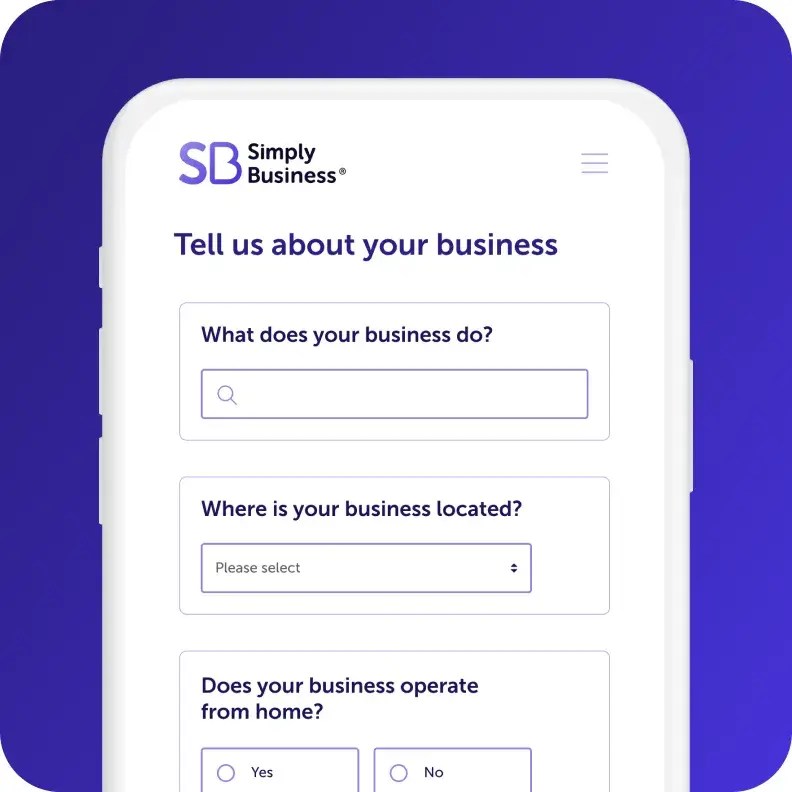
Start your quote
Answer a few questions about
your business in one form.

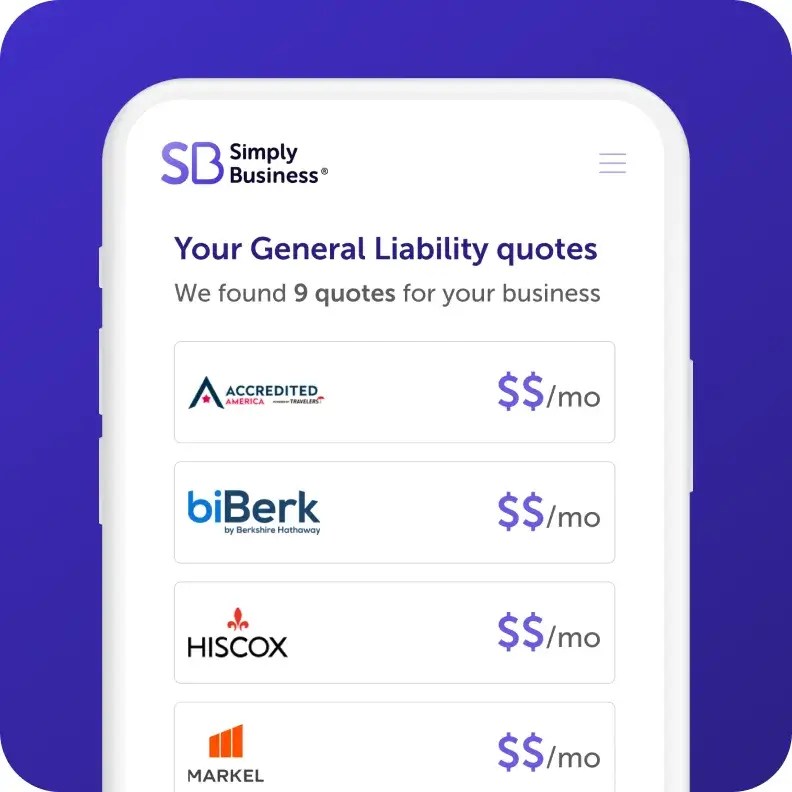
Review quotes
Compare quotes side by side from top-rated insurers and customize your coverage.

Get protected in minutes
Choose your policy, and get instant proof of insurance – all online, and all within 10 minutes.


Written by
Our +1 million customers are big fans. And you will be too.

I went online, looked around, and found Simply Business. The process was so seamless. I got my certificate within minutes. It was just phenomenal.

Karen
Owner of Tangaza Bath & Body Studio LLC
With Simply Business I know I can look at different carriers, but also see all my stuff in the same place… a lot of [insurance] providers don’t offer a variety of coverage, all in one place.

Jef
Owner of Bunker83 LLC
It wasn’t overwhelming to figure out what was covered and what wasn’t covered. And the cost was competitive.

Kim
Owner of Room to Breathe Professional Organizing
Feel confident in your choice.
We partner with a range of top-rated carriers and use smart technology to match you with policies that fit your specific business, your risks, and budget.

400+
business types covered

1M+
customers worldwide

18
top-rated carriers











We’ve Got More Helpful Information


*The displayed price for each product is a monthly estimate calculated from the 10th percentile of relevant policies sold by Simply Business (e.g., General Liability data is used for General Liability estimates). This estimate uses data from relevant policy sales between July–December 2025. Final price and payment terms, which may include an initial down payment, are subject to change based on your state, selected insurance provider, and specific business details.
† Limits may vary by state and nature of your business.
‡ Displayed price is based on the lowest available coverage limit for Equipment and Small Tools policies.
Page last updated: