Carpenter insurance
One application, multiple quotes.
All in one place.
Essential Protection
From
$42.62
/month*
Can help cover claims of accidental damage to a customer’s property, such as dents to walls or floors.
What’s included:
General Liability
Coverage limits: $1M to $2M†

Get multiple quotes in less than 10 mins
Essential Protection
From
$42.62
/month*
Can help cover claims of accidental damage to a customer’s property, such as dents to walls or floors.
What’s included:
General Liability
Coverage limits: $1M to $2M†
Get multiple quotes in less than 10 mins
Would you rather pick and choose your coverage? Explore all options
Over 1 million customers worldwide.


Buy instantly online.

Written by
Why Does a Carpenter Need Insurance?
As a carpenter, every project demands precision, craftsmanship, and care. But even the best preparation can’t prevent every setback. From accidental damage to a client’s property, stolen tools, or injuries to others, carpenter insurance can help protect your business and keep you building with confidence.
Below are some of the most common types of insurance policies that carpenters carry to stay protected.
What Type of Carpenter Insurance Do I Need?

General Liability Insurance
From
$42.62
/month*
A foundational carpenter insurance coverage to help handle costs from third-party accidents, property damage, and bodily injury.

Business Owner’s Policy (BOP)
From
$33.75
/month*
General liability, property insurance, and more all in one convenient package.

Workers’ Comp Insurance
From
$38.91
/month*
Coverage to help take care of employees who get sick or injured on the job. Most states require this coverage for small businesses with full- or part-time employees. It also can benefit business owners who don’t have employees.

Contractor’s Equipment and Small Tools
From
$20.83
/month‡
Also known as inland marine insurance, this coverage can financially protect your mobile tools and equipment that are in transport or temporarily stored offsite, depending on your policy.
Business insurance —
a quick explainer
Learn more about policies for small businesses, what they cover, why you might need them, and how we can help – all in just 60 seconds.
Business insurance is often made up of different types of policies to cover different things, similar to how your health insurance can be made up of medical dental and vision coverage. Here are some of the ones small business owners need. General liability is kind of the Swiss army knife of insurance. It can do a lot, like help handle costs from third party accidents, property damage, bodily injury, and more. Nobody’s perfect, right? That’s what professional liability is for. It could come in handy in the event of honest mistakes or claims of negligence. Workers’ comp can protect your business and help take care of employees who get sick or injured on the job. Small businesses are big targets for cyber criminals. Cyber Insurance can help cover costs associated with stolen customer data, cyber attacks, breaches, and fraud. BOP or a business owners policy combines different types of coverages like general liability and commercial property insurance. Putting them together for you is where we come in. You tell us a bit about your business online or on the phone, and we customize the coverage options for what you do and what you need. It’s your business, it should be your insurance as well. That’s why we’re here.
What Does Carpenter Insurance Cover?
From custom cabinets to backyard decks, quality carpentry can transform a client’s home. But without the right insurance, one mishap could leave you footing the bill. Here’s how carpenter liability insurance can help protect against some of the most common risks you may face:

While installing crown moulding in a living room, your nail gun slips from the ladder and dents the homeowner’s new hardwood floors. A general liability policy could help cover those types of third-party claims.
You’re contracted to build a large home addition, and the homeowner wants assurance the work will be completed on time and to code. That’s where a surety bond comes in. It’s a financial guarantee that protects your client if you can’t meet your contractual obligations. If the job isn’t finished or doesn’t meet agreed-upon standards, the bond can compensate the client for their losses.

Even seasoned carpenters can face disputes over workmanship. Suppose you install a set of custom cabinets, but within weeks the doors don’t close properly, and the client demands that you repair them. Adding a contractor’s errors and omissions endorsement to your general liability policy could help cover repair costs and help protect you against a negligence claim.

A late-night electrical fire breaks out in your workshop, destroying stacked lumber, hand tools, and a nearly finished set of built-in shelves. A business owner’s policy (BOP) typically bundles general liability insurance, commercial property protection, and business interruption coverage to help pay for cleanup, material replacement, and lost income — so you can get back to building for your clients quickly. Commercial property protection can also cover tools or equipment that are stolen from your fixed business location.
Many carpenters choose a BOP because it offers more protection than a stand-alone general liability policy without usually costing much more — a great option if you’re established or planning to grow.

One of your crew is ripping boards on a table saw when their hand slips, causing a serious cut that requires stitches. Workers’ compensation insurance can help cover their medical bills and provide wage replacement as they recover.
Workers’ comp is often legally required and can protect your business from costly claims, as well as taking care of your crew if they get sick or injured on the job. Even if you operate solo, we recommend workers’ comp, because many health insurance policies won’t cover work-related injuries.

You return to a remodel the next morning and discover your miter saw and cordless drill set are missing from a locked on-site storage area. If you have a general liability policy, adding contractor’s equipment and small tools coverage, also known as inland marine insurance, can help pay to replace or repair your stolen or damaged equipment, whether it’s on the move or at a jobsite.

How Much Does Carpenter Insurance Cost?
Try Our Carpenter Insurance Calculator
Get a quick estimate in just 3 steps.

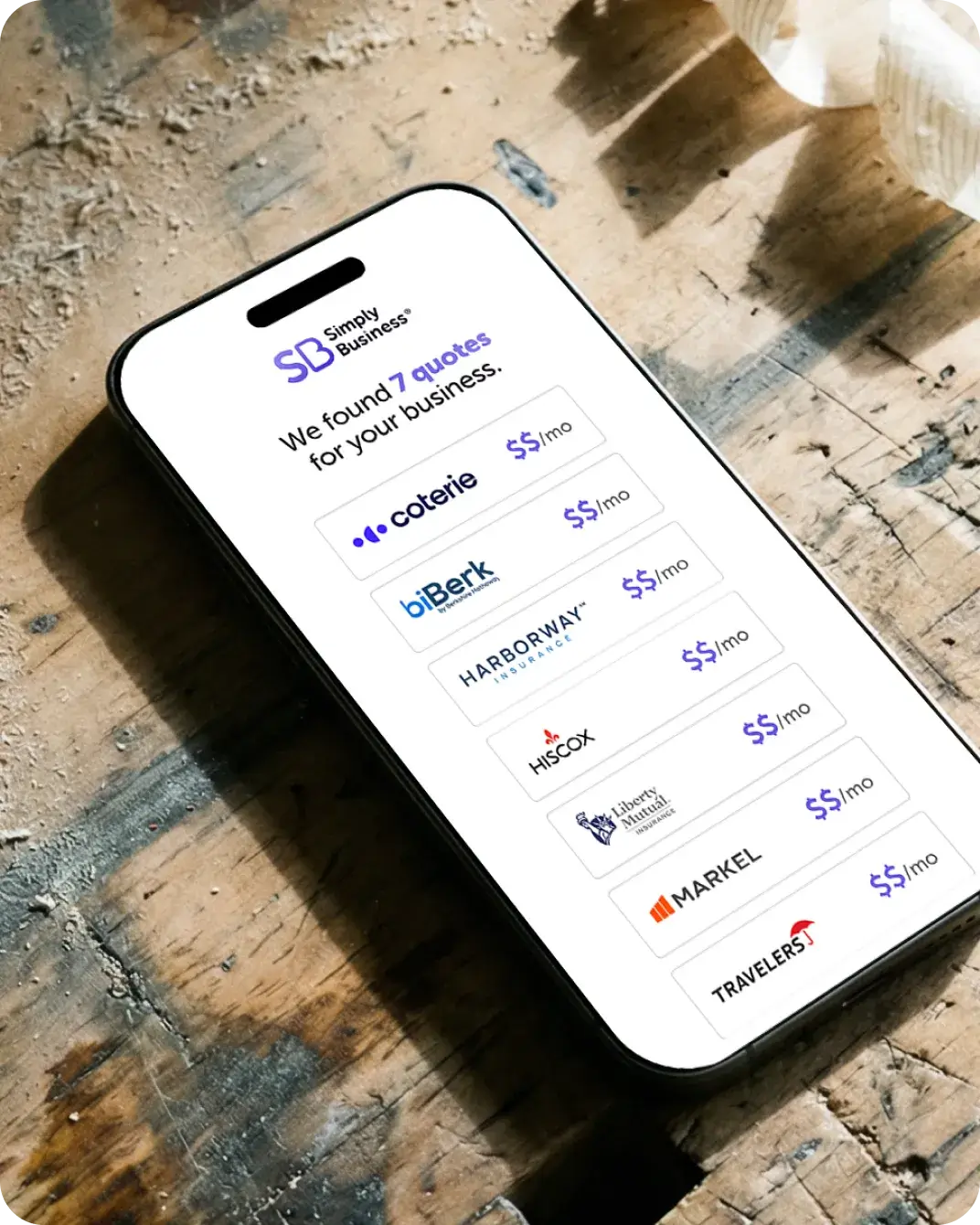
Why Carpenters Choose Simply Business
Small business insurance is what we do. Whether it’s covering you for accidents and errors, meeting workers’ comp requirements, or financially protecting your business from the unexpected, we can help find coverage for your handyman business.
Speed and Efficiency
Get customized quotes from top-rated insurers in just 10 minutes.
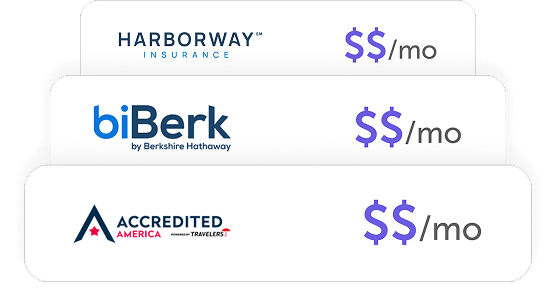
Tailored Coverage
Access flexible insurance options specifically built for your unique business needs.
Trusted Worldwide
Join over 1 million small business owners who rely on our highly-rated service.
Answers to More Questions About Carpenter Insurance
Carpenter insurance is a collection of policies that can help protect your business, your gear, and your livelihood.
Most states mandate workers’ compensation insurance if you have employees. Liability coverage is also frequently a requirement for professional licensing. We recommend checking with your state and local governments regarding the insurance requirements you need to satisfy.
Workers’ compensation insurance is designed to cover exactly this kind of scenario. If an employee is injured on the job, workers’ compensation can help cover their medical bills, rehabilitation costs, and a portion of lost wages while they recover. It can also help protect your business from lawsuits, since employees who receive workers’ compensation benefits generally can’t sue their employer over the same injury.
Even if you don’t have employees, many general contractors and commercial clients require solo carpenters to carry their own workers’ compensation policy to step onto a jobsite. Additionally, because many personal health insurance policies exclude work-related injuries, a solo policy can help cover your medical bills if you’re injured on the job.
Standard general liability insurance doesn’t cover theft of your own equipment. A business owner’s policy (BOP) may include some business personal property coverage, but it’s typically limited to items stored at a fixed business location—not tools in transit or left at a job site. That’s where contractor’s equipment and small tools insurance comes in. It’s designed to cover tools and machinery that travel with you—whether they’re on a job site, in your truck, or in a storage trailer.
Let’s say you nick a client’s kitchen cabinets while installing a countertop, or scuff their hardwood floors moving materials, your general liability policy’s property damage coverage could help pay to repair or replace what was damaged. General liability typically covers damage to the client’s property but not the cost of redoing your own work.
Standard general liability policies include what’s known as a “your work” exclusion, which typically excludes the cost of redoing or correcting your own faulty workmanship. That said, an errors and omissions (E&O) policy could help cover the cost to repair your work and help protect you from a negligence claim.
The cost for your insurance coverage is usually determined by:
- The type of work you do
- Where your business is located
- Your annual revenue and/or payroll
- The types of policies and limits you choose
Other factors can include your claims history and how long you’ve been in business.
Insurers typically classify carpentry work by risk level, and the type of projects you take on is one of the biggest factors impacting your premium. Finish carpentry, such as trim work, cabinetry, and millwork, generally carries a lower risk profile than structural framing, roofing support, or commercial construction. If your work regularly involves heights, heavy structural elements, or multi-trade job sites, your premiums will likely reflect the higher risk classification of those activities.
If you’re thinking of buying carpenter liability insurance, we recommend having the following information on hand when using our carpenter insurance calculator:
- The state where you do business
- Your type of business or trade
- Your annual revenue and payroll estimates
This information can make it easier to get a quote from one of our insurers.
COIs for most insurance policies are available as soon as you purchase your policy. Once available, Simply Business provides instant digital certificate of insurance access through your online account any time of day. So if a general contractor needs proof of coverage before you can start framing on Monday morning, you can pull your COI and send it over in minutes.

Written by
Feel confident in your choice.
We partner with a range of top-rated carriers and use smart technology to match you with policies that fit your specific business, your risks, and budget.

400+
business types covered

1M+
customers worldwide

18
top-rated carriers











We’ve Got More Helpful Information



*The displayed price for each product is a monthly estimate calculated from the 10th percentile of relevant policies sold by Simply Business (e.g., General Liability data is used for General Liability estimates). This estimate uses data from relevant policy sales between July–December 2025. Final price and payment terms, which may include an initial down payment, are subject to change based on your state, selected insurance provider, and specific business details.
† Limits may vary by state and nature of your business.
‡ Displayed price is based on the lowest available coverage limit for Equipment and Small Tools policies.
Page last updated: