Sole Proprietor Workers’ Compensation Insurance for Small Businesses
Coverage for business owners who don’t have employees. Get a quote in minutes.

Over 1 million customers worldwide.


Buy instantly online.

Written by
Does A Sole Proprietor Need Workers’ Compensation?
As a sole proprietor, you’re the CEO, the marketing department, and the front-line worker. A single injury doesn’t just mean a medical bill—it can mean your whole business stops.
In most states, sole proprietors might not be required to carry workers’ compensation, but it can provide critical coverage if a work-related injury or illness takes you out of action.
Here’s how workers’ compensation insurance for sole proprietors can help protect your bottom line:
Unlocking new projects: High-value clients and general contractors often require a Certificate of Insurance (COI) before you can step onto a job site. Carrying your own workers’ compensation policy makes you “hire-ready.”
Filling health insurance gaps: Most personal health plans explicitly exclude work-related injuries or illness. If you’re injured while on the clock, your provider may deny the claim, potentially leaving you to pay 100% of the medical bills out of pocket.
Replacing your paycheck: Unlike health insurance, workers’ compensation can help cover a portion of your income while you recover.
Simply Business gives you access to top insurance carriers.
















What is Typically Covered by Sole Proprietor Workers’ Compensation Insurance?
A slip and fall on a job site. A bad reaction to chemicals at work. Even a bite from a client’s dog while working at their home.
Workers’ Compensation insurance for sole proprietors can cover a wide range of situations where you get hurt or become sick on the job:

Medical expenses
Workers’ Compensation for sole proprietors can cover medical exams, tests, and surgeries for workplace injuries and illness.

Rehabilitation costs
Benefits can help cover physical therapy and ongoing care to help you recover and return to work from a workplace injury or illness.

Lost wages
If you’re unable to work as the result of a workplace injury or illness, you could receive a portion of your average weekly wage, typically paid in weekly or bi-weekly installments.

Survivor benefits
In the event of the worst, sole proprietor workers’ Compensation insurance can help cover end-of-life expenses.
What is Typically Not Covered by Sole Proprietor Workers’ Compensation?
Workers’ compensation insurance for sole proprietors generally won’t help with:
Client or vendor accidents
Sole proprietor workers’ compensation insurance typically covers only you as the business owner. If a client or vendor is injured in the course of your normal work, they may be covered by general liability insurance, which we also recommend for small business owners.
Off-the-clock injuries
Injuries or illnesses that occur outside of scope-of-employment duties.

Impairment or misconduct
Injuries resulting directly from an employee’s intoxication, illegal drug use, or intentional willful misconduct.

Standard commutes
Routine travel to and from work, with limited exceptions such as traveling for a dedicated business errand.
How Much Does Sole Proprietor Workers’ Compensation Cost?
What Some Customers are Paying for Sole Proprietor Workers’ Compensation2
Massachusetts
Electrician
- Limited Liability Company (LLC)
- 1 employee
- Quoted May 2026
$111
/month
Texas
Handyperson
- S-Corp
- 2 employees
- Quoted May 2026
$137
/month
Michigan
Lawn care
- Limited Liability Company (LLC)
- 2 employees
- Quoted May 2026
$95
/month
Learn more about workers compensation insurance cost here.
2These examples are real insurance quotes generated on the dates above. They are for illustration purposes only. Your coverage options and pricing may differ based on the information you provide us about your particular business, the state you operate in, the number of employees, and other factors.
Which Businesses Can be Covered by Sole Proprietor Workers’ Compensation Insurance?
Generally speaking, sole proprietor workers’ compensation coverage can be purchased for many types of businesses, even if they’re run by a sole proprietor. We can help find sole proprietor insurance for many different types of businesses, including these:


What Other Types of Insurance Do I Need?
Business insurance usually refers to one or more coverages suited to your type of small business. Here are the foundational insurance policies we most often recommend, and how they can help protect your small business:

General LiabilityFrom $20.75/month*
Professional LiabilityFrom $25.83/month*

Business Owner’s Policy From $33.75/month*

Inland MarineFrom $20.83/month*

Business Personal PropertyFrom $25.83/month*
Errors & OmissionsFrom $33.75/month*
Workers’ Compensation Laws for Sole Proprietors by State
Workers’ compensation laws vary widely from state to state. And for sole proprietors, that variation goes beyond whether you’re required to carry coverage.
Most states likely don’t require sole proprietors and independent contractors without employees to carry workers’ compensation. But some do — especially for higher-risk trades. It’s best to check your state’s specific rules and regulations.
In most states, sole proprietors can elect to be covered under their own workers’ compensation policy even when it’s not required but the rules for opting in, and the paperwork involved, differ from state to state.
For most small businesses, the simplest path is through a licensed broker like Simply Business, where you can compare workers’ compensation quotes from multiple carriers and find coverage that fits your state, industry, and payroll.
Four states — Ohio, Washington, North Dakota, and Wyoming — are monopolistic, meaning you can’t purchase a policy from a private insurer. Coverage has to come through the state-run fund.
Not having the proper coverage when required can come with steep fines and other penalties, so it’s best to check with your state agencies for specific information. We have the following guides to get you started:
California, Colorado, Florida, Georgia, Illinois, Maryland, Minnesota, New Jersey, New York, North Carolina, Pennsylvania, Texas, Wisconsin.
How to Get Sole Proprietors Workers’ Compensation Insurance Online
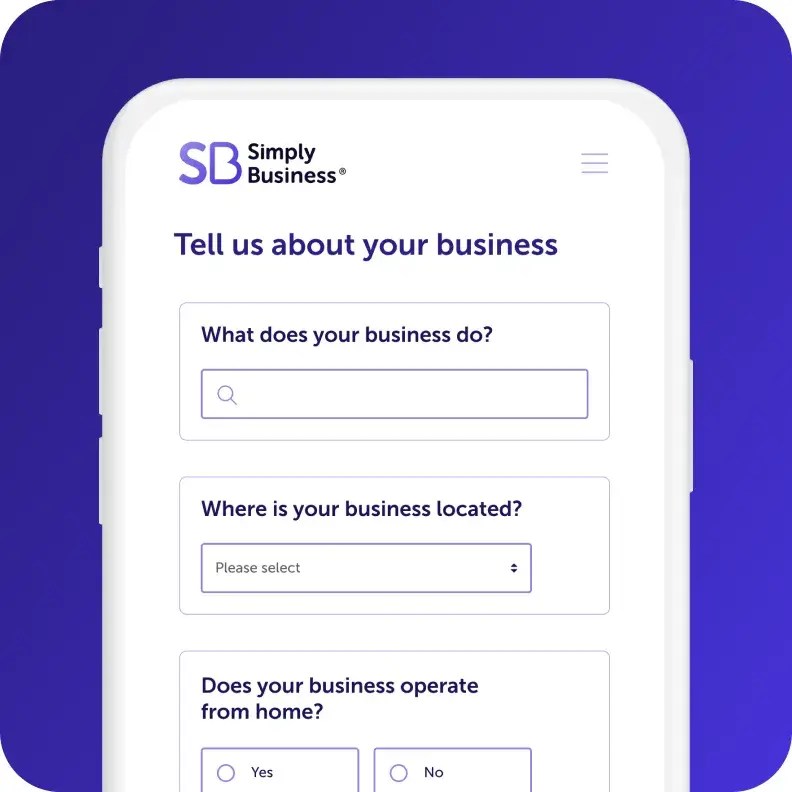

Start your quote
Answer a few questions about your business in one form.
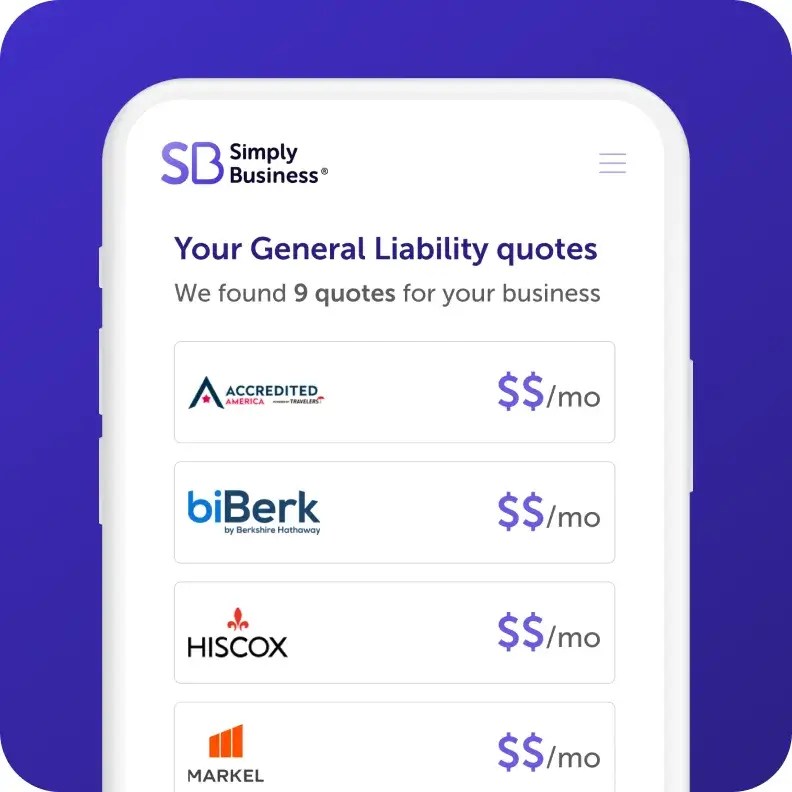

Review quotes
Compare quotes side by side from top-rated insurers and customize your coverage.


Get protected in minutes
Choose your policy, and get instant proof of insurance – all online, and all within 10 minutes.
Answers to More Questions About Workers’ Compensation Insurance for Sole Proprietors
Workers’ compensation insurance for sole proprietors covers medical expenses for most work-related injuries or illnesses. It can also help with rehabilitation costs and replace a portion of lost wages while you recover.
Standard health insurance typically excludes coverage for work-related injury or illness. Plus, unlike workers’ compensation, health insurance plans won’t cover lost income as a result of your injury or rehabilitation and retraining costs.
Most states don’t require 1099 independent contractors without employees to carry workers’ compensation. But a handful of states do require coverage in higher-risk fields.
Usually not. Being a 1099 independent contractor typically means you’re responsible for your own insurance, including workers’ compensation—even when you’re working on a GC’s job site. In fact, many GCs require their subcontractors to provide proof of their own coverage before starting a project. And without your own policy in place, a work-related injury could leave you personally responsible for medical bills and lost income.
A workers’ compensation ghost policy is designed for sole proprietors and independent contractors who don’t carry full coverage but still need proof of workers’ compensation insurance to meet contractual requirements, satisfy client or contractor demands, or demonstrate professionalism. It’s called a “ghost policy” because it provides documentation of insurance without insuring you or any workers. Unlike a full workers’ compensation policy, a ghost policy doesn’t cover your injuries but it can be a more affordable way to satisfy hiring requirements.
COIs for most insurance policies are available as soon as you purchase your policy. Once available, Simply Business provides instant digital certificate of insurance access through your online account any time of day. So if a client needs proof of workers’ compensation coverage before signing a contract, you can pull your COI and send it over in minutes.
A waiver of subrogation is an add-on to your workers’ compensation policy that prevents your insurance company from seeking reimbursement from a third party—usually a general contractor or client—after paying out a claim on your behalf. Many GCs and commercial clients require this type of sole proprietor workers’ compensation waiver before they’ll let you on a job site, and they’ll often ask to see it listed on your COI. Your insurer can typically include the endorsement when you set up your policy.
Workers’ compensation premiums are determined by a standard formula that considers your industry’s risk level, your business’ claims history, and your estimated payroll or the state-mandated flat payroll amount for sole proprietors. Visit our workers’ compensation cost guide for more information.
If you’re thinking of buying workers’ compensation insurance, we recommend having the following information on hand when using our workers’ compensation insurance calculator:
- The state where you do business
- Your type of business or trade
- Your estimated annual payroll
This information can make it easier to get a quote from one of our insurers.
State Business Insurance Guides
Find out what’s required in the state or states where you operate:
Written by
*The displayed price for each product is a monthly estimate calculated from the 10th percentile of relevant policies sold by Simply Business (e.g., General Liability data is used for General Liability estimates). This estimate uses data from relevant policy sales between July–December 2025. Final price and payment terms, which may include an initial down payment, are subject to change based on your state, selected insurance provider, and specific business details.
Page last updated: