Workers’ Compensation Insurance for Small Businesses
If you have employees — even just one apprentice — most states require you to carry workers’ compensation. This policy covers medical bills and lost wages for employees who get injured or become ill on the job. Get coverage for as low as $38.91/mo.*
Over 1 million customers worldwide.


Buy instantly online.

Written by
What Is Workers’ Compensation Insurance and How Does It Work?
Workers’ compensation insurance helps cover your employees if they’re injured or become ill because of their work. That means helping cover things like medical bills, recovery costs (including physical therapy), and a portion of lost wages while they’re unable to work.
In most cases, benefits are provided regardless of who was at fault — and in exchange, employees typically give up the right to sue your business. That means fewer legal complications and a more straightforward process for everyone.
While the “standard” system handles medical and wage benefits, there are rare instances where an employee or their family may still pursue a lawsuit—for example, in cases of gross negligence or “third-party over” claims.
To bridge this gap, most policies include employer’s liability insurance. By including this protection, you ensure that even if a claim moves “outside the system,” your business isn’t left to shoulder the legal and financial burden alone.
Business insurance generally includes several types of policies designed to protect your business from financial losses due to accidents, lawsuits, property damage, and more.
Simply Business gives you access to top insurance carriers.
















What Does Workers’ Compensation Insurance Cover?
Workers’ compensation is designed to support employees through recovery while helping you manage the financial impact of workplace injuries. Coverage can vary by state and policy, but most plans include a few key protections.
Here’s what you can typically expect your policy to include:

Medical care and hospital stays
If an employee is injured on the job, workers’ compensation covers medical treatment — from doctor’s visits to hospital stays, prescriptions, and rehabilitation, allowing your team to get the care they need without delay.
It can also cover ongoing treatment if the injury requires extended care — helping employees focus on recovery, not costs.

Lost wages and disability benefits
If an employee can’t work while recovering, workers’ compensation can replace a portion of their income. This helps them stay financially stable during their recovery period.
If the injury leads to temporary or permanent disability, additional benefits (outside of workers’ compensation coverage) may apply — depending on the situation and your policy.

Legal protection for employers (Employer’s Liability)
Workers’ compensation insurance also often includes employer’s liability coverage, which helps protect your business if an employee brings a claim outside the standard system. This refers to situations where an employee bypasses the typical “no-fault” claims process and files a civil lawsuit directly against their employer. This can help cover legal fees, settlements, or judgments.
It’s important to note that in monopolistic states (Ohio, North Dakota, Washington, and Wyoming), this coverage is not included in the state-fund policy and must be purchased as a separate endorsement (often via a “Stop Gap” endorsement on a General Liability policy).
It adds an extra layer of protection — so you’re not facing those costs on your own.
How Much Does Workers’ Compensation Insurance Cost?
On average, workers’ compensation insurance costs $101/month. This is the median cost our customers paid between July 1, 2025 and December 31, 2025.
Your cost depends on several factors, such as your industry, payroll, location, and claims history. Higher-risk businesses — like construction — often pay more than lower-risk, office-based businesses.
It’s important to note that you’re not stuck with one option. We’ll help you compare quotes from multiple insurers, so you can choose coverage that works for your business and your budget.
What Some Customers are Paying for Workers’ Compensation2
Massachusetts
Electrician
- Limited Liability Company (LLC)
- 1 employee
- Quoted May 2026
$111
/month
Texas
Handyperson
- S-Corp
- 2 employees
- Quoted May 2026
$137
/month
Michigan
Lawn care
- Sole Proprietorship
- 2 employees
- Quoted May 2026
$95
/month
2These examples are real insurance quotes generated on the dates above. They are for illustration purposes only. Your coverage options and pricing may differ based on the information you provide us about your particular business, the state you operate in, the number of employees, and other factors.
What Other Types of Insurance Do I Need?
Business insurance usually refers to one or more coverages suited to your type of small business. Here are the foundational insurance policies we most often recommend, and how they can help protect your small business:

General LiabilityFrom $20.75/month*

Professional LiabilityFrom $25.83/month*

Business Owner’s Policy From $33.75/month*

Inland MarineFrom $20.83/month*

Business Personal PropertyFrom $25.83/month*
Errors & OmissionsFrom $33.75/month*
How to Get Workers’ Compensation Online
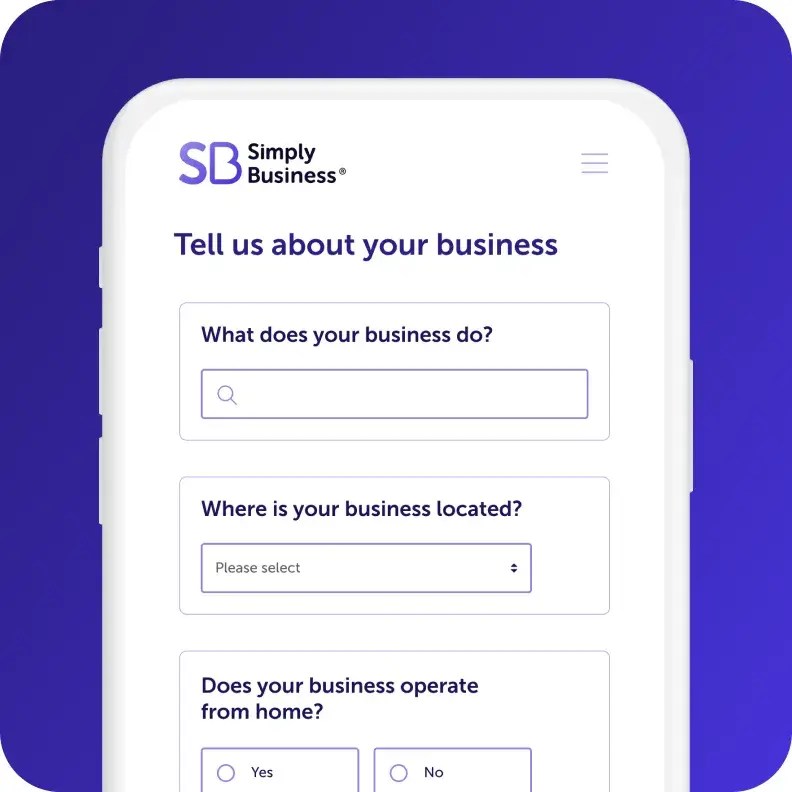

Start your quote
Answer a few questions about your business in one form.
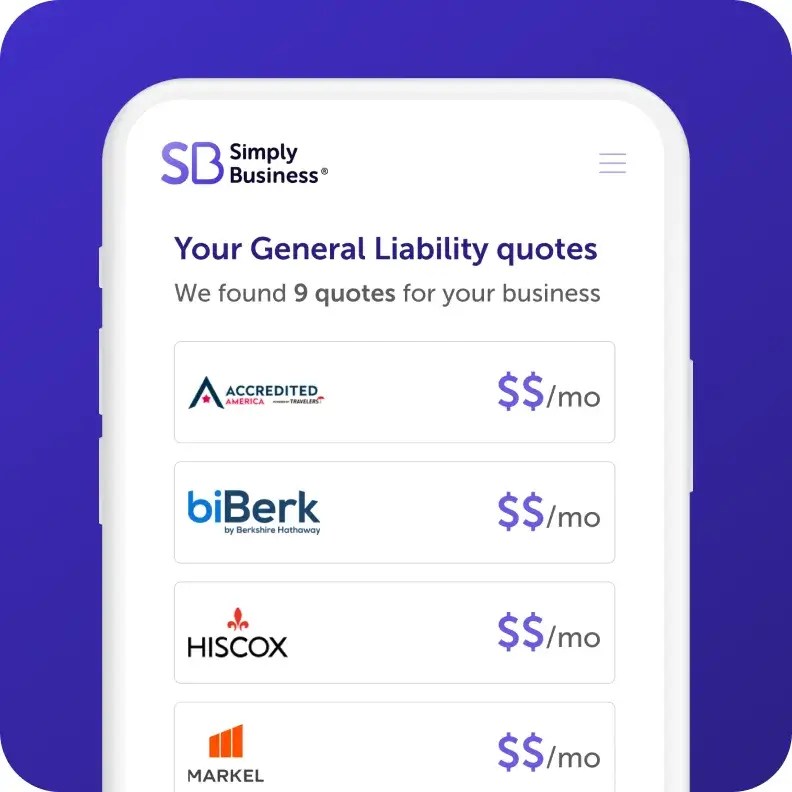

Review quotes
Compare quotes side by side from top-rated insurers and customize your coverage.


Get protected in minutes
Choose your policy, and get instant proof of insurance – all online, and all within 10 minutes.
Workers’ Compensation —
a one-minute explanation
Find out what workers’ comp covers, why you might need it, and how we can help — all in just 60 seconds.
As a business owner, you’re the one making it all happen. But as your business grows, you’re likely to have to bring on some people to help get the job done. And in most states once you have employees, you may need workers’ compensation insurance. Workers’ comp can help cover if an employee gets sick or injured while working for your business, that can include medical rehab, bills loss, wages, and even death benefits. Carrying a workers’ comp insurance policy can prevent an injured employee from suing your business. Workers’ comp laws differ by state, which can make it difficult to figure out what coverage you need. Not to worry, if you need coverage, our high-tech online quote tool is designed to help you get what you need for the state or states you work in. Plus we’ve got helpful licensed agents you can speak to on the phone. Workers’ comp can help take care of your employees and we can help you take care of workers’ comp.
Workers’ Compensation FAQs
In many states, a one-person LLC without employees may not be required to carry workers’ comp. Still, some business owners choose to have coverage for added protection.
Requirements can change once you hire employees — so it’s important to understand your state’s rules.
Yes — workers’ compensation can cover remote employees if the injury happens while they’re performing work-related duties. The key is whether the activity was part of their job.
Because home environments vary, claims may require more documentation — but coverage can still apply.
An Experience Modification Rate (EMR) reflects your business’s past claims history and is used to adjust your premium. It helps workers’ compensation insurers measure your level of risk compared to similar businesses.
A lower EMR can reduce your costs, while a higher one may increase them — making workplace safety an important factor.
Many insurers offer flexible payment options, including monthly plans. This can make it easier to manage your cash flow without paying everything up front.
When you compare quotes, we’ll show you available payment options — so you can choose what works best for your business.
State Business Insurance Guides
Find out what’s required in the state or states where you operate:
Written by
*The displayed price for each product is a monthly estimate calculated from the 10th percentile of relevant policies sold by Simply Business (e.g., General Liability data is used for General Liability estimates). This estimate uses data from relevant policy sales between July–December 2025. Final price and payment terms, which may include an initial down payment, are subject to change based on your state, selected insurance provider, and specific business details.
Page last updated: