Notary insurance
One application, multiple quotes.
All in one place.
Essential Protection
From
$22.50
/month*
Can provide coverage if a client claims there was a mistake in the professional services you provided.
What’s included:
Errors & Omissions / Professional Liability
Coverage limits: $100K to $3M†

Get multiple quotes in less than 10 mins
Essential Protection
From
$22.50
/month*
Can provide coverage if a client claims there was a mistake in the professional services you provided.
What’s included:
Errors & Omissions / Professional Liability
Coverage limits: $100K to $3M†
Get multiple quotes in less than 10 mins
Would you rather pick and choose your coverage? Explore all options
Over 1 million customers worldwide.


Buy instantly online.

Written by
Why Do I Need Notary Insurance?
As a notary public, you play an essential role in life-changing events. Whether you witness the signing of a new home purchase, a business contract, or a family trust, your careful eye ensures that your clients are in good hands.
Below are some of the most common types of insurance policies that notaries carry to stay protected.
What Type of Notary Insurance Do I Need?

Errors & Omissions
Also known as professional liability, this provides coverage for damages and legal costs due to mistakes or negligence claims.
From
$22.50
/month*

Workers’ Comp
Coverage to help take care of employees who get sick or injured on the job. Most states require this coverage for small businesses with full- or part-time employees. It also can benefit business owners who don’t have employees.
From
$38.91
/month*

General Liability
A foundational insurance coverage to help handle costs from third-party accidents, property damage, and bodily injury.
From
$20.75
/month*

Business Owner’s Policy (BOP)
General liability, property insurance, and more all in one convenient package.
From
$33.75
/month*
Business insurance —
a quick explainer
Learn more about policies for small businesses, what they cover, why you might need them, and how we can help – all in just 60 seconds.
Business insurance is often made up of different types of policies to cover different things, similar to how your health insurance can be made up of medical dental and vision coverage. Here are some of the ones small business owners need. General liability is kind of the Swiss army knife of insurance. It can do a lot, like help handle costs from third party accidents, property damage, bodily injury, and more. Nobody’s perfect, right? That’s what professional liability is for. It could come in handy in the event of honest mistakes or claims of negligence. Workers’ comp can protect your business and help take care of employees who get sick or injured on the job. Small businesses are big targets for cyber criminals. Cyber Insurance can help cover costs associated with stolen customer data, cyber attacks, breaches, and fraud. BOP or a business owners policy combines different types of coverages like general liability and commercial property insurance. Putting them together for you is where we come in. You tell us a bit about your business online or on the phone, and we customize the coverage options for what you do and what you need. It’s your business, it should be your insurance as well. That’s why we’re here.
What Types of Insurance Do Notaries Need?
Protecting people from fraud and identity theft is beneficial and rewarding, but there are risks with being a notary. We can tailor your notary insurance to help fit your specific needs.
Here are three types of policies we typically recommend:
General Liability Insurance
General liability insurance covers costs resulting from third-party accidents, property damage, and bodily injuries, including clients and vendors. You may need a GL policy if you own or rent an office space.
Here’s why: Let’s say you’re meeting with a client at your office. You offer him a cup of coffee and accidentally spill some on his lap. The burn from the hot coffee is so bad that he has to go to the emergency room.
If you have general liability coverage, your policy can help cover your client’s medical bills, plus legal costs if you get sued (up to your policy limit). That means you don’t have to worry about putting your business or family at risk.
Here’s what general liability insurance usually covers:
- Third-party bodily injury
- Third-party property damage
- Personal and advertising injury
- Claims arising from product defects
- Medical expenses
- And more
GL insurance usually doesn’t cover:
- Damage to your own property
- Professional services
- Workers compensation or injury to your employees
- Damage to your work
- Automobiles while in business use
- Expected or intentional injury or damage
- And more
Notary Errors and Omissions Insurance
For notaries, even the slightest error could result in a lawsuit. Errors and omissions insurance covers the costs of legal claims or damage caused to a customer by negligent acts or omissions associated with your work.
Here’s an example: You received an urgent visit to notarize a power of attorney (POA) for an elderly patient coming out of a nearby hospital. You connect with the patient and the relative receiving the POA. Nothing appears out of the ordinary, so you notarize the POA document.
As it turns out, the “relative” is a scam artist who steals money from elderly patients. The patient’s family members file a lawsuit, suing you for negligence.
If you have notary errors and omissions insurance, the cost of legal fees and other monetary damages could be covered by your policy, up to its limits.
An E&O insurance notary policy usually covers:
- Errors or alleged errors
- Legal defense costs
- Omissions or alleged omissions
- Claims and damages
- And more
E&O insurance does not cover:
- Intentional acts
- Property damage
- Medical expenses
- Bodily injury
- And more

Workers Compensation Insurance
If you have even one employee, you may need workers compensation insurance. Workers compensation covers an employee’s medical expenses and other losses in the event of a work-related injury.
Workers comp can cover:
- Medical costs
- Lost wages during a worker’s time off
- Rehabilitation expenses
- Death benefits
It does not cover:
- Client or vendor accidents
- OSHA fines
- Work safety improvements
- Wages for a worker who replaces the injured employee
Why Do I Need Notary Insurance?
You deal with important transactions every day. Any misstep could cost you thousands of dollars — not to mention your reputation. Even if a mistake isn’t your fault, you may still be sued by a disgruntled client.
With notary insurance, you’ll have peace of mind knowing that you and your business are covered. While you’re protecting others, insurance protects you.

What Does Notary Insurance Cost
Try our insurance calculator.
Get a quick estimate in just 3 steps.


Answers to More Notary Insurance Coverage Questions
Whether or not you need notary insurance may depend on where you live. Check with your local government to find out what’s required in your area.
If you have part-time or full-time employees, you’ll likely need to carry workers compensation insurance.
Additionally, you may need proof of business insurance to rent office space or equipment.
You may be able to deduct your insurance premiums when filing your business’s taxes. We recommend checking with an accountant for more information.
The amount of coverage you’ll need will largely depend on factors such as:
- The size of your business
- Your business’s location
- Your annual revenue
- And more
Our quote form and licensed insurance agents will gather information to help you find coverage for your notary business. If you have questions, our insurance pros are there to assist!
It’s helpful to have the following information handy:
- Your annual revenue estimates
- Your payroll information
- Information on any previous insurance claims
A comprehensive solution that includes both general liability and business personal property insurance can cover:
- Third-party bodily injury
- Third-party accidents and damages
- Theft, damage, and loss of business property
- And more
It often depends on many factors. As a general rule of thumb, you can expect the cost of your policy to be determined by:
- Your revenue
- Your payroll
- Number of employees
- Your business location
- The type of services you provide
- And more
You can get business personal property coverage as an addition to your general liability (GL) insurance. And we can help you find GL policies for a low monthly price.
Wondering how much you’ll pay for notary insurance? Click here to answer a few easy questions and get free quotes to compare policies.

Why Small Businesses Choose Simply Business
Small business insurance is what we do. Whether it’s covering you for accidents and errors, meeting workers’ comp requirements, or financially protecting your business from the unexpected, we can help find the coverage you need for your business.

Start your quote
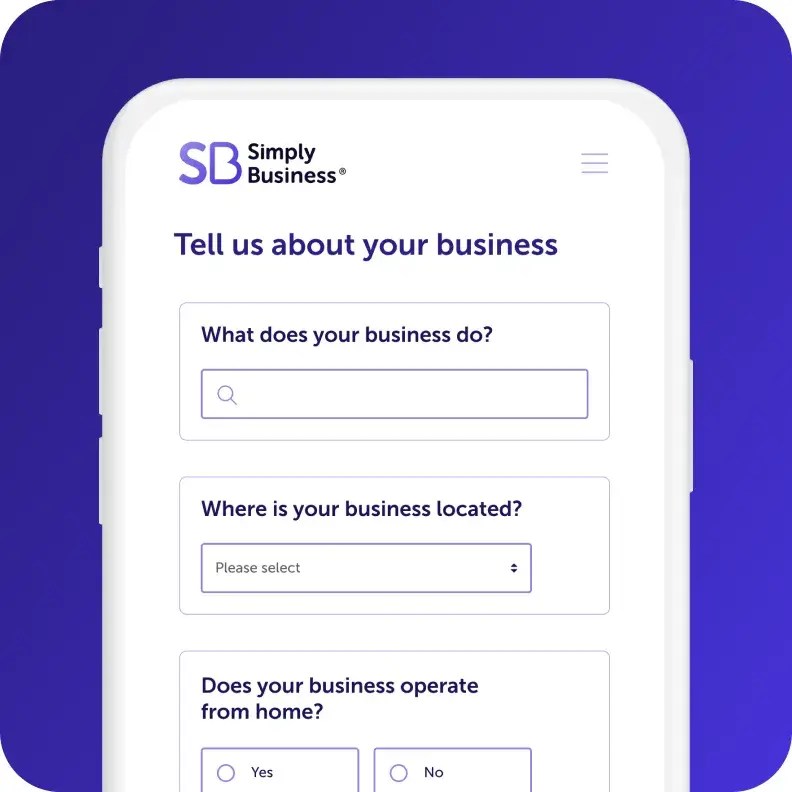
Answer a few questions about
your business in one form.

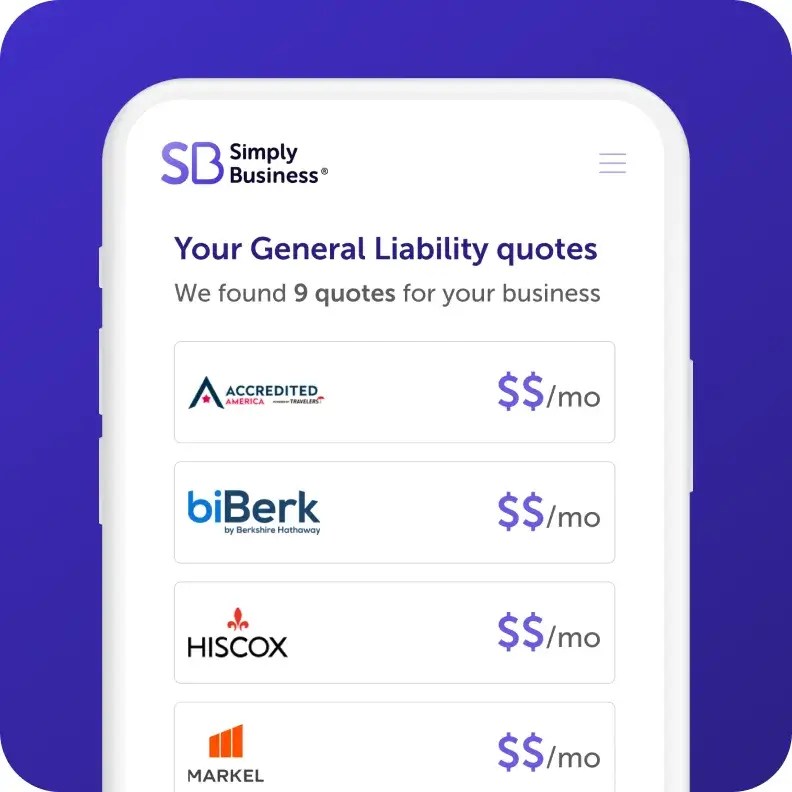
Review quotes
Compare quotes side by side from top-rated insurers and customize your coverage.

Get protected in minutes
Choose your policy, and get instant proof of insurance – all online, and all within 10 minutes.


Written by
Our +1 million customers are big fans. And you will be too.

I went online, looked around, and found Simply Business. The process was so seamless. I got my certificate within minutes. It was just phenomenal.

Karen
Owner of Tangaza Bath & Body Studio LLC
With Simply Business I know I can look at different carriers, but also see all my stuff in the same place… a lot of [insurance] providers don’t offer a variety of coverage, all in one place.

Jef
Owner of Bunker83 LLC
It wasn’t overwhelming to figure out what was covered and what wasn’t covered. And the cost was competitive.

Kim
Owner of Room to Breathe Professional Organizing
Feel confident in your choice.
We partner with a range of top-rated carriers and use smart technology to match you with policies that fit your specific business, your risks, and budget.

400+
business types covered

1M+
customers worldwide

18
top-rated carriers




We’ve Got More Helpful Information



*The displayed price for each product is a monthly estimate calculated from the 10th percentile of relevant policies sold by Simply Business (e.g., General Liability data is used for General Liability estimates). This estimate uses data from relevant policy sales between July–December 2025. Final price and payment terms, which may include an initial down payment, are subject to change based on your state, selected insurance provider, and specific business details.
† Limits may vary by state and nature of your business.
‡ Displayed price is based on the lowest available coverage limit for Equipment and Small Tools policies.
Page last updated: