Cleaning business insurance
One application, multiple quotes.
All in one place.
Essential Protection
From
$20.83
/month*
Could help cover accidental damage, like a broken vase or a client’s slip and fall injury on a wet floor.
What’s included:
General Liability
Coverage limits: $1M to $2M†

Get multiple quotes in less than 10 mins
Essential Protection
From
$20.83
/month*
Could help cover accidental damage, like a broken vase or a client’s slip and fall injury on a wet floor.
What’s included:
General Liability
Coverage limits: $1M to $2M†
Get multiple quotes in less than 10 mins
Would you rather pick and choose your coverage? Explore all options
Over 1 million customers worldwide.


Buy instantly online.

Written by
Why Do Cleaning Businesses Need Insurance?
From a family’s kitchen to a downtown office, cleaning happens inside someone else’s space — full of slick floors, furniture, kids or staff. It’s close-contact work where a single accident can get expensive fast. According to the National Safety Council, the average workers’ compensation claim from a workplace slip or fall now runs over $54,000.¹
But crew slips are just one risk. The same wet floor that sidelines a cleaner can put your customer in the ER. And whether the damage is to a person, a hardwood floor, or the equipment in your van, one bad shift can cost more out of pocket than most small businesses can wipe clean.
Below are some of the most common types of insurance policies that cleaning businesses carry to stay protected.
¹ 2022-2023 slip-and-fall workers’ compensation claim data cited by the National Safety Council (NSC) and sourced from National Council on Compensation Insurance.
What Type of Cleaning Business Insurance Do I Need?

General Liability
A foundational insurance coverage to help handle costs from third-party accidents, property damage, and bodily injury.
From
$20.75
/month*

Workers’ Compensation
Coverage to help take care of employees who get sick or injured on the job. Most states require this coverage for small businesses with full- or part-time employees. It also can benefit business owners who don’t have employees.
From
$38.91
/month*

Contractor’s Equipment and Small Tools Insurance
Also known as inland marine insurance, this coverage can financially protect equipment and inventory that’s in transport or stored offsite.
From
$20.83
/month‡

Business Owner’s Policy (BOP)
General liability, property insurance, and more all in one convenient package.
From
$33.75
/month*
Business insurance —
a quick explainer
Learn more about policies for small businesses, what they cover, why you might need them, and how we can help – all in just 60 seconds.
Business insurance is often made up of different types of policies to cover different things, similar to how your health insurance can be made up of medical dental and vision coverage. Here are some of the ones small business owners need. General liability is kind of the Swiss army knife of insurance. It can do a lot, like help handle costs from third party accidents, property damage, bodily injury, and more. Nobody’s perfect, right? That’s what professional liability is for. It could come in handy in the event of honest mistakes or claims of negligence. Workers’ comp can protect your business and help take care of employees who get sick or injured on the job. Small businesses are big targets for cyber criminals. Cyber Insurance can help cover costs associated with stolen customer data, cyber attacks, breaches, and fraud. BOP or a business owners policy combines different types of coverages like general liability and commercial property insurance. Putting them together for you is where we come in. You tell us a bit about your business online or on the phone, and we customize the coverage options for what you do and what you need. It’s your business, it should be your insurance as well. That’s why we’re here.
What Does Cleaning Business Insurance Typically Cover?
A broken vase. A stolen extractor. A strained back. Cleaning work carries real risk, and cleaning service insurance can help when a shift takes a messy turn:

It’s 6 a.m. You’ve just finished mopping an office lobby and turn for the wet-floor signs in your cart. By the time you turn back, an early arrival is on the floor cradling their wrist.
A general liability policy could help cover the cost of their medical bills, legal fees, and damages from other third-party injury or damage claims.

You roll up to your shop Monday morning to find ankle-deep water in the back room. A pipe burst during the weekend’s cold snap, soaking pallets of paper goods, boxes of floor stripper, and two backpack vacuums. With a Business Owner’s Policy (BOP), you can bundle general liability, commercial property protection, and business interruption coverage to help pay for damages, repairs, and lost income at your business location so you can get back to work quickly.
Many cleaning business owners choose a BOP because it offers more protection than a stand-alone general liability policy without costing much more — a great option if you’re established or planning to grow.

Your best cleaner is carrying a vacuum down a tight basement stairwell when her grip gives. She catches the railing but twists hard. By the next morning, the back spasms have set in and a two-week recovery turns into eight. Workers’ compensation insurance can help cover her medical bills and replace a portion of her wages as she recovers.

You’re wrapping up a deep clean at a customer’s apartment with your van parked at the curb. When you head out to grab your heavy-duty steam cleaner, you find the side door pried open and your upholstery steamer and commercial stick vacuum are gone.
Contractor’s equipment and small tools, also known as inland marine insurance, can help pay to replace or repair your stolen or damaged equipment while your locked vehicle is at a jobsite or in transit.
Why Should I Get Insurance for My Cleaning Business?
Whether you have a cleaning business with employees or you work for yourself, you’re probably budget-conscious. If you’re not aware of how valuable cleaning business insurance is, you may not want to spend your money on it.
So why even get a policy in the first place?
Accidents can happen at any time. And if you don’t have the right coverage in place, you may quickly find out how expensive an accident can be.
And the accident might not even be your fault. Maybe one of your part-time employees knocks over a priceless vase while vacuuming in a customer’s home. Regardless of who caused the accident, if they work for your business, you may be liable for costs resulting from property damage or third-party injuries (i.e., customers or vendors).
Even if you’re doing your work perfectly, a customer could find some fault and decide to sue your business. It doesn’t matter if you’re in the right — you’ll still have to hire an attorney to defend you.
This scenario happens a lot more often than you think. An estimated 43% of small business owners have reported being involved in a lawsuit pertaining to their business.
Different states have different requirements, but if you need a business license or special certification to be a cleaner, you may be asked to show a certificate of insurance (aka a COI). This document provides proof that you have the kind of coverage that might be required by state or federal laws.
If a customer has to decide between hiring a cleaner with no insurance and a cleaner who carries insurance (hopefully that’s you!), it’s likely they will hire the insured business.
That’s because the customer knows that if any accidents or property damage occur as a result of your work, they won’t have to pay for it themselves — your policy can cover it.
Need a little more convincing as to why you should carry cleaning business insurance? Give our licensed insurance agents a call at 844-654-7272 — they’ll be happy to answer any questions you have!
Who Needs Cleaning Business Insurance?
Cleaning work covers a range of specialties, and most face similar risks. You may want to consider cleaning business insurance if you’re a:
- Residential house cleaner or maid service working inside occupied homes, where a knocked-over vase, a chemical-stained countertop, or a slip on a freshly mopped floor can lead to a claim.
- Commercial janitorial company servicing offices, schools, or medical buildings, often after hours or unsupervised, and almost always under a contract that requires proof of insurance.
- Carpet and upholstery cleaner working with high-powered extractors and chemical solutions, where a torn rug or a stained hardwood can quickly turn into an expensive repair.
- Window cleaner operating at heights (3 stories and below) with ladders, lifts, where one dropped tool or one cracked pane can damage property below or injure a passerby.
- Pressure washing specialist cleaning siding, decks, driveways, and storefronts, where high-PSI equipment can chip paint, etch concrete, or damage landscaping in seconds.
- Airbnb or short-term rental turnover cleaner serving a fast-growing, often-solo niche with many of the same risks as other cleaners — damaged property, slip-and-fall liability, or contracts that require proof of insurance.
Whatever your specialty, if you work on client property, handle expensive equipment, or employ a crew, insurance can help protect what you’ve built.

What Does Cleaner Insurance Cost
Cleaning business insurance can start around $21 per month* for general liability, but your actual cost depends on several factors, such as where you’re located, whether you have employees, the size of your payroll, the coverage you choose, and the type of cleaning work you do — residential, commercial, or specialty services like carpet or pressure washing.
Try our Cleaner insurance calculator. Get a quick estimate in just 3 steps.
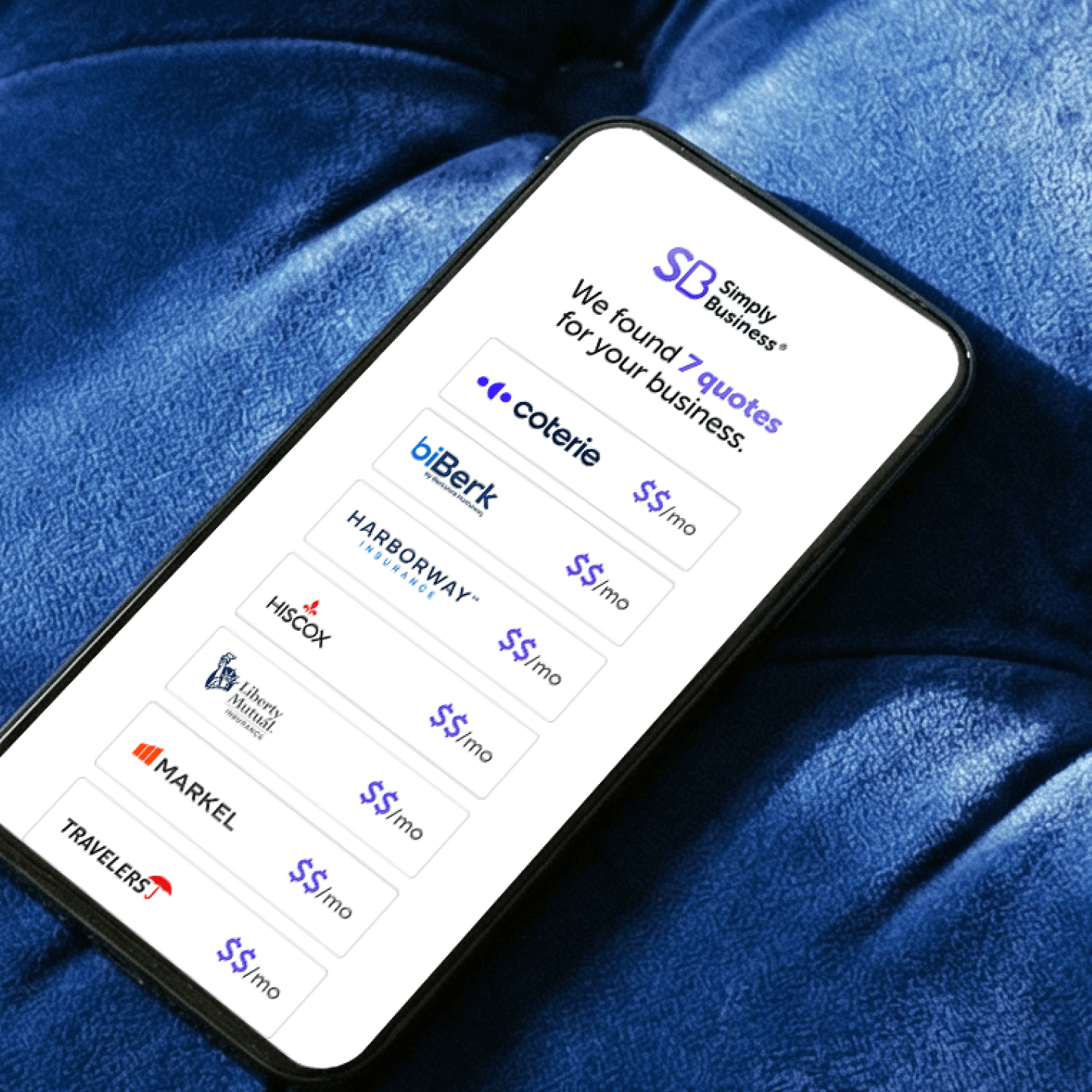
*The is a monthly estimate calculated from the 10th percentile of relevant policies sold by Simply Business (e.g., General Liability data is used for General Liability estimates). This estimate uses data from relevant policy sales between July–December 2025. Final price and payment terms, which may include an initial down payment, are subject to change based on your state, selected insurance provider, and specific business details.
Answers to More Cleaner Insurance Coverage Questions
Cleaning service insurance is a combination of individual coverages that can help protect your business from some of the most common risks of the trade — accidental damage to a customer’s home or office, client or worker injuries, and stolen or damaged tools and equipment.
Most states legally require workers’ compensation if you have employees, and some licensing requirements or contracts may require general liability coverage. Property managers, commercial clients, and home-service platforms can also ask for proof of insurance before they’ll let your team onto a property. Check with your state licensing board and clients for specific requirements.
A janitorial bond is one type of a surety bond that protects your clients if an employee is legally convicted of theft. While business insurance covers accidental damage or injuries, a bond acts as a guarantee of your team’s honesty. Many residential and commercial clients refuse to hire cleaners who aren’t “bonded and insured,” making it a critical trust signal for your business. Simply Business doesn’t sell janitorial bonds, but you can purchase one through a surety provider to pair with your general liability policy.
Yes. COIs for most policies are available as soon as you purchase your coverage. With Simply Business, you can download and share your COI instantly through your online account or right from your phone when a property manager, host, or commercial client needs proof before letting you on the job.
In most states, yes — even if you only have one part-time helper. A few states have higher thresholds or specific exemptions, and rules for sole proprietors and family members vary. Because requirements differ significantly by state and change over time, the safest move is to check directly with your state’s workers’ compensation board for your particular requirements.
Most states don’t require workers’ compensation for sole proprietors. But even when it’s not legally mandated, we recommend workers’ comp insurance because many individual health insurance policies don’t cover work-related injuries. Some commercial clients and property management companies also ask solo cleaners to carry their own workers’ comp before letting them on-site. Requirements vary, so it’s important to check your state requirements and the contracts you sign.
Yes. If a subcontractor injures themselves on a job or damages a client’s property, you could be held liable depending on the contract and your state’s laws. Before bringing on subcontractors, check whether your general liability policy covers their work and whether your state requires you to carry workers’ comp on their behalf. Requiring subcontractors to carry their own insurance — and verifying it — is one of the simplest ways to protect your business.
Possibly. General liability policies often include “completed operations” coverage, which can apply to property damage or injury claims that arise after a job is finished — such as a cleaning solution that quietly discolors hardwood and isn’t noticed for days or weeks. Coverage depends on policy terms and whether the policy was active at the time the work was completed.
Your insurance cost depends on several factors, including, but not limited to:
- The type of cleaning services you offer (residential, commercial, or specialty work like carpet or pressure washing)
- Where your business is located
- Your annual revenue and payroll
- The value of your tools and equipment
- The number of employees or subcontractors you have
- The types of policies, coverage limits, and deductibles you choose
- Claims history and time in business
A few things worth checking before you buy:
- Are your tools and equipment covered at replacement cost or actual cash value?
- Does the policy cover gear in your service van and in transit, or only at a fixed location? Are you * covered for chemical damage to a client’s property — like staining or discoloration — or just for impact damage?
- If you contract through property managers, commercial accounts, or short-term rental hosts, does the coverage meet their specific requirements?
- Are subcontractors covered under your policy, or do they need their own?
Our licensed agents can walk you through these questions — give us a call.

Why Cleaners Choose Simply Business
Small business insurance is what we do. Whether it’s covering you for accidents and errors, meeting workers’ comp requirements, or financially protecting your business from the unexpected, we can help find the coverage you need for your business.

Start your quote
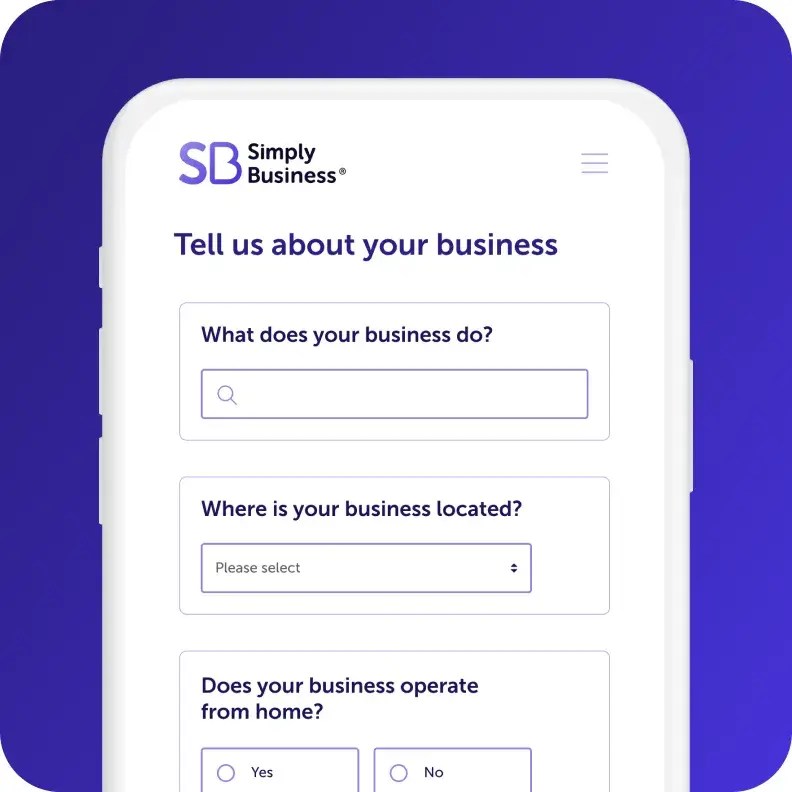
Answer a few questions about
your business in one form.

Review quotes
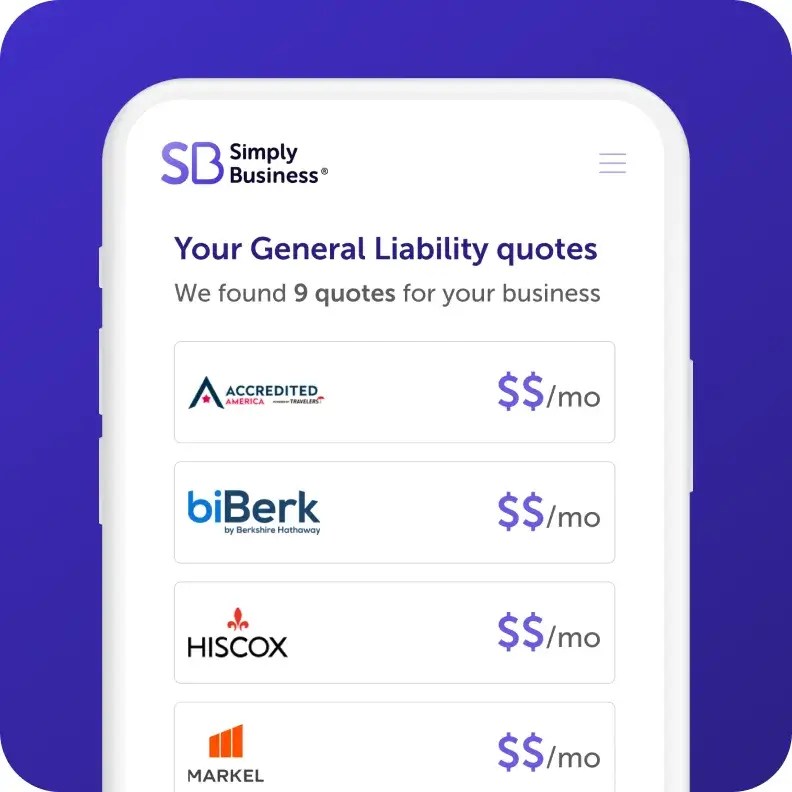
Compare quotes side by side from top-rated insurers and customize your coverage.

Get protected in minutes
Choose your policy, and get instant proof of insurance – all online, and all within 10 minutes.


Written by
Our +1 million customers are big fans. And you will be too.

I went online, looked around, and found Simply Business. The process was so seamless. I got my certificate within minutes. It was just phenomenal.

Karen
Owner of Tangaza Bath & Body Studio LLC
With Simply Business I know I can look at different carriers, but also see all my stuff in the same place… a lot of [insurance] providers don’t offer a variety of coverage, all in one place.

Jef
Owner of Bunker83 LLC
It wasn’t overwhelming to figure out what was covered and what wasn’t covered. And the cost was competitive.

Kim
Owner of Room to Breathe Professional Organizing
Feel confident in your choice.
We partner with a range of top-rated carriers and use smart technology to match you with policies that fit your specific business, your risks, and budget.

400+
business types covered

1M+
customers worldwide

18
top-rated carriers



We’ve Got More Helpful Information
10-minute read
How to Bid on Cleaning Jobs: A Step-By-Step Guide
*The displayed price for each product is a monthly estimate calculated from the 10th percentile of relevant policies sold by Simply Business (e.g., General Liability data is used for General Liability estimates). This estimate uses data from relevant policy sales between July–December 2025. Final price and payment terms, which may include an initial down payment, are subject to change based on your state, selected insurance provider, and specific business details.
† Limits may vary by state and nature of your business.
‡ Displayed price is based on the lowest available coverage limit for Equipment and Small Tools policies.
Page last updated: