
Brick & Mortar Retail Insurance
Compare quotes for retail stores, boutiques, and brick-and-mortar businesses from top-rated carriers.
Trusted by +1M small business owners worldwide
No junk mail. No spam calls. Free quotes.
Find your trade
Choose your business type to see coverage details, typical costs, and quotes tailored to your store.


Written by
If you run a storefront — a boutique, a bookshop, a hardware store, or mostly anything with a front door and a cash register — this page can help you find retail store insurance built for the space, the stock, and the people in it. Find your business type below, or start with the coverages most retailers consider: a business owner’s policy (BOP), general liability, commercial property, workers’ compensation, and business interruption insurance.
What Insurance Does a Retail Store Need?
A storefront concentrates everything in one place — your inventory, your equipment, your customers, your income. That’s the charm of brick and mortar, and it’s also the potential risk: What happens in your store (a customer slips, a product causes harm) and what happens to your store (fire, theft, a broken storefront window) are both of your problems, and different coverages address each.
For most retail businesses, the natural starting point is a business owner’s policy (BOP), which bundles general liability, commercial property, and — in many policies — business interruption coverage into one package, often at a lower combined price than buying each separately. Use the checklist below to spot what applies to your store, then read on for what each piece does.

What insurance do I need?
| If your store… | Ask about… |
|---|---|
Welcomes customers in person | General liability insurance |
| Carries inventory, fixtures, or equipment | Commercial property insurance |
| Has employees — including seasonal help | Workers’ compensation insurance |
| Relies on in-person sales | Business interruption insurance |
| Sells physical products | Product liability protection (may be within general liability) |
| Has a storefront window | Glass coverage — and check your lease |
| Handles cash or has staff at the register | Crime/employee dishonesty coverage |
| Stocks up for a busy season | Seasonal inventory increase coverage |
| Sells perishables | Spoiled merchandise coverage |
| Sells alcohol | Liquor liability coverage |
| Depends on one specialized machine | Equipment breakdown coverage |
| Depends on a key supplier or anchor store | Contingent business interruption coverage |
General liability insurance can cover the risks that come with foot traffic, which is the whole point of a storefront. With people coming and going all day, the occasional accident is part of retail life: a slip on a wet floor, a trip over a display, a knocked-over shelf.
Best for: Every retail store with a door that opens to the public — this is the baseline coverage commercial leases typically require.
General liability insurance typically covers claims involving:
- Third-party bodily injury, such as a customer slipping on a just-mopped floor
- Damage to someone else’s property while doing business
- Personal and advertising injury, such as alleged libel or slander
Worth knowing: Most general liability policies also include a small medical payments coverage that can pay a minor injury bill regardless of who was at fault.
Commercial property insurance can help protect the physical business you’ve built: for example, the inventory on your shelves, the display cases, the cash registers and point-of-sale equipment, the shelving, the signage. If a fire, theft, or covered storm damages the things your store can’t open without, commercial property insurance is the coverage that can help you restock and reopen.
Best for: Any retailer with meaningful inventory, fixtures, or equipment — which is nearly every retailer.
Commercial property insurance can help with losses involving:
- Registers, point-of-sale systems, and other business equipment
- Inventory damaged or destroyed by fire, theft, vandalism, or other covered events
- Display cases, fixtures, shelving, and signage
Ask about your storefront glass:
A storefront’s glass is easy to overlook and expensive to replace — a broken display window can run into the thousands, and it’s one of the most easily damaged parts of any store. Coverage for glass varies by policy, and if you lease your space, your lease may hold you responsible for the glass, even though the building isn’t yours. When you compare quotes, ask specifically how each policy treats storefront glass.
Two more realities of retail worth raising when you get quotes: Burglary and robbery losses typically fall under your property coverage, but routine shoplifting is often excluded as an inventory shortage, and employee theft typically needs its own protection. And if your inventory spikes for the holidays or can spoil, like a florist’s coolers full of stems, ask about seasonal inventory increases and spoiled merchandise coverage.
Most states require workers’ compensation insurance by law when you hire employees — and in most states, part-time and seasonal staff count. That matters in retail, where holiday help is a way of life: The student behind your register in December is generally an employee in the eyes of your state, whether or not they’re on the payroll in January. Requirements vary by state and business structure, so check the rules where you operate before your busy season, not during it.
Best for: Retail stores with employees — full-time, part-time, or seasonal.
Workers’ compensation insurance typically covers:
- Medical expenses for work-related employee injuries or illnesses
- Partial lost wages while an employee recovers
- Employer liability to protect your business if an injured employee sues (Note: In monopolistic states, this is typically excluded and may require a separate Stop Gap coverage endorsement).
Note: Coverage details vary by state, carrier, and policy terms. Always review your actual insurance policy to confirm specific terms, limits, and exclusions.
Business interruption insurance answers the question every store owner dreads: What happens to my income while the doors are closed? If a covered event — a fire, for example — shuts your store, this coverage can help replace a portion of lost income and keep paying the bills that don’t stop, like rent and payroll, while you rebuild. It’s often included in a BOP, which is one of the strongest arguments for starting there.
Best for: Any store that relies on in-person sales — where a closed door quickly becomes lost income.
Business interruption insurance may help with:
- A portion of lost income while a covered event keeps your store closed
- Ongoing operating expenses, such as rent and utilities, during the closure
- Costs of operating from a temporary location, where the policy provides it
When someone else’s bad day becomes yours
Standard business interruption coverage generally responds to damage at your own store. But a retailer’s income also can depend on other people’s property — the supplier who stocks your shelves, or the anchor store that brings foot traffic to your block. Contingent business interruption coverage is designed for that scenario, and it’s worth asking about if your revenue leans on a location you don’t control. Some owners pair coverage with a practical backup, too: an arrangement with a nearby business to serve each other’s customers after a disaster. That kind of agreement can keep customers from drifting away while
What Is Product Liability Insurance for Retail Stores?
If you sell physical products, you can be named in a claim when a product injures someone or damages their property — even if you didn’t make it. A customer hurt by a product often brings everyone in the chain into the claim, and the retailer who sold it is frequently named alongside the manufacturer. Product liability protection for retailers typically comes through the products-completed operations coverage within a general liability policy, so if you sell goods, confirm it’s part of any policy you compare rather than assuming.
The exposure scales with what’s on your shelves. A bookstore’s risk looks different from a hardware store selling ladders and power tools, or a pet store selling treats and toys that end up in someone’s home — which is one reason quotes for different store types price differently.
If you sell alcohol
Selling alcohol adds an exposure of its own: liquor liability, which standard general liability policies typically exclude for businesses in the alcohol trade. If you run a liquor store, or your shop sells wine or beer alongside everything else, ask specifically about liquor liability coverage when you compare quotes.
How Much Does Retail Store Insurance Cost?
Simply Business customers pay a median price of $54 per month for a business owner’s policy¹ — the bundle most retailers start with. Store type matters:

Median Cost
| Business Type | Median Monthly BOP Cost¹ |
|---|---|
| General merchandise store | $51 |
| Clothing/apparel stores | $58 |
¹Data from Simply Business customers who identified as “general merchandise store” or “clothing/apparel stores”, who purchased BOP policies between July 1, 2025 and December 31, 2025. Median costs shown are for illustrative purposes only; actual premiums vary by state, coverage limits, and individual business risk.
One thing to keep in mind: These figures reflect a BOP alone. Your total cost can be higher if your store also needs workers’ compensation, liquor liability, crime coverage, equipment breakdown, or other coverage, for example, from the checklist above.
A few factors drive a retail rate more than others: the value of your inventory and equipment, your location and foot traffic, the coverage limits you select, and your claims history. A store insuring a large space and substantial stock will pay more than a small shop with lean shelves — and insuring property at replacement cost typically costs more than actual cash value, which factors in depreciation. The most reliable way to know your cost is to compare quotes for your specific store, location, and business type.
How to Get Covered with Simply Business

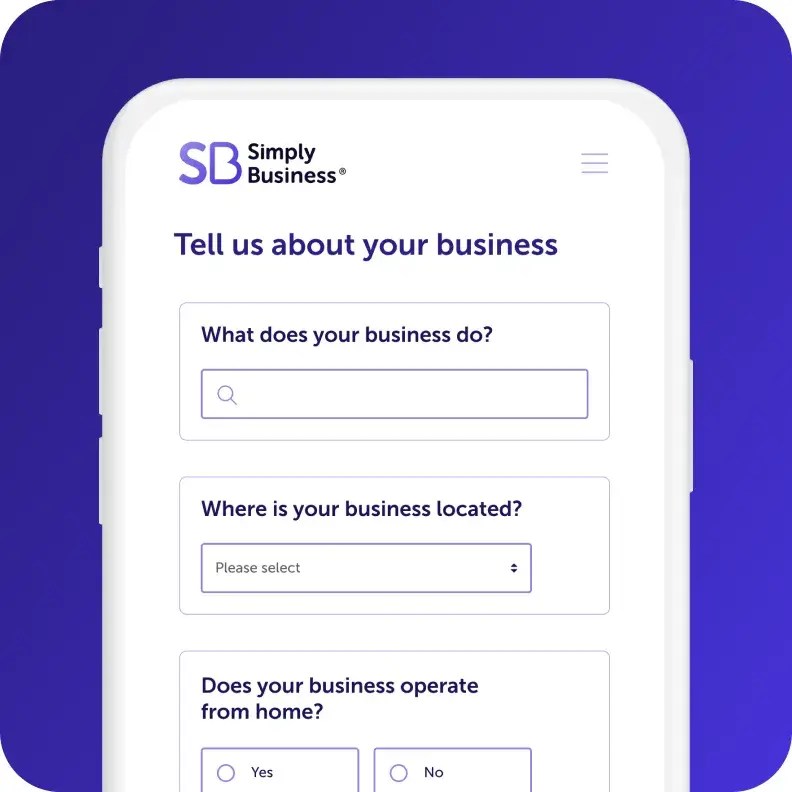
Tell us about your business
Answer a few questions about the work you do.your business in one form.

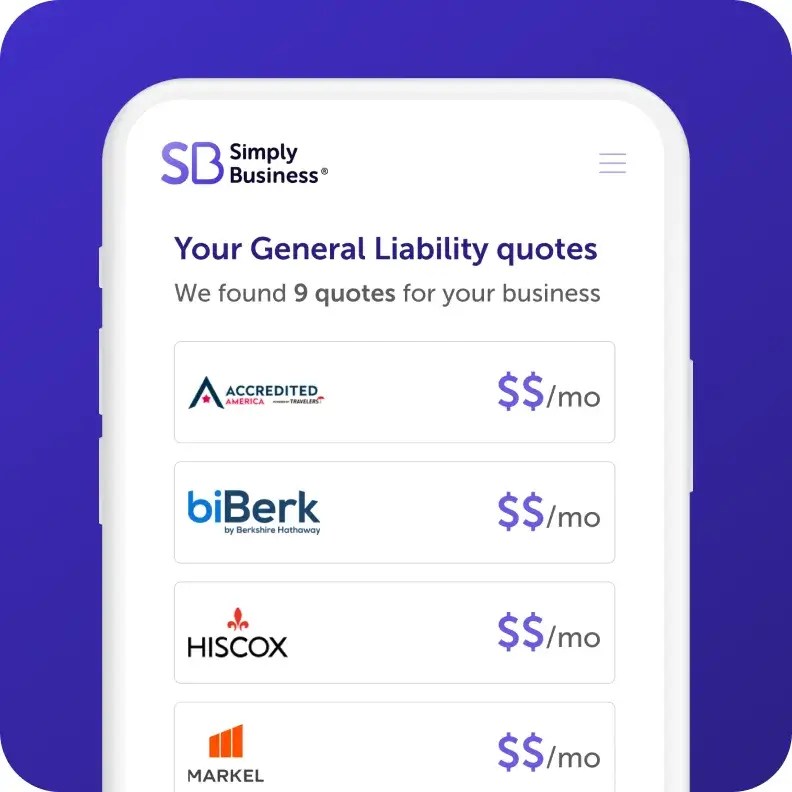
Review quotes
We’ll show you policies from top carriers so you can pick the coverage and price that work for you.

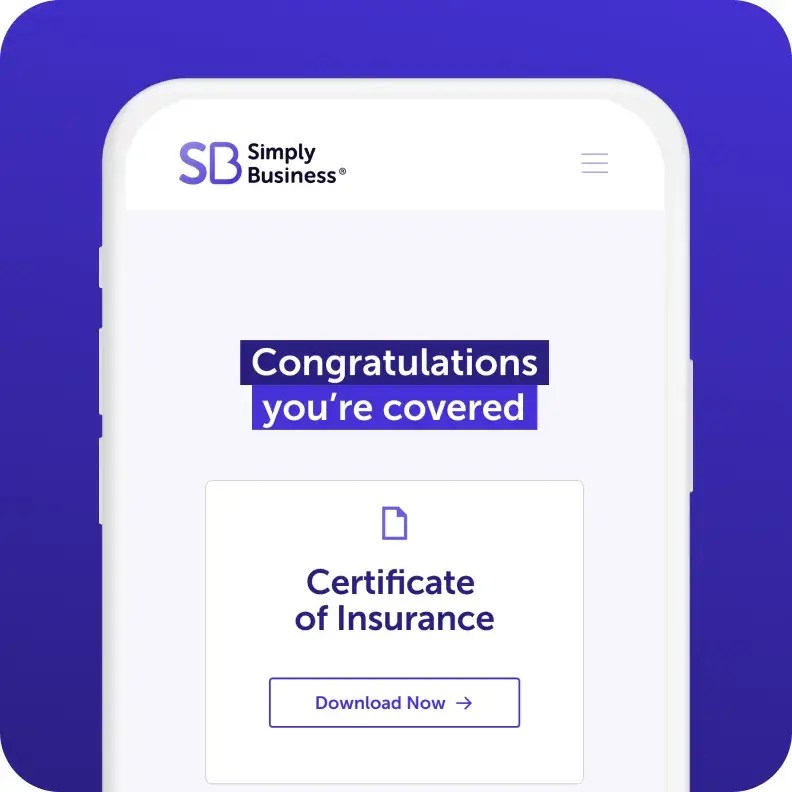
Get protected in minutes
Buy online in under 10 minutes. Download your certificate of insurance right away.
Our +1 million customers are big fans. And you will be too.
Trusted by over one million small business owners globally, Simply Business makes it easy to compare options and choose coverage with confidence. Read our customer reviews to see what they say about their experience.

The representative was wonderful. Super helpful and ultimately helped me make the best decision.

Ryan. S
Restaurant owner, North Carolina
The process was simple to sign up and the cost was good. I already recommended you.
Beverley C.
Home bakery business owner, West Virginia
Frequently Asked Questions
Most retail stores start with a business owner’s policy (BOP), which bundles general liability, commercial property, and often business interruption coverage. Add workers’ compensation when you have employees — in most states it’s required by law — and consider extras, where available, that fit your stock, such as spoiled merchandise coverage for perishables or liquor liability if you sell alcohol. If your store depends on specialized equipment, ask about equipment breakdown coverage too: Standard property insurance typically doesn’t cover a machine that simply stops working. Your landlord or lease also may set minimum coverage requirements.
General liability is one coverage: It addresses claims from third parties, like a customer injured in your store. A BOP is a package that can include general liability and adds commercial property coverage — and often business interruption — in one policy, usually at a lower combined price. For a store with inventory and fixtures to protect, the practical question is rarely which one; it’s whether the BOP’s property coverage matches what’s actually on your shelves.
If you sell physical goods, the exposure exists — a customer injured by a product can bring the retailer into a claim, even when the retailer didn’t manufacture it. Product liability protection typically comes through the products-completed operations coverage within a general liability policy. Confirm it’s included in any policy you compare, and if you sell higher-risk goods like tools, alcohol, or pet products, when you get the quotes, let them know so the coverage matches the shelf. Some insurers also offer product recall endorsements, which can help with the costs of notifying customers and pulling a faulty product off your shelves.
In most states, yes — part-time and seasonal employees generally count toward workers’ compensation requirements, and coverage is required by law when you hire them. Rules vary by state and business structure, so check your state’s requirements before staffing up for a busy season. Sole proprietors with no employees generally aren’t required to carry it for themselves. Be sure to confirm which requirements apply to your business based on location and business type.
Yes — inventory is typically part of what commercial property coverage protects, alongside fixtures, equipment, and signage, when a covered event such as a fire or theft causes the loss. The details matter, though: Check that your limit reflects what’s actually in the store, ask how the policy handles seasonal inventory increases and documented theft versus employee theft (routine shoplifting is typically excluded) and ask specifically about storefront glass and spoilage if either applies to your business.
Simply Business customers have paid a median of $54 per month for a business owner’s policy, with clothing and apparel stores at a median of $58 and general merchandise stores at $51.¹ Your rate depends on your inventory and equipment values, location, coverage limits, and claims history. The fastest way to a real number is comparing quotes for your specific store.
If a covered event — such as a fire — forces your store to close, business interruption coverage can help replace a portion of your lost income and pay ongoing expenses such as rent and utilities while you recover. It’s often included in a BOP. If your income depends on other locations, such as a key supplier or the anchor store that drives your foot traffic, ask about contingent business interruption coverage as well.
Sources
¹ Simply Business customer BOP policy purchase data, July 1, 2025–December 31, 2025, as published on the Simply Business BOP cost page. Sync all figures with the live page immediately before publishing.

Written by