Locksmith insurance
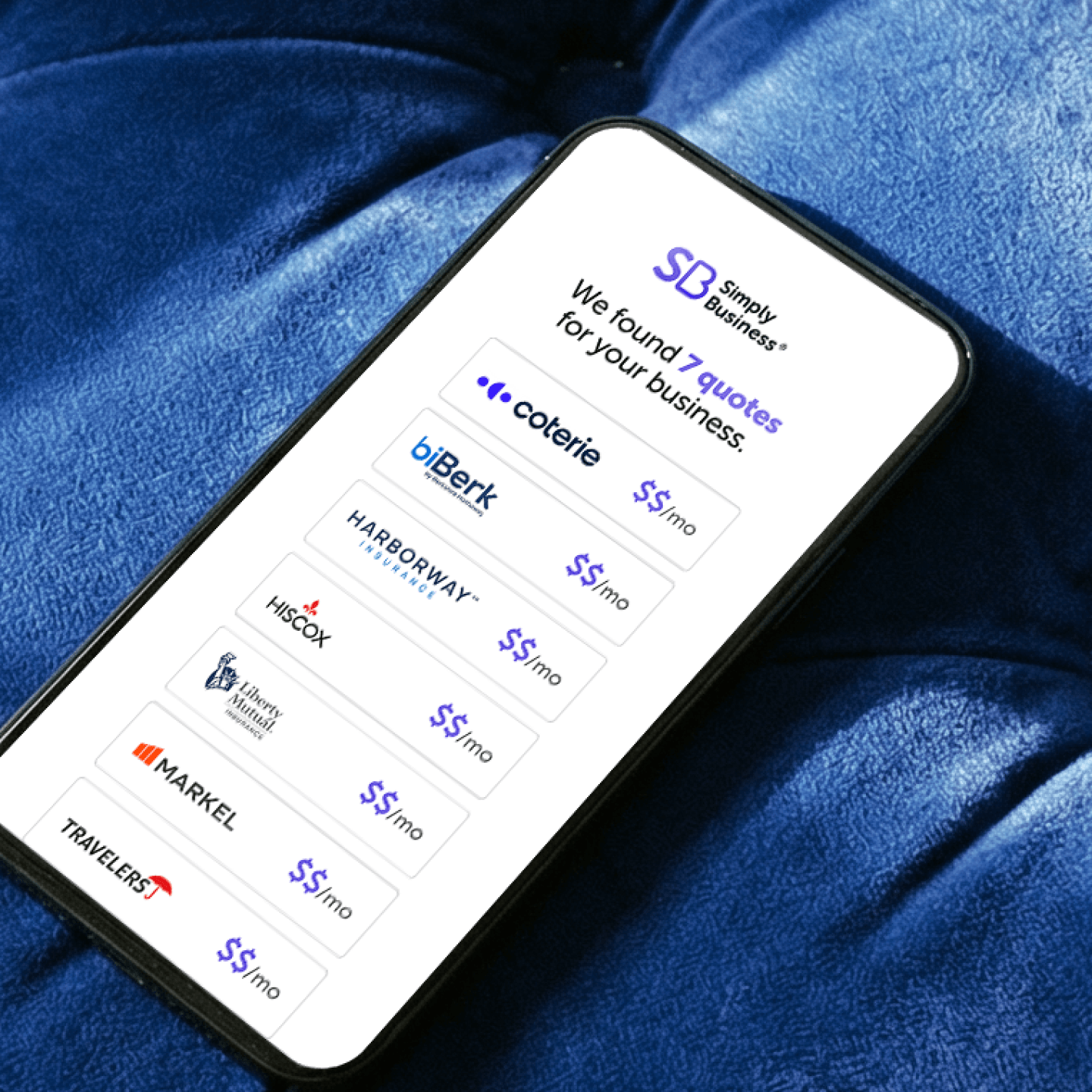
One application, multiple quotes.
All in one place.
Essential Protection
From
$18
/month*
Could help cover claims against your business for property damage and injuries to others.
What’s included:
General Liability
Coverage limits: $100K to $2M†

Get multiple quotes in less than 10 mins
Essential Protection
From
$18
/month*
Could help cover claims against your business for property damage and injuries to others.
What’s included:
General Liability
Coverage limits: $100K to $2M†
Get multiple quotes in less than 10 mins
Would you rather pick and choose your coverage? Explore all options
Over 1 million customers worldwide.


Buy instantly online.

Written by
Why Do Locksmiths Need Insurance?
As a locksmith, you help keep homes, vehicles, and businesses secure. But protecting other people’s property can potentially leave your own business exposed.
A drill slips and damages a customer’s door. A technician gets hurt on a service call. Thousands of dollars in key-cutting and programming equipment disappear from a locked van overnight. Locksmith insurance can help safeguard your business when accidents, injuries, or theft cut into your bottom line.
Below are some of the key insurance policies locksmiths typically carry to stay protected.
What Type of Insurance Does a Locksmith Typically Need?
Below is a list of common types of insurance locksmiths may need and how much they might cost.

General Liability
Foundational insurance for locksmiths to help handle costs from third-party accidents, property damage, and bodily injury.
From
$20.75
/month*

Business Owner’s Policy (BOP)
General Liability, Property insurance, and more all in one convenient package.
From
$33.75
/month*

Professional Liability
Professional Liability, also known as Errors & Omissions (E&O) insurance, typically helps cover the costs of claims arising from professional errors, negligence, or unintentional omissions in your work.
From
$25.83
/month*

Contractor’s Equipment and Small Tools Insurance
Also known as Inland Marine insurance, this coverage typically helps protect your gear and equipment in transit or at a jobsite.
From
$20.83
/month‡

Workers’ Comp
Coverage for employees who suffer a work-related injury or illness. Workers’ Compensation is typically required by law in most states, depending on your business structure and employee headcount. It can also benefit business owners who don’t have employees.
From
$38.91
/month*
Business insurance —
a quick explainer
Learn more about policies for small businesses, what they cover, why you might need them, and how we can help – all in just 60 seconds.
Business insurance is often made up of different types of policies to cover different things, similar to how your health insurance can be made up of medical dental and vision coverage. Here are some of the ones small business owners need. General liability is kind of the Swiss army knife of insurance. It can do a lot, like help handle costs from third party accidents, property damage, bodily injury, and more. Nobody’s perfect, right? That’s what professional liability is for. It could come in handy in the event of honest mistakes or claims of negligence. Workers’ comp can protect your business and help take care of employees who get sick or injured on the job. Small businesses are big targets for cyber criminals. Cyber Insurance can help cover costs associated with stolen customer data, cyber attacks, breaches, and fraud. BOP or a business owners policy combines different types of coverages like general liability and commercial property insurance. Putting them together for you is where we come in. You tell us a bit about your business online or on the phone, and we customize the coverage options for what you do and what you need. It’s your business, it should be your insurance as well. That’s why we’re here.
What Does Locksmith Insurance Typically Cover?
Whether you’re handling emergency lockouts or commercial access-control installations, here’s how a combination of coverages can help when a job takes an unexpected turn.
You’re replacing a high-security deadbolt when the drill cracks the decorative glass panel beside the door. A routine service call now comes with a repair bill. General Liability insurance can help cover third-party property damage, bodily injury claims, and related legal costs resulting from your operations.
A pipe bursts in the unit above your storefront overnight, soaking computers, replacement locks, and access-control hardware. When you arrive early the next morning, appointments are already booked but your shop can’t operate normally.
A Business Owner’s Policy (BOP) typically bundles General Liability, Commercial Property protection, and Business Interruption coverage to help pay for damages, repairs, and lost income so you can get back to work quickly.
You incorrectly key a master key system for a local apartment building, inadvertently allowing a tenant’s key to unlock multiple units. Resolving the security compromise requires rekeying the entire complex, and the property manager holds you financially responsible for the mistake.
Professional Liability insurance, also known as Errors & Omissions (E&O) coverage, can help protect against claims alleging mistakes or negligence in your professional work. It may also help cover legal defense costs, settlements, and judgments for covered claims, up to your policy limits.
You finish your last service call and park your locked van for the night, with your mounted laser key-cutting machine, transponder programmer, and diagnostic equipment secured inside. By morning, the van has been broken into and thousands of dollars in essential equipment are gone.
Contractor’s Equipment and Small Tools coverage, also known as Inland Marine insurance, can help pay to replace or repair covered equipment when it’s stolen or damaged in transit or at a field location.
Your technician is drilling out a stubborn commercial lock when the tool slips and badly injures their hand. They need medical treatment and time away from service calls. Workers’ Compensation insurance can help cover their medical bills and replace a portion of their wages as they recover.
Workers’ Comp is often legally required and can help protect your business from costly claims, as well as taking care of your crew if they suffer a work-related illness or injury on the job. Even if you operate solo, workers’ compensation insurance is highly recommended, because many personal health insurance policies do not cover work-related injuries.
Who Needs Locksmith Insurance
Locksmith work ranges from traditional lock-and-key services to sophisticated electronic security systems. You may want to consider locksmith insurance if you’re a:
Residential locksmith rekeying locks, replacing deadbolts, and handling home lockouts, where a slipped tool or forced entry can damage doors, frames, or hardware.
Commercial locksmith servicing offices, retail properties, and other businesses, where complex locking systems, master key setups, panic hardware, and client contract requirements can raise the stakes of a mistake.
Automotive locksmith unlocking vehicles, cutting car keys, programming transponders and smart key fobs, where a mistake can damage doors, windows, electronics, or trim.
Emergency locksmith responding to urgent home, business, and vehicle lockouts, where time pressure and forced-entry techniques can increase the chance of accidental property damage.
Safe and vault technician opening, repairing, or servicing safes and vaults, where specialized tools, heavy equipment, and high-value customer property require extra care.
Security installer setting up smart locks, card readers, CCTV systems, and electronic access controls, where drilling, wiring, or mounting hardware can cause accidental physical damage to a client’s doors, walls, or surrounding property.
Mobile key-duplication business cutting and programming keys from a service van, with expensive mobile equipment that may be vulnerable to theft or damage.
Freelance locksmith working independently across residential, commercial, or automotive jobs, where a single property-damage claim or major tool loss can shut down a small operation.
Whether you work from a storefront, a service van, or both, insurance can help protect your tools, your customers’ property, and the business you’ve built.
How Much Does Locksmith Insurance Cost?
Here’s a look at the median monthly costs¹ for locksmith insurance:
Median Monthly Costs1
| Coverage Type | Median Monthly Cost |
| Locksmith General Liability Client property damage (e.g., door frame or lock damage) and job site accidents | $20 per month |
| Business Owner’s Policy (BOP) Bundles General Liability with protection for your lock shop, tools, and inventory | $47 per month |
| Professional Liability (E&O) Security lock installation disputes or master key consulting negligence claims | $41 per month |
| Locksmith Workers’ Compensation Medical expenses and lost wages for technician job-site injuries | $131 per month |
| Contractor’s Tools & Equipment (Inland Marine) Mobile key cutters, code machines, transponder programmers, and lock picks in transit | $27 per month |
Your final premium will depend on factors such as your location, the type of work you do, the number of employees you have, your annual revenue, and your claims history.
1Pricing based on general liability, BOP, professional liability, contractor’s equipment and small tools, and workers’ comp policies purchased from Simply Business by customers identifying as a “locksmith” between July 1, 2025 and December 31, 2025.

Try Our Locksmith Insurance Calculator
Get a quick estimate in just 3 steps.
Answers to More Questions About Locksmith Insurance
Locksmith insurance is a collection of policies bought by locksmiths that can help protect against risks such as accidental customer property damage, third-party injuries, employee injuries, and stolen or damaged tools and equipment.
Common coverages for locksmiths include General Liability, Professional Liability, Tools and Equipment coverage, and Workers’ Compensation if you have employees. A BOP may also make sense if you operate from a storefront or have other business property to protect.
Mobile locksmiths may also need Commercial Auto insurance for service vans or other business vehicles.
Locksmith insurance rules vary by state and locality. Some states and municipalities require locksmiths to be licensed, which may involve maintaining General Liability insurance or holding professional credentials from trade organizations like the ALOA Security Professionals Association. Be sure to double check which requirements are applicable to you and your business.
Workers’ Compensation insurance is legally required in most states, depending on your business structure and number of employees. Commercial clients, landlords, and property managers may also require specific general liability limits, additional insured status, and a current certificate of insurance (COI) before work begins.
Check your state and local licensing rules, consult federal resources like the SBA’s insurance guide, and review the insurance specs in each commercial contract.
General Liability can help cover certain third-party property damage caused by your work, such as damaging a door while replacing a lock or if you accidentally scratch a vehicle while performing a lockout.
However, coverage depends on exactly how the damage occurred and the terms and exclusions of your policy, so don’t assume every type of damage is automatically covered.
Installing smart locks, card readers, CCTV systems, and electronic access controls adds risks beyond traditional lock work. An installation mistake can damage customer property or disrupt a security system, while connected devices and stored client information may also create cyber liability exposures.
Ask your insurer whether your services and electronic-security work are covered under your existing policies or require additional protection.
A BOP’s Commercial Property coverage is designed to protect business property at your insured premises, but equipment that regularly travels in a service van may need separate protection.
Contractor’s Equipment and Small Tools insurance, also known as Inland Marine coverage, can help protect covered mobile equipment such as laser key-cutting machines, OBD transponder programmers, diagnostic tools, and other gear while in transit or at a jobsite.
Check your policy limits to make sure your equipment is adequately insured. And always be sure to double check your policy documents for any excluded equipment.
If you own a service van or other vehicle used to travel to customers, carry tools, or perform locksmith work, you will typically need Commercial Auto insurance. Personal auto policies can restrict or exclude certain business uses, particularly when a vehicle is owned by the business or used primarily for commercial work.
While Simply Business doesn’t currently offer Commercial Auto insurance, we are happy to refer our customers with trusted providers who do.
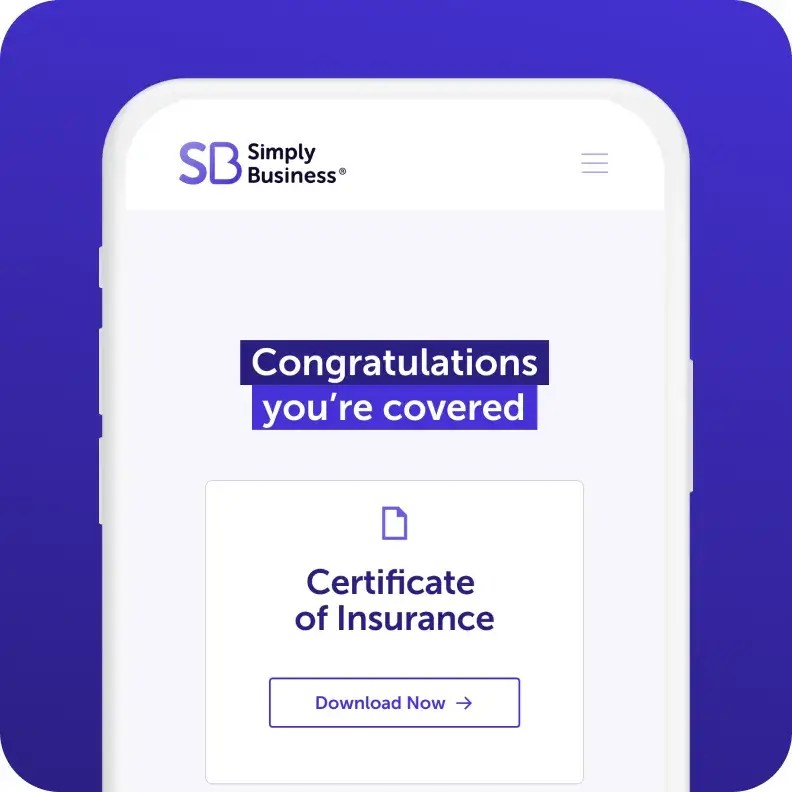
Yes. COIs for most policies from Simply Business are available soon after you purchase your coverage, and you can download and share your COI through your online account or right from your phone. That can be useful when a property manager, landlord, commercial client, or other party needs proof of insurance before allowing work to begin.
Your insurance premium depends on several factors, including, but not limited to:
- The type of locksmith services you provide
- Whether you operate from a storefront, service van, or both
- Your annual revenue and payroll
- The size of your team
- Where your business is located
- The value of your tools and equipment
- The number of business vehicles you operate
- Your claims history and years in business
- Your chosen policy types, coverage limits, and deductibles
Larger operations, more expensive equipment, and services with greater property-damage exposure can all affect your coverage needs and what you pay.
Before signing on the dotted line, consider asking:
- Does my general liability policy cover all the residential, commercial, automotive, and emergency locksmith services I provide?
- Does my policy meet the liability limits or additional insured requirements in my commercial contracts?
- Are my higher-value tools insured up to their full replacement value?
- How does my policy handle accidental damage to customer doors, locks, or vehicles?
- Does my service van require commercial auto insurance?
- Can I download a COI immediately when I need one for a commercial job?
Our licensed agents can walk you through these questions — give us a call.

Written by
Why Small Businesses Choose Simply Business
Small business insurance is what we do. Whether it’s covering you for accidents and errors, meeting workers’ comp requirements, or financially protecting your business from the unexpected, we can help find the coverage you need for your business.

Start your quote
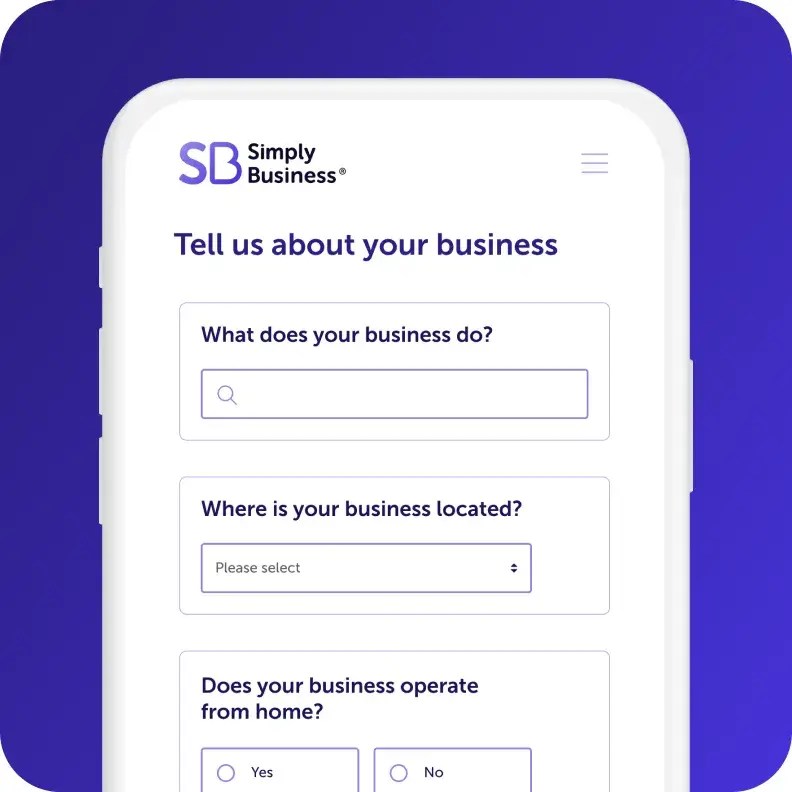
Answer a few questions about
your business in one form.

Review quotes
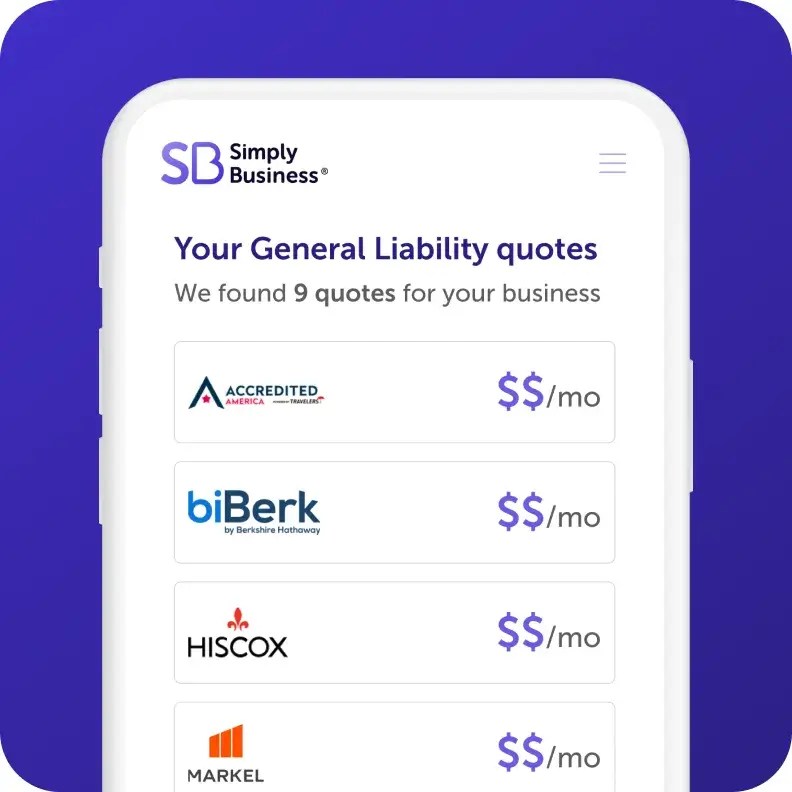
Compare quotes side by side from top-rated insurers and customize your coverage.

Get protected in minutes
Purchase your policy, and get instant proof of insurance – all online, and all within 10 minutes.
Our +1 million customers worldwide are big fans. And you will be too.

I went online, looked around, and found Simply Business. The process was so seamless. I got my certificate within minutes. It was just phenomenal.

Karen
Owner of Tangaza Bath & Body Studio LLC
With Simply Business I know I can look at different carriers, but also see all my stuff in the same place… a lot of [insurance] providers don’t offer a variety of coverage, all in one place.

Jef
Owner of Bunker83 LLC
It wasn’t overwhelming to figure out what was covered and what wasn’t covered. And the cost was competitive.

Kim
Owner of Room to Breathe Professional Organizing
Feel confident in your choice.
We partner with a range of top-rated carriers and use smart technology to match you with policies that fit your specific business, your risks, and budget.

400+
business types covered

1M+
customers worldwide

18
top-rated carriers


















We’ve Got More Helpful Information


*The displayed price for each product is a monthly estimate calculated from the 10th percentile of relevant policies sold by Simply Business (e.g., General Liability data is used for General Liability estimates). This estimate uses data from relevant policy sales between July–December 2025. Final price and payment terms, which may include an initial down payment, are subject to change based on your state, selected insurance provider, and specific business details.
† Limits may vary by state and nature of your business.
‡ Displayed price is based on the lowest available coverage limit for Equipment and Small Tools policies.
Page last updated: