Tree Service Insurance Cost & Coverage Guide for 2026
Try our insurance calculator.
Get a quick estimate in just 3 steps. No email required.
Insuring over 1 million small business owners worldwide.


Buy instantly online. No junk mail. No spam calls.
Insuring over 1 million small businesses worldwide.
Buy instantly online. No junk mail. No spam calls.

Written by
Tree Service Insurance
As a tree service professional, you have the equipment and necessary skills to protect people and property from the risk of falling trees. No doubt, it’s a dangerous job. A tree trimmer could fall from a tall tree, or a large tree could land on a dwelling. Either way, it could cost your business many thousands of dollars.
Just as you protect others, tree service insurance can protect you, your workers, and your business.
This guide outlines the essential small business insurance policies tree service businesses buy, what they cost, and how to get the protection your business needs. We’ve got you covered.
On this page
Find the information you need quickly
What is Tree Service Insurance?
Tree service insurance, also known as arborist insurance, is a collection of policies that tree service professionals typically buy, designed to help protect your business from the financial fallout of third-party injuries, property damage, and business interruption. Without the right coverage, your business could be directly responsible for paying someone’s medical bills or costly legal expenses. You may also have to pay for equipment repairs or incur unexpected costs due to a business interruption.
Many clients will require you to demonstrate that you have proof of insurance before you can even start a job, making it essential for growing your business.
How Much Does Tree Service Insurance Cost?
Here is a breakdown of median costs¹ for tree service businesses, based on our recent customer data.
Median Costs1
| Insurance Policy | Median Monthly Cost | Median Annual Cost |
|---|---|---|
| General liability | $117 | $1,404 |
| Workers’ compensation | $132 | $1,584 |
| Inland marine | $27 | $324 |
1Data from Simply Business customers specializing as “tree services” who purchased at least one or a combination of general liability, workers’ compensation policies, and inland marine insurance from July 1, 2025 to December 31, 2025. The median costs shown are for illustrative purposes only; actual premiums vary by state, coverage limits, and individual business risk.
Tree service insurance rates vary, and your final premium is based on several factors including your location, number of employees, the types of services you provide, and your claims history.
What Insurance Does a Tree Service Business Need?

General Liability
General liability (GL) typically covers expenses if your company causes someone other than an employee to be hurt or if your company causes property damage. It’s a foundational business insurance coverage to help handle costs from third-party accidents, property damage, and bodily injury.
Why You Need It:
Large tree removals don’t always go as planned. A general liability policy will help pay medical expenses for injuries if a tree falls on someone who is not an employee. Your policy will also typically pay to repair or replace a building if a tree falls on it or your company damages it in some other way.
Starting at
$145.83
/month*

Workers’ Compensation
If you have employees — even just one apprentice — most states require you to carry workers’ compensation. This policy covers medical bills and lost wages for employees who get injured or become ill on the job.
Why You Need It:
Suppose one of your employees is injured by a chainsaw kickback while working or suffers an eye injury from flying debris. Workers’ compensation coverage will help cover medical expenses and lost wages for you or your employees due to a work-related incident or illness.
Starting at
$38.91
/month*

Inland Marine
Your tools and equipment are vital to your operations. Inland marine insurance, sometimes called “tools and equipment coverage,” allows you to quickly repair or replace your business equipment, reducing downtime and helping you land new work. An inland marine policy also usually covers tools and equipment that you rent or lease – called contractor’s equipment floater.
Why You Need It:
Imagine someone stole tools from a locked trailer at a jobsite, or equipment was damaged on its way to the site. An inland marine policy will generally pay to repair or replace your equipment up to the policy limit.
Starting at
$20.83
/month‡
Get quotes for your
tree service insurance today.
Simply Business provides customized coverage options from top-rated small business insurers — all in just 10 minutes. We do all the leg work so you can sit back, compare quotes, and save.
Business insurance —
a quick explainer
Learn more about policies for small businesses, what they cover, why you might need them, and how we can help – all in just 60 seconds.
Business insurance is often made up of different types of policies to cover different things, similar to how your health insurance can be made up of medical dental and vision coverage. Here are some of the ones small business owners need. General liability is kind of the Swiss army knife of insurance. It can do a lot, like help handle costs from third party accidents, property damage, bodily injury, and more. Nobody’s perfect, right? That’s what professional liability is for. It could come in handy in the event of honest mistakes or claims of negligence. Workers’ comp can protect your business and help take care of employees who get sick or injured on the job. Small businesses are big targets for cyber criminals. Cyber Insurance can help cover costs associated with stolen customer data, cyber attacks, breaches, and fraud. BOP or a business owners policy combines different types of coverages like general liability and commercial property insurance. Putting them together for you is where we come in. You tell us a bit about your business online or on the phone, and we customize the coverage options for what you do and what you need. It’s your business, it should be your insurance as well. That’s why we’re here.
Frequently Asked Questions (FAQs)
The premium is generally based on the overall risk level, so it varies by company. Typical factors include, but are not limited to, the type of services you provide (e.g., tree trimming, stump removal), payroll amount, crew size, and equipment types.
Yes. Work at high elevations increases risk. Work involving tall trees or aerial work may result in higher tree trimming insurance costs. Some policies have limits on how high your workers can go and still be covered. For instance, general liability policies often have height exclusions (e.g., nothing above 15 or 30 feet), whereas workers’ compensation rarely excludes by height but will significantly increase the premium based on the “Classification Code.”
Typically yes. Depending on the type of equipment you have, you may need an inland marine policy, a commercial auto policy, or both. Speak with your broker or agent for help on finding a policy that will fit your needs.
Workers’ compensation rates for tree service providers are typically higher than premiums for office workers because of the high risks in the tree services industry. Your workers are exposed to falls, chainsaw injuries, and heavy equipment use, which typically increase the tree trimming insurance costs.
TCIA accreditation and OSHA safety programs may qualify your business for extra discounts. Safety training and certifications that follow industry standards demonstrate to insurance companies that your business has a lower-than-expected risk level and may help lower your rates.

Why Small Businesses Choose Simply Business
Small business insurance is what we do. Whether it’s covering you for accidents and errors, meeting workers’ comp requirements, or financially protecting your business from the unexpected, we can help find the coverage you need for your business.

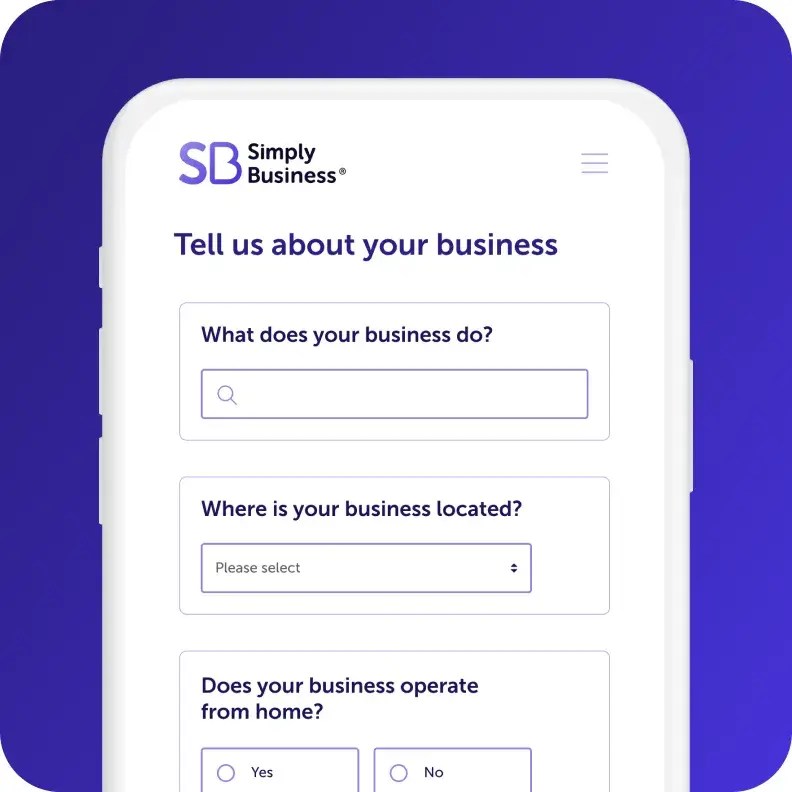
Start your quote
Answer a few questions about
your business in one form.

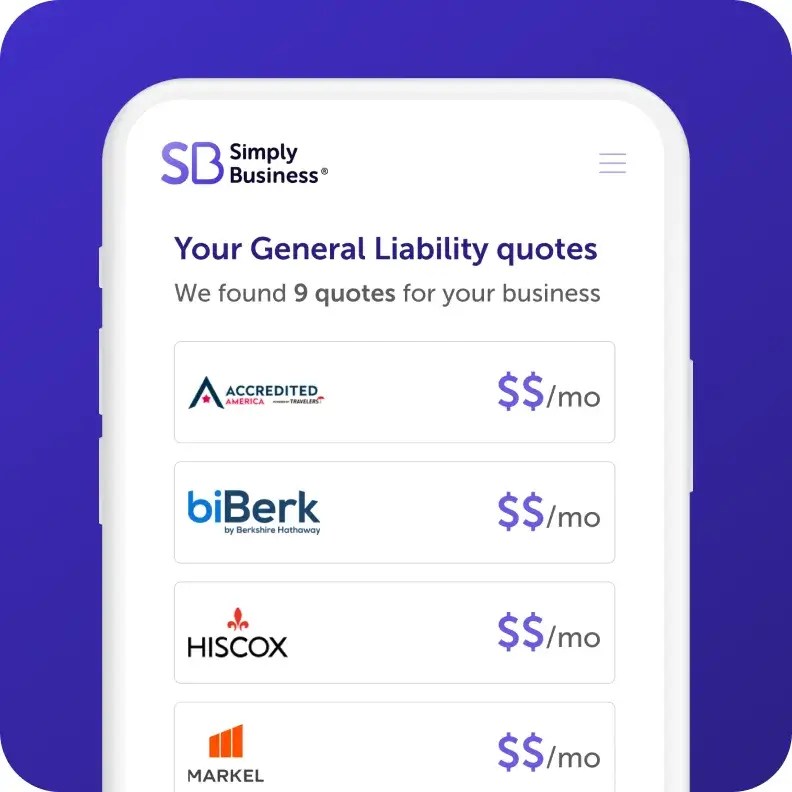
Review quotes
Compare quotes side by side from top-rated insurers and customize your coverage.

Get protected in minutes
Choose your policy, and get instant proof of insurance – all online, and all within 10 minutes.

Our +1 million customers worldwide are big fans. And you will be too.

I went online, looked around, and found Simply Business. The process was so seamless. I got my certificate within minutes. It was just phenomenal.

Karen
Owner of Tangaza Bath & Body Studio LLC
With Simply Business I know I can look at different carriers, but also see all my stuff in the same place… a lot of [insurance] providers don’t offer a variety of coverage, all in one place.

Jef
Owner of Bunker83 LLC
It wasn’t overwhelming to figure out what was covered and what wasn’t covered. And the cost was competitive.

Kim
Owner of Room to Breathe Professional Organizing

Written by
Feel confident in your choice.
We partner with a range of top-rated carriers and use smart technology to match you with policies that fit your specific business, your risks, and budget.

400+
business types covered

1M+
customers worldwide

18
top-rated carriers



We’ve Got More Helpful Information
*The displayed price for each product is a monthly estimate calculated from the 10th percentile of relevant policies sold by Simply Business (e.g., General Liability data is used for General Liability estimates). This estimate uses data from relevant policy sales between July–December 2025. Final price and payment terms, which may include an initial down payment, are subject to change based on your state, selected insurance provider, and specific business details.
‡ Displayed price is based on the lowest available coverage limit for Equipment and Small Tools policies.
Page last updated: