Flooring Contractor Cost & Coverage Guide for 2026

Rates as low as $20.75/month*
Over 1 million customers worldwide
Buy instantly online
See your price estimate in 3 steps.

Written by
Flooring Contractor Insurance
An adhesive spill ruins custom baseboards during a hardwood install, a homeowner trips on an exposed subfloor, an employee strains their back hauling heavy stone tile — flooring contractor insurance can help protect your business from the unexpected, so one jobsite mishap doesn’t pull the rug out from under your entire business.
This guide will break down the most common insurance coverages flooring installers buy, what they typically cost, and how you can lay down a solid foundation of protection for your business. We’ve got you covered.
What is Flooring Contractor Insurance?
Flooring contractor insurance is a combination of separate policies frequently bought by flooring professionals that can help protect your business from some of the most common risks of the trade — third-party property damage and bodily injury, accidents involving crew on the job, stolen or damaged tools, and business interruption.
Without the coverage your business needs, you could be paying out of pocket for property damage, legal fees, or medical bills.
How Much Does Flooring Contractor Insurance Cost?
Flooring contractors can purchase individual insurance policies starting at $27 to $132 per month, depending on the individual policy. Your final premium may vary based on factors such as your location, the type of work you do, the number of employees you have, your annual revenue, and your claims history.
Here is a breakdown of median costs¹ based on our recent customer data.
Average Costs1
| Insurance Policy | Median Monthly Cost | Median Annual Cost |
|---|---|---|
| General liability | $50 | $600 |
| Business owner’s policy | $48 | $576 |
| Contractor’s equipment and small tools | $27 | $324 |
| Workers’ compensation | $132 | $1,584 |
1Data from Simply Business customers specializing as “flooring contractors” who purchased at least one or a combination of General Liability, BOP, Contractor’s Equipment and Small Tools, and Workers’ Compensation policies from July 1, 2025 to December 31, 2025. The median costs shown are for illustrative purposes only; actual premiums vary by state, coverage limits, and individual business risk.
What Insurance Does a Flooring Contractor Typically Need?
Below is a list of common types of insurance flooring contractors need, why they should consider them, and how much they might cost.

General Liability
This foundational insurance for flooring contractors covers costs from third-party accidents, property damage, and bodily injury.
From
$50
/month2
General Liability is designed to protect your business when a customer gets hurt on your jobsite or you accidentally damage their property. For example, if a homeowner trips over an exposed subfloor during a multi-day tile install, or if you spill a dark stain on a client’s expensive rug, this coverage can help handle the financial damage.

Workers’ Comp
If you have employees — even just one assistant — most states require that you carry Workers’ Compensation. This policy helps cover medical bills and a portion of lost wages for employees who suffer a work-related injury or illness.
From
$132
/month2
Instead of paying out of pocket when a crew member is injured on the job, Workers’ Comp can help absorb the impact. For example, if a crew member twists their knee while carrying a heavy pallet of natural stone tile, this policy can help pay for their surgery and lost wages while they recover. Even if you operate solo, workers’ compensation insurance is highly recommended, because many personal health insurance policies do not cover work-related injuries.

Inland Marine
Your tools and equipment are vital to your operations. Inland marine insurance, sometimes called “tools and equipment coverage,” allows you to quickly repair or replace your business equipment, reducing downtime and helping you land new work. An inland marine policy also usually covers tools and equipment that you rent or lease – called contractor’s equipment floater.
From
$27
/month2
This coverage is designed to help safeguard your equipment and tools on the go. If thieves break into your locked work van while your crew is inside installing laminate, Contractor’s Equipment and Small Tools can help pay to replace your stolen miter saws, pneumatic nail guns, and laser levels.

Business Owner’s Policy (BOP)
A Business Owner’s Policy (BOP) typically bundles three key coverages — General Liability, Commercial Property, and business interruption insurance — into one convenient package. It’s designed to help protect your business from a range of common risks without the hassle and expense of managing multiple policies.
From
$48
/month2
A BOP can help protect physical assets — like your workshop and tools — while also replacing lost income from unexpected disasters that General Liability alone won’t cover. If a fire breaks out overnight from oil-stained rags and destroys your stacked hardwood inventory and office equipment, this package can help pay for repairs, ruined inventory, and lost income so your business can rebuild.
Who Needs Flooring Contractor Insurance
Flooring installation work covers a range of specialties, and many face similar risks. You may want to consider flooring contractor insurance if you’re a:
- Hardwood installer or refinisher operating heavy drum sanders, nailers, and flammable stains inside occupied homes, where a single nicked baseboard or dust containment failure can trigger a costly claim.
- Tile, stone, and grout specialist handling heavy slabs, wet saws, and mortars, where a cracked subfloor, uncoupled membrane failure, or a dropped tile can cause damage to expensive underlying property.
- Carpet installer moving heavy furniture and stretching carpet, where exposed tack strips, razor-knife slips, or loose seams create immediate trip-and-fall hazards for homeowners.
- Laminate, vinyl plank, and LVP installer prepping subfloors and cutting around intricate door casings, where an overlooked moisture issue or buckled planks lead to damage in the customer’s walls or underlying structure.
- Commercial flooring contractors laying high-traffic surfaces in offices, retail spaces, or schools, where working alongside other trades or the public increases your liability.
- Big-box installation subcontractor delivering and installing for major home improvement retailer programs, which require a current Certificate Of Insurance (COI) before dispatching jobs.
- Independent subcontractor partnering with general contractors or property management groups that mandate verified liability coverage before you can step onto the jobsite.
Whatever your specialty, if you work on client property, handle expensive tools and equipment, or employ a crew, insurance can help protect what you’ve built.
Frequently Asked Questions
If you have employees, most states require that you carry workers’ compensation. While state laws rarely mandate general liability coverage for every job, some states and local licensing boards require it to obtain your contractor license. You may also need it to secure work — general contractors, property managers, and big-box installation programs often require proof of liability insurance before dispatching a job. Check with your local trade licensing board to confirm local rules and requirements
Flooring installers work directly inside occupied homes and active commercial spaces where heavy equipment, flying dust, and chemical adhesives create everyday hazards. So while it may not be mandated by state law, general liability is widely considered a foundational coverage. If a heavy tile slips and smashes a custom tub, or a drum sander gouges a baseboard, general liability can help cover the repair costs and protect your business from out-of-pocket claims.
Yes, in most cases. General liability insurance is designed to cover third-party property damage caused by your ongoing operations. For example, if you accidentally nick a custom kitchen island while maneuvering a heavy bundle of hardwood, or spill dark wood stain onto a customer’s custom rug, your general liability policy can help cover the repair or replacement costs up to your policy limits.
Possibly. But only if your general liability policy includes “completed operations” coverage. Flooring contractors face significant post-job exposure such as a tile floor that cracks or a hardwood floor that buckles and lifts months after installation. Completed operations coverage specifically handles claims for resulting third-party bodily injury or property damage, but it does not cover the cost of repairing or replacing your defective work.
No. A standard general liability policy excludes your own property and gear. Because flooring installers transport high-value tools like floor nailers, drum sanders, wet saws, and moisture meters, you may want to consider contractor’s equipment and small tools coverage, also known as inland marine insurance. This essential policy can help protect your toolkit from theft or damage while in transit or at an active job site.
Sometimes, but not automatically. Your general liability policy may cover damage caused by subcontractors working on your behalf, depending on your policy terms. But many insurers expect subcontractors to carry their own liability coverage, and some policies exclude sub work entirely. Before sending a sub on a job, ask to see their Certificate of Insurance and confirm with your insurer whether your policy covers work performed by subcontractors, not just your employees.
Usually, yes. COIs for most policies are available as soon as you purchase your coverage. With Simply Business, you can download and share your COI instantly through your online account or right from your phone — useful when a general contractor, retail installation program, or property manager needs proof before dispatching a job.
Most commercial policies are annual agreements paid either in full upfront or via monthly payment plans. While you might only need coverage for a massive, multi-week commercial installation, short-term or “per-project” policies are rare for independent contractors. Maintaining year-round coverage ensures your business remains protected from ongoing exposures even between active jobs.
Your insurance premium depends on several factors, including, but not limited to:
- The types of flooring materials you install (e.g., hardwood, stone, and tile vs. laminate and carpet)
- Your business location and geographic service area
- Your annual revenue and total payroll
- The replacement value of your tools, mobile equipment, and gear
- The number of employees or subcontractors you use
- Your chosen policy types, coverage limits, and deductibles
- Your commercial claims history and years in business
Often, yes. Commercial flooring work typically involves larger square footage, high-traffic active construction zones, stricter safety compliance regulations, and heavier equipment, which can mean greater liability exposure and higher premiums. Some insurers also require different policy classifications for commercial versus residential work, so it’s worth confirming what’s covered if you do both.
Yes, it can. Insurers look at the inherent risks of the materials you handle. For example, hardwood flooring often involves toxic stains and heavy drum sanders that can cause extensive property damage if mishandled. Tile and stone installations involve heavy materials and wet saws, increasing workers’ comp exposure. Laminate, luxury vinyl plank (LVP), and carpet installations generally carry slightly lower inherent risks, which can reflect favorably on your premium.
A few ways to keep strong protection while trimming costs:
- Bundle smartly: A BOP can be more cost-effective than buying general liability and commercial property insurance separately.
- Right-size your limits: A solo installer doing small residential upgrades has different exposure than a multi-crew operation working with large home builder networks. Make sure your limits match your actual risk.
- Reduce preventable claims: Lock and secure tools in your van’s cargo area, follow strict manufacturer installation and moisture testing specs, and document each job — fewer incidents on your record means lower renewals over time.
- Keep your info current: Accurate revenue and payroll figures help avoid overpaying for coverage you don’t need during an audit.
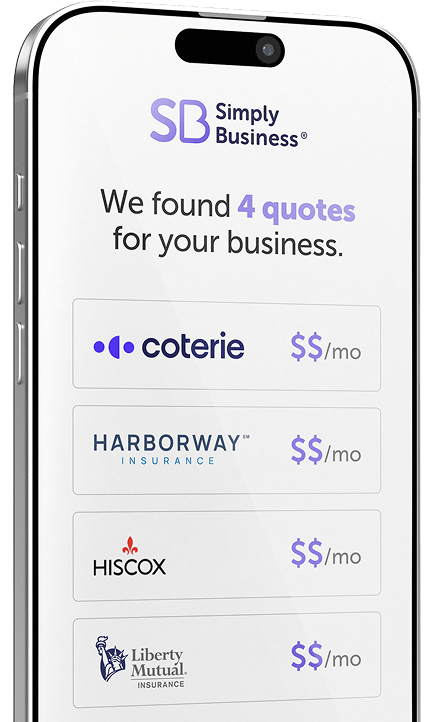
- Compare options: Simply Business provides customized coverage recommendations and flooring contractor insurance quotes from top-rated small business insurers so you can see them side by side.

Written by
Why Small Businesses Choose Simply Business
Small business insurance is what we do. Whether it’s covering you for accidents and errors, meeting workers’ comp requirements, or financially protecting your business from the unexpected, we can help find the coverage you need for your business.

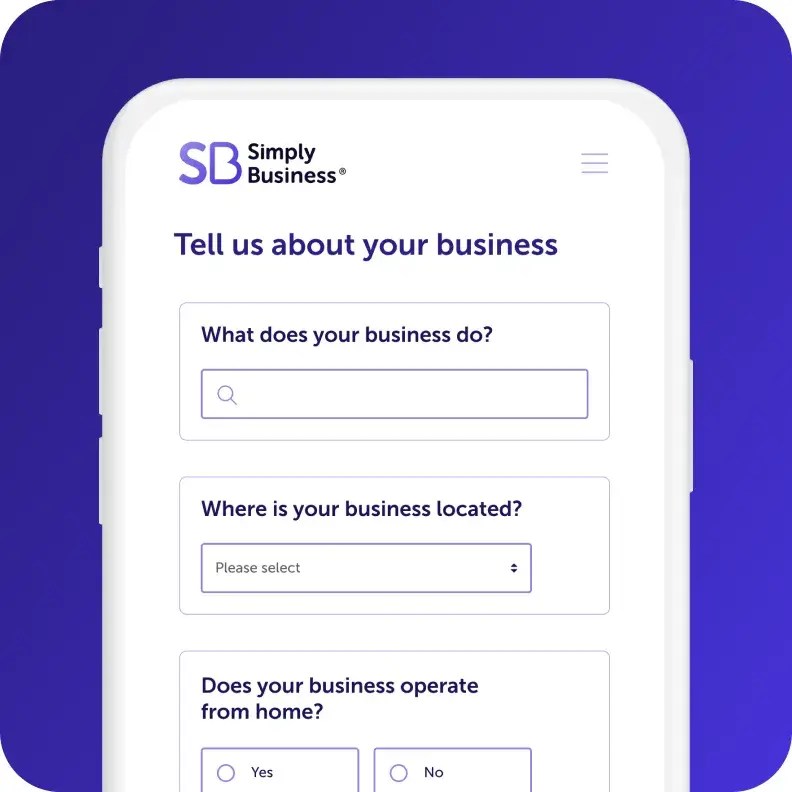
Start your quote
Answer a few questions about
your business in one form.

Review quotes
Compare quotes side by side from top-rated insurers and customize your coverage.


Get protected in minutes
Purchase your policy, and get instant proof of insurance – all online, and all within 10 minutes.

Get quotes for your
Flooring Contractor insurance today.
Simply Business provides customized coverage options from top-rated small business insurers — all in just 10 minutes. We do all the leg work so you can sit back, compare quotes, and save.
Our +1 million customers worldwide are big fans. And you will be too.

I went online, looked around, and found Simply Business. The process was so seamless. I got my certificate within minutes. It was just phenomenal.

Karen
Owner of Tangaza Bath & Body Studio LLC
With Simply Business I know I can look at different carriers, but also see all my stuff in the same place… a lot of [insurance] providers don’t offer a variety of coverage, all in one place.

Jef
Owner of Bunker83 LLC
It wasn’t overwhelming to figure out what was covered and what wasn’t covered. And the cost was competitive.

Kim
Owner of Room to Breathe Professional Organizing
Feel confident in your choice.
We partner with a range of top-rated carriers and use smart technology to match you with policies that fit your specific business, your risks, and budget.

400+
business types covered

1M+
customers worldwide

18
top-rated carriers












We’ve Got More Helpful Information


*The displayed price for each product is a monthly estimate calculated from the 10th percentile of relevant policies sold by Simply Business (e.g., General Liability data is used for General Liability estimates). This estimate uses data from relevant policy sales between July–December 2025. Final price and payment terms, which may include an initial down payment, are subject to change based on your state, selected insurance provider, and specific business details.
‡ Displayed price is based on the lowest available coverage limit for Equipment and Small Tools policies.
Page last updated: