
Home & Commercial Outdoor
Maintenance Insurance
Compare quotes for landscapers, lawn care, and outdoor maintenance businesses.
Trusted by +1M small business owners worldwide
No junk mail. No spam calls. Free quotes.
Find your trade
Select your trade to see coverage options tailored to your day-to-day work.

LandscapingFrom $29.17/month*

Lawn CareFrom $29.17/month*

Power WashingFrom $41.67/month*

Window CleaningFrom $48.33/month*

Written by
What Insurance Do Outdoor Maintenance Businesses Need?
Accidental property damage, customer injuries, worker injuries, vehicle accidents, and damage or breakage to tools and equipment are common risks in outdoor maintenance businesses.
General liability is a core business insurance policy. Depending on your unique business, you also may need some combination of commercial auto insurance, tools & equipment insurance, workers’ compensation insurance, or a business owner’s policy.
The right combination of insurance coverages can help protect your business from unexpected costs and keep your business going when things go wrong.
General liability insurance is highly recommended (and often required by client contracts) for home and commercial outdoor maintenance businesses. It protects your business from bodily injury or property damage to a customer or another third party.
Look at these examples of how a general liability policy can protect the following home and outdoor maintenance businesses. Check your official policy for any excluded services.
- Residential and commercial landscaping liability insurance: A client trips over a large water hose, injuring their leg.
- Lawn care business insurance: A large mower launches rocks and wood chips, causing an injury to a passerby.
- Home maintenance business insurance: While mowing a client’s yard, a worker damages a hidden sprinkler head.
- Window cleaning insurance: A window washer is cleaning windows on a second-story building. They dropped a tool, which hit and injured someone walking on the ground level.
In these and other examples, general liability insurance can help cover third-party bodily injury and property damage costs, as well as related legal expenses if a customer files a claim. Actual coverage and payouts are subject to the policy’s specific deductibles, terms, limits, and exclusions.
Watch Out
General liability policies typically exclude coverage for claims involving damage for companies that use chemicals or pesticides. Your company may need to obtain pollution liability to cover these types of risks.
Workers’ compensation insurance can help protect your business when an employee becomes ill or injured because of their work. Workers’ compensation is not required in most states for sole proprietors (check your state laws and regulations for requirements), but you can get sole proprietor workers’ compensation to insure yourself in some states where you are the only employee.
Common risks to workers for outdoor maintenance businesses can include injuries, falls, lifting accidents, exposure to harsh weather, and more.
A workers’ compensation policy can help cover an injured employee’s medical care, rehabilitation expenses, and a portion of their lost wages. In most cases, accepting workers’ compensation benefits acts as the exclusive remedy for covered injuries, effectively barring the employee from suing the company and providing a clear path to early dismissal if a lawsuit is filed.
As an example, if a worker falls off a ladder while cleaning gutters or trimming high tree branches, a workers’ compensation claim generally helps pay for an emergency room visit, hospitalization, tests, surgeries, and treatment. The worker would usually also receive payments for a portion of their lost wages.
Payments to workers are subject to the policy and state requirements. You can find out about your state’s workers’ compensation requirements at your state insurance department’s website.
Did you know?
State regulations vary, and it’s important to know the laws in your state. States often require workers’ compensation if you have a certain number of employees. State regulations also specify who can be covered, such as the owner; partners; corporate officers; and part-time, full-time, seasonal, and contract employees.
Your business relies on tools and equipment every day. Outdoor maintenance businesses generally spend thousands of dollars on equipment such as mowers, blowers, trimmers, pressure washers, trailers, and other similar equipment. It could be stolen, damaged, or destroyed, causing you to shut your operation down.
Tools & equipment coverage, also called inland marine insurance, can help with costs to repair or replace tools and equipment.
For example, if a forklift accidentally backs into a portable generator, damaging it beyond repair, your tools & equipment insurance policy may pay to replace it.
Did you know?
State regulations vary, and it’s important to know the laws in your state. States often require workers’ compensation if you have a certain number of employees. State regulations also specify who can be covered, such as the owner; partners; corporate officers; and part-time, full-time, seasonal, and contract employees.
A business owner’s policy (BOP) combines general liability with commercial property coverage, giving your outdoor maintenance business important coverages in one policy.
In addition to protecting your business from third-party liability claims, it also helps pay for losses to your business property. It can cover items you use in your business such as office equipment and supplies, and other equipment stored at your business location.
If fire, wind, or hail destroys your business property, the insurance policy will help pay to replace those business items.
Did you know?
Your payment is subject to the policy terms, limits, deductibles, and exclusions, just as with other commercial policies.
Home and commercial outdoor maintenance businesses typically rely on trucks, vans, or trailers to transport employees, tools, equipment, and materials to jobsites.
Commercial auto insurance is designed to protect your maintenance service from losses involving vehicle damage and liability for injuries or property damage for workers driving work vehicles.
As an example, if an employee of your landscaping business is driving a company truck to a client’s property and causes an accident, your commercial auto insurance may help cover another driver’s vehicle damage and medical expenses. If the policy includes physical damage (collision coverage), the policy also may cover the damage to your work vehicle.
Quick tip
Your coverage depends on your exact policy of the company that insures you. Your state may also have rules for weight limits, cargo type, and business use.
A Note on Seasonal Businesses
Depending on the region, many outdoor maintenance businesses operate only seasonally. Risks are higher during the peak season and lower in the off-season, yet insurance covers the business for the entire year.
Outdoor maintenance businesses generally use their off-seasons to maintain their vehicles and equipment. However your business is structured, it’s important to have the right insurance coverage, even during the off-season.
Watch Out
It may seem that you don’t need insurance coverage during the off-season, yet depending on your business, a cancellation may leave you with coverage gaps.
Licensing Requirements for Outdoor Maintenance Work
Your outdoor maintenance business may be legally required to carry a business license or permit, depending on your business and the regulations in your local area and state.
For example, specialized services such as pesticide application, tree removal, and irrigation installations commonly require certifications or permits.
It’s important to check with your local and state licensing authorities to learn which licenses, permits, registrations, and certifications are necessary for you and your crew to begin working.
State and local authorities also may require your business to have certain insurance requirements. You must purchase the proper coverage to operate your business legally. Once you have it, you can have proof of coverage by showing a certificate of insurance (COI).
Did You Know?
Commercial property owners and government clients often require proof of proper licensing.
How Much Does Outdoor Maintenance Insurance Cost?
Here’s a look at the median costs1 for business insurance for outdoor maintenance businesses:
| Policy | General Liability | Workers’ Compensation | Inland Marine |
|---|---|---|---|
| Landscaper | $32 | $111 | $43 |
| Lawn care | $31 | $100 | $29 |
| Pressure washing | $91 | $131 | $27 |
1Data from Simply Business customers identified as “landscapers,” “lawn care services,” or “pressure washing,” who purchased at least one or a combination of general liability, workers’ compensation, or inland marine policies from July 1, 2025 to December 31, 2025.
How to Get Covered with Simply Business

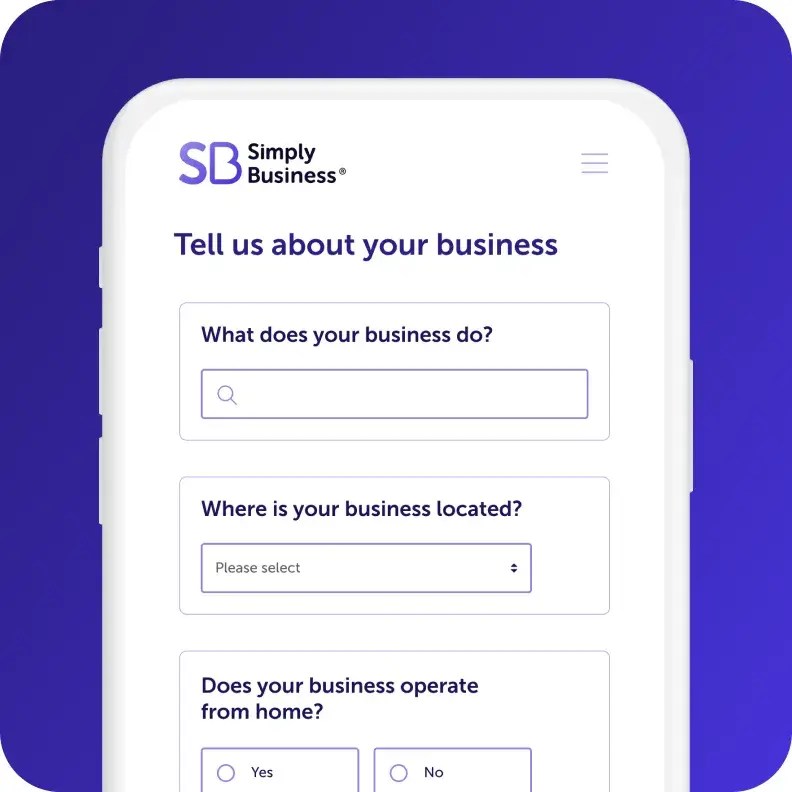
Tell us about your business
Answer a few questions about the work you do.your business in one form.

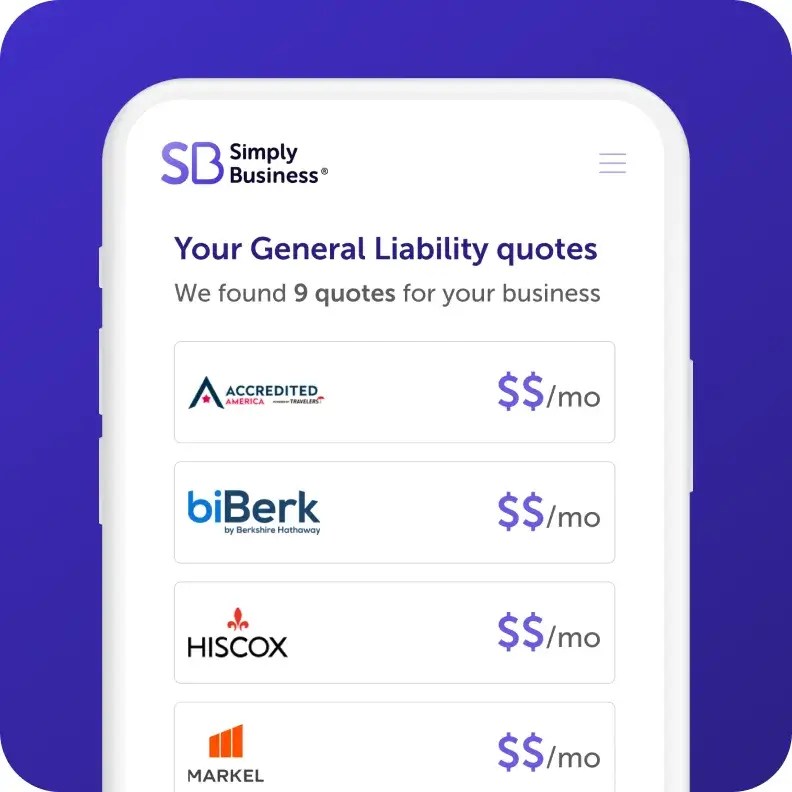
Review quotes
We’ll show you policies from top carriers so you can pick the coverage and price that work for you.

Get protected in minutes
Buy online in under 10 minutes. Download your certificate of insurance right away.

Frequently Asked Questions
Landscaping and lawn care businesses typically need general liability, commercial auto, and tools and equipment coverage to cover the scope of their operations. Depending on the state and number of employees, you also may need workers’ compensation insurance.
Yes, you typically need commercial auto insurance to comply with state laws for vehicles used for business purposes, covering your work truck for bodily injury and property damage to others. Liability coverage typically extends to the trailer while it’s being towed, though physical damage coverage for the trailer must be scheduled separately. Personal auto insurance policies generally do not cover accidents that occur with work trucks.
Yes, if your state law requires you to have workers’ compensation for non-regular and full-time employees. In some states, you may not have to carry workers’ compensation if you have fewer than a certain number of employees. State rules may be different for construction or agricultural workers.
Yes. Commercial policies cover your operations and workers all year, even when the business is closed or doesn’t have active employees. Insurance companies generally adjust premiums for seasonal business insurance to account for the months your business is closed or minimally operating.
In most cases, outdoor maintenance businesses need a general business license to operate legally. Depending on state and local laws, they also may need specialized licenses, especially if they’re working with chemicals or working on large installations.
No. General liability policies don’t cover damage caused by pesticides and similar chemicals, as they typically carry an exclusion for pollution damage. You can purchase a separate pollution liability policy to cover this type of loss.
Our +1 million customers are big fans. And you will be too.

Straight forward easy process and simply fantastic.

Don S.
Lawn care services, West Virginia
It was an easy and efficient process to get insurance.
Roger D.
Landscaping, Arizona
Written by
Feel confident in your choice.
We partner with a range of top-rated carriers and use smart technology to match you with policies that fit your specific business, your risks, and budget.

400+
business types covered

1M+
customers worldwide

18
top-rated carriers



We’ve Got More Helpful Information


*The displayed price for each product is a monthly estimate calculated from the 10th percentile of relevant policies sold by Simply Business (e.g., General Liability data is used for General Liability estimates). This estimate uses data from relevant policy sales between July–December 2025. Final price and payment terms, which may include an initial down payment, are subject to change based on your state, selected insurance provider, and specific business details.