
Food & Restaurant Business Insurance
Compare quotes for food and restaurant businesses from top-rated carriers.
Trusted by +1M small business owners worldwide
No junk mail. No spam calls. Free quotes.
Find your trade
Select your trade to see coverage options tailored to your day-to-day work.


Written by
What Insurance Does a Food Business Need?
Most food businesses build their protection from a handful of core policies. Here are some of the most common types of insurance policies that food businesses buy and what those policies cover.
General liability insurance is where nearly every food business starts, and many landlords and event venues will ask to see proof of it before you begin operating. It can help cover third-party claims of bodily injury and property damage — let’s say a customer gets hurt after slipping on a wet floor in your dining room or tripping over a loose rug.
General liability policies also typically include product liability coverage, which can help defend your business if a customer alleges that your food caused an allergic reaction or foodborne illness. General liability coverage limits for food businesses usually run $1 million per occurrence and $2 million aggregate — these are the numbers most leases and vendor contracts are looking for.
If your business sells or serves alcohol, don’t count on your general liability policy to step in. Standard general liability policies typically exclude alcohol-related claims for any business that manufactures, distributes, sells, serves, or furnishes alcohol — and that exclusion surprises many operators. The stakes are real: Dram shop laws in over 40 states and Washington, D.C., can hold your business responsible for injuries or property damage caused by an intoxicated patron, even after they’ve left your establishment.
Liquor liability insurance can help cover legal defense costs, settlements, and third-party medical expenses from those claims. In some states there’s a legal layer too: Michigan, for example, requires retail liquor licensees to show at least $50,000 worth in financial responsibility — a requirement most businesses meet with liquor liability insurance.
Workers’ compensation insurance is required by law in nearly every state, though the exact employee count threshold varies (e.g., some states require it at three, four, or five employees) — Texas and South Dakota are the only states that allow most private employers to completely opt out from providing workers’ comp coverage. It’s easy to see why regulators take kitchens seriously: workers can easily get hurt working with hot fryers, sharp knives, slick floors, and heavy lifting all shift long. Cuts are the most frequent restaurant workers’ comp claim, but slips and falls drive the biggest share of claim costs — and a single serious burn or back injury can run from $60,000 well into six figures.
Workers’ comp typically pays medical expenses and a portion of lost wages for injured employees, and it can help protect you from employee lawsuits over workplace injuries. Premiums for restaurants typically average between 1% and 3% of payroll — and in most states, tips don’t count toward that payroll calculation.
A Business owner’s policy (BOP) bundles general liability and commercial property insurance into a single policy, which often costs less than buying each separately. The property side can help protect the physical things you’ve poured money into — ovens, walk-in freezers, point-of-sale (POS) systems, and dining room fixtures — against covered events like fire, theft, wind, and vandalism. One add-on worth asking about: food spoilage coverage. Standard property insurance generally won’t reimburse you for inventory lost to a power outage or refrigeration breakdown, but a spoilage endorsement can help replace perishable stock when the walk-in refrigerator gives out at the worst possible moment.
If your business owns vehicles — for deliveries, catering runs, or mobile food service — you’ll need commercial auto insurance. Personal auto policies typically exclude business use, which means a claim from an accident on a catering run could be denied outright. Commercial auto can help cover third-party injuries and property damage from an accident, along with physical damage to the vehicle itself. For food trucks, it typically extends to permanently attached kitchen equipment, such as built-in fryers and ventilation hoods.
If your staff deliver food in their own vehicles, don’t stop there. Their personal vehicle policies generally exclude delivery driving, and when an employee causes an accident on a run, liability can flow up to your business. Hired and non-owned auto (HNOA) coverage is built for exactly this scenario — it can help protect your business when employees drive personal vehicles for work. It typically won’t cover damage to the employee’s own vehicle, so many owners also require delivery staff to carry a business-use endorsement on their personal policies.
Using a delivery app such as Uber Eats or DoorDash instead? Those couriers are not your employees but instead have a relationship with the platform. The major platforms carry liability coverage for active deliveries, which keeps most of the road risk on their side. Still, injured parties sometimes name every business in the chain, so it’s worth reviewing your platform agreement’s insurance terms and asking your insurer whether and how your policy or policies would respond if your restaurant were named in a delivery-related claim.
A Note on Food Trucks
A food truck is really three businesses in one: a restaurant, a vehicle, and a rolling warehouse of expensive equipment. That’s why standard restaurant packages tend to fall short — they don’t account for road exposure or a venue that changes daily.
Beyond commercial auto and general liability, food trucks typically need inland marine insurance, often structured as a tools and equipment floater. Here’s the gap it fills: Commercial property insurance generally protects assets only at a fixed address, and commercial vehicles don’t cover loose cargo. Inland marine coverage can help protect the gear that travels with you — portable generators, POS tablets, loose cooking tools, and food inventory — against theft or damage between venues.
Home-Based Food Businesses and Cottage Food Laws
Home-based food businesses have boomed in recent years, helped along by state cottage food laws that allow you to sell shelf-stable, lower-risk foods such as breads, cookies, and fruit jams, made in your own kitchen. The rules vary quite a bit by state: Texas, for example, has expanded both the foods allowed and the registration requirements for cottage food producers. It’s important to check your state’s rules before you sell.
Here’s the part that catches many home bakers off guard: Most homeowner’s policies won’t cover your business. Homeowners’ policies typically contain a “business pursuits” exclusion, meaning claims that arise from a commercial operation working out of their home are generally denied.
If a customer slips on your porch while picking up a cake order, or has a severe allergic reaction to a mislabeled ingredient, you would likely be on your own. A dedicated cottage food business policy can fill that gap with general and product liability protection, and it can provide the proof of insurance many farmers’ markets and event venues ask for.
How Much Does Food Business Insurance Cost?
What you’ll pay depends on how you operate, among several other factors, but here is a look at the median costs1 for the most common policies food business and restaurant owners purchase.

Restaurants
| Policy | Median Monthly Cost | Median Annual Cost |
|---|---|---|
| Business Owner’s Policy | $144 | $1,728 |
| Workers’ Compensation | $100 | $1,200 |

Caterers
| Policy | Median Monthly Cost | Median Annual Cost |
|---|---|---|
| General Liability | $25 | $300 |
| Professional Liability | $38 | $456 |
| Workers’ Compensation | $100 | $1,200 |
| Inland Marine | $24 | $288 |

Home-based bakeries
| Policy | Median Monthly Cost | Median Annual Cost |
|---|---|---|
| General Liability | $22 | $264 |
| Workers’ Compensation | $100 | $1,200 |

Food trucks
| Policy | Median Monthly Cost | Median Annual Cost |
|---|---|---|
| Business Owner’s Policy (BOP) | $49 | $588 |
| General Liability | $24 | $288 |
| Workers’ Compensation | $100 | $1,200 |
1Data from Simply Business customers specializing in the identified trade who purchased at least one or a combination of general liability, BOP, inland marine, professional liability, or workers’ compensation policies from July 1, 2025 to December 31, 2025.
How to Get Covered with Simply Business
Getting the appropriate coverage for your business begins with an accurate picture of your risks. Before you compare quotes, pull together your estimated payroll, projected annual revenue, and the replacement value of your kitchen equipment — and be upfront about how you operate, whether that’s serving alcohol, offering delivery, running deep fryers, or crossing state lines for festivals. The details you share shape the coverage you receive.
Because pricing and carrier appetite vary widely across the market, comparing quotes can help you save. We bring quotes from top-rated carriers that understand food and beverage businesses into one place, so you can compare options online and get covered in minutes — with a certificate of insurance (COI) available the same day. In fact, a COI is often the piece leases and event contracts hinge on: Many require at least $1 million in general liability coverage and additional insured status, so review yours before you pick your limits.

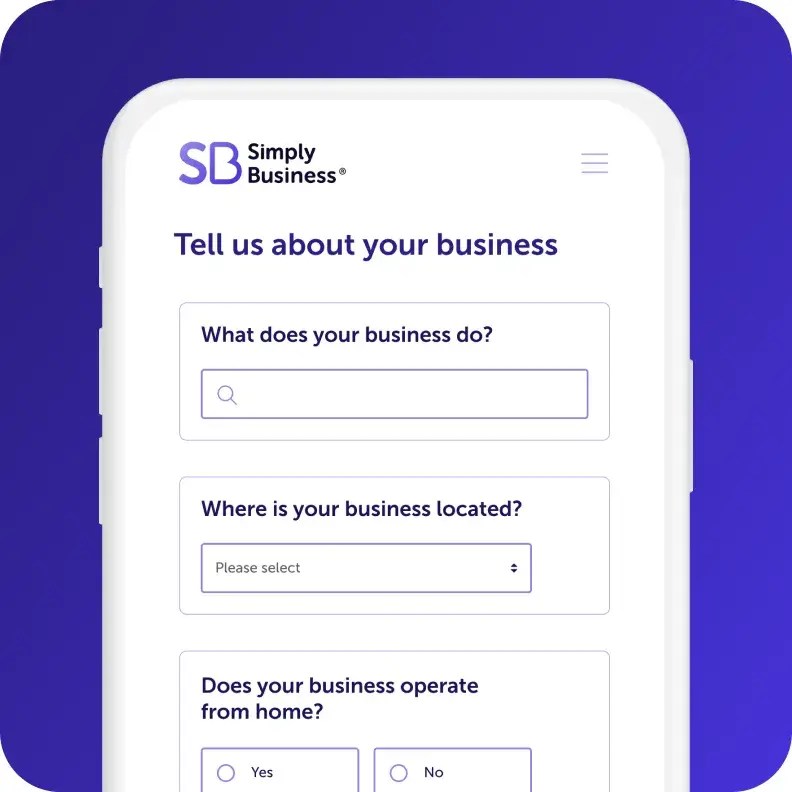
Tell us about your business
Answer a few questions about the work you do.your business in one form.

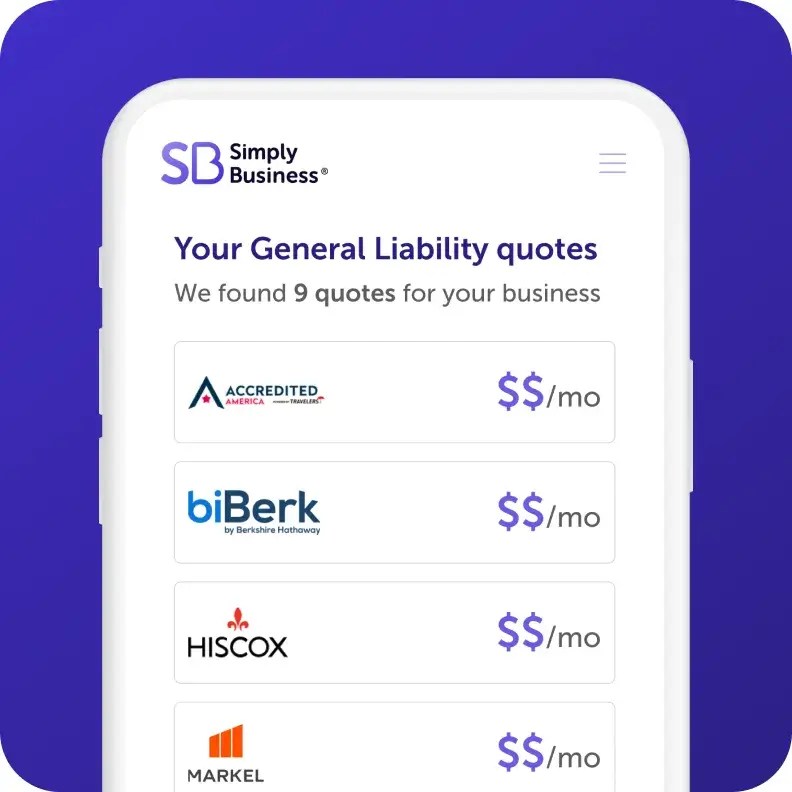
Review quotes
We’ll show you policies from top carriers so you can pick the coverage and price that work for you.

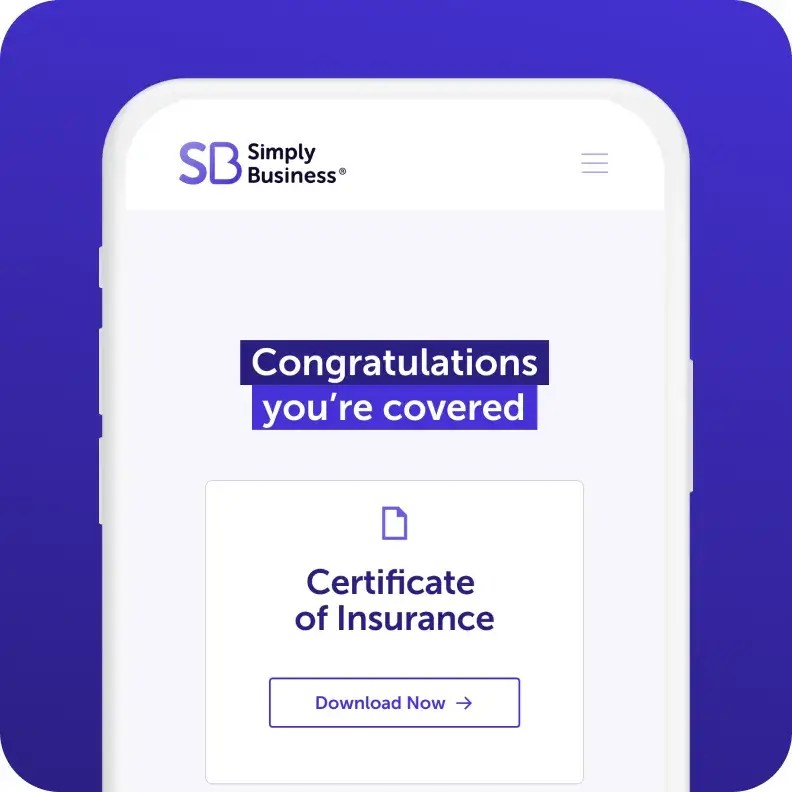
Get protected in minutes
Buy online in under 10 minutes. Download your certificate of insurance right away.
Our +1 million customers are big fans. And you will be too.

The representative was wonderful. Super helpful and ultimately helped me make the best decision.

Ryan. S
Restaurant owner, North Carolina
The process was simple to sign up and the cost was good. I already recommended you.
Beverley C.
Home bakery business owner, West Virginia
Frequently Asked Questions
Most food businesses combine several policies to cover all their risks. The typical foundation is a BOP, which bundles general liability and commercial property coverage. From there, you’ll likely need workers’ compensation when you have employees (it’s required by law in almost every state, though thresholds vary by state) liquor liability if you serve alcohol, and commercial auto if your business uses vehicles.
If you serve alcohol, in most cases “yes.” General liability policies typically exclude claims related to commercial alcohol service, and under dram shop laws in most states and Washington, D.C., your business can be held liable if an intoxicated patron injures someone or damages property after being served at your establishment. Liquor liability insurance can help cover those claims — and some states require licensees to show proof of financial responsibility, which most businesses meet with liquor liability coverage.
Not automatically. Standard commercial property coverage generally excludes spoiled inventory, so you would need to add a spoilage endorsement to help reimburse perishable stock lost to a power outage or refrigeration breakdown. That’s different from food contamination — a customer getting sick from your food is a liability issue that general liability’s product liability coverage can help with, while a contamination event that shuts down your kitchen may call for separate food contamination coverage.
Yes. In addition to general liability, food trucks need commercial auto insurance for the vehicle itself and typically inland marine insurance to help protect unattached equipment — generators, POS systems, loose tools, and inventory — while on the road or parked at an event.
It depends on who is driving and what is being driven. If your business owns delivery vehicles, you’ll need commercial auto insurance. If employees deliver in their own vehicles, HNOA coverage can help protect your business if their personal auto policies — which generally exclude delivery driving — don’t respond. And if you use a third-party app such as Uber Eats or DoorDash, the platforms should carry liability coverage for active deliveries, but it’s smart to review your platform agreement and confirm with your insurer regarding how your policies would respond if your restaurant were named in a claim.
Yes. Standard homeowner’s policies usually contain a business pursuit exclusion and generally won’t cover commercial activity or business equipment in your home. A dedicated cottage food policy can help protect against product liability claims (like a foodborne illness or allergic reaction) and injuries on your property related to the business.
Product liability coverage — typically included in general liability policies — can help protect your business if a customer alleges your food caused them harm. That includes food poisoning, physical contaminants like glass or plastic, and allergic reactions tied to undisclosed ingredients, covering legal defense, as well as settlements or medical costs up to the policy’s limits.
The median monthly cost1 for a restaurant BOP policy is $144. It also depends on your state, and with a full package costing more once you add Workers’ Comp and any Liquor Liability coverage. Your price depends on location, revenue, property value, payroll, and whether you serve alcohol — comparing quotes is the fastest way to see your actual number.
Written by
Feel confident in your choice.
We partner with a range of top-rated carriers and use smart technology to match you with policies that fit your specific business, your risks, and budget.

400+
business types covered

1M+
customers worldwide

18
top-rated carriers

















We’ve Got More Helpful Information
9-minute read
How to Start a Home Bakery


*The displayed price for each product is a monthly estimate calculated from the 10th percentile of relevant policies sold by Simply Business (e.g., General Liability data is used for General Liability estimates). This estimate uses data from relevant policy sales between July–December 2025. Final price and payment terms, which may include an initial down payment, are subject to change based on your state, selected insurance provider, and specific business details.
Page last updated: