
Cleaning, Maintenance & Repair Insurance
Compare quotes for cleaning, maintenance, and repair businesses from top-rated carriers.
Trusted by +1M small business owners worldwide
No junk mail. No spam calls. Free quotes.
Find your trade
Select your trade to see coverage options tailored to your day-to-day work.


Written by
What Insurance Do Cleaning, Maintenance, and Repair Businesses Need?
From weekly office cleaning contracts to one-time move-out jobs, most pros build their small business insurance around a few core coverages:
General liability insurance helps cover third-party claims of bodily injury or property damage — like a client slipping on a freshly mopped floor, or a vase knocked over while you’re dusting.
Best for: Every cleaning, maintenance, and repair professional who works on someone else’s property.
A business owner’s policy (BOP) bundles general liability with commercial property coverage to typically help protect the equipment and inventory stored at your primary business premises against fire, theft, and vandalism.
Best for: Businesses with an office, storage space, or expensive equipment to protect.
Workers’ compensation insurance helps pay medical bills and lost wages if an employee is hurt on the job — important in a line of work with lifting, ladders, and cleaning chemicals.
Best for: Any business with employees. Workers’ comp takes care of both you and your team — and most states require it once you hire your first employee, though requirements vary by state.
Tools and equipment insurance (also called inland marine insurance) typically helps cover your equipment while it’s on the move, so a stolen carpet extractor or pressure washer doesn’t stop your workday.
Best for: Mobile businesses that carry their equipment from job to job.
Commercial auto insurance typically helps cover the vehicles your business owns, because most personal auto policies don’t cover business use — so if your van full of equipment gets rear-ended between jobs, you’re covered. At the moment, Simply Business doesn’t offer commercial auto insurance, but we can direct you to a trusted partner who does.
Best for: Businesses with vans, trucks, or crews driving between job sites.
How Much Does Cleaning Business Insurance Cost?
Here’s a look at the median monthly prices Simply Business customers in housekeeping and maid services paid for common policies:
| Policy | Median Monthly Cost1 |
|---|---|
| General liability | $29 |
| Workers’ compensation | $102 |
| Tools and equipment | $27 |
1Data from Simply Business customers specializing as a housekeeping or maid business who purchased the identified policy from July 1, 2025 to December 31, 2025.
There’s no one-size-fits-all price. What you’ll pay depends on a few things:
- The work you do: Higher-risk jobs, like window washing at heights, usually cost more to insure than interior cleaning.
- Your team: Workers’ comp is priced on payroll, so premiums grow as you hire.
- Your revenue: More jobs mean more chances for a claim, so insurers factor in annual revenue.
- Your location: Rates and requirements vary by state.
Comparing quotes from multiple insurers is one of the easiest ways to find coverage that fits your business and your budget. For a closer look at typical prices, see our cleaning business insurance cost guide — or get a quote and see prices for your specific business in minutes.
Bonded vs. Insured: What’s the Difference?
Insurance helps protect your business; a bond helps protect your client.
If a team member accidentally breaks something, insurance helps to protect you and cover the claim. A bond plays a similar role, but for the client.
For example, most liability policies exclude employee theft, so clients may ask for separate bond, and the bond company will reimburse the client if an employee steals from their home or office. Similar theft protection is available as an add-on to some insurance policies, but many clients and contracts ask for a bond by name — and being able to say “yes, we’re bonded” is often what wins the job.
One more difference worth knowing: with insurance, you don’t pay the insurer back after a covered claim. With some bonds — license bonds especially — your business may need to repay the bond company for claims it pays out.
Type of Bonds
“Bonded” can mean different things depending on your trade and the job. In the case of cleaning businesses, that usually means a janitorial bond (also called a business service bond). Here are the other bonds these businesses run into most:
| Bond type | What it does | When you might need it |
|---|---|---|
| Janitorial bond (business service bond) | Reimburses your client if an employee steals from their home or business | Cleaning teams working unsupervised in clients’ spaces; often requested by residential clients and property managers |
| License or permit bond | Guarantees you’ll follow local licensing rules | Repair trades in cities or counties that require a bond before issuing a contractor or home improvement license |
| Bid bond | Assures a client you’ll honor your bid and sign the contract if you win it | Bidding on government or large commercial cleaning and maintenance contracts |
| Performance bond | Guarantees you’ll complete the work as contracted | Large or long-term commercial contracts, especially government facilities |
| Employee dishonesty coverage | Protects your own business from employee theft; can be extended to cover clients’ property | Businesses that want theft protection built into an insurance policy instead of a standalone bond |
If a client or licensing office asks you to be bonded, check which type they mean. For a deeper look, see our guides to surety bonds for small businesses and what bonded and insured means.
Either way, many clients — especially property managers — will want you both bonded and insured before they’ll sign a contract. A bond protects your client; for the insurance side, we can show you quotes from multiple carriers in minutes. And coverage needs differ by client type: commercial cleaning jobs like offices and medical buildings often require higher liability limits and an additional insured endorsement, while residential work usually doesn’t.
How to Get Covered with Simply Business

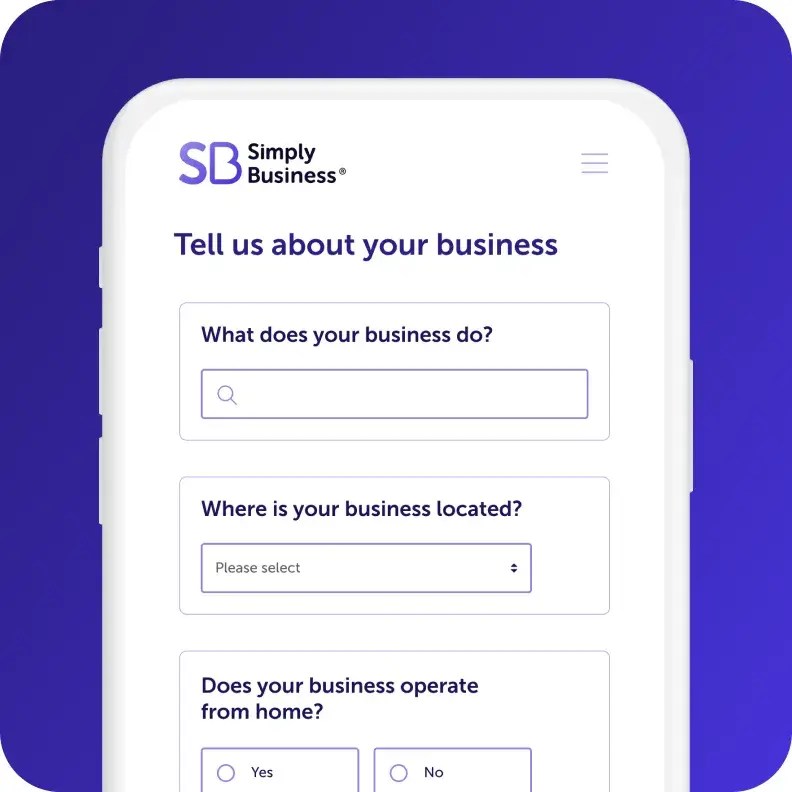
Tell us about your business
Answer a few questions about the work you do.your business in one form.

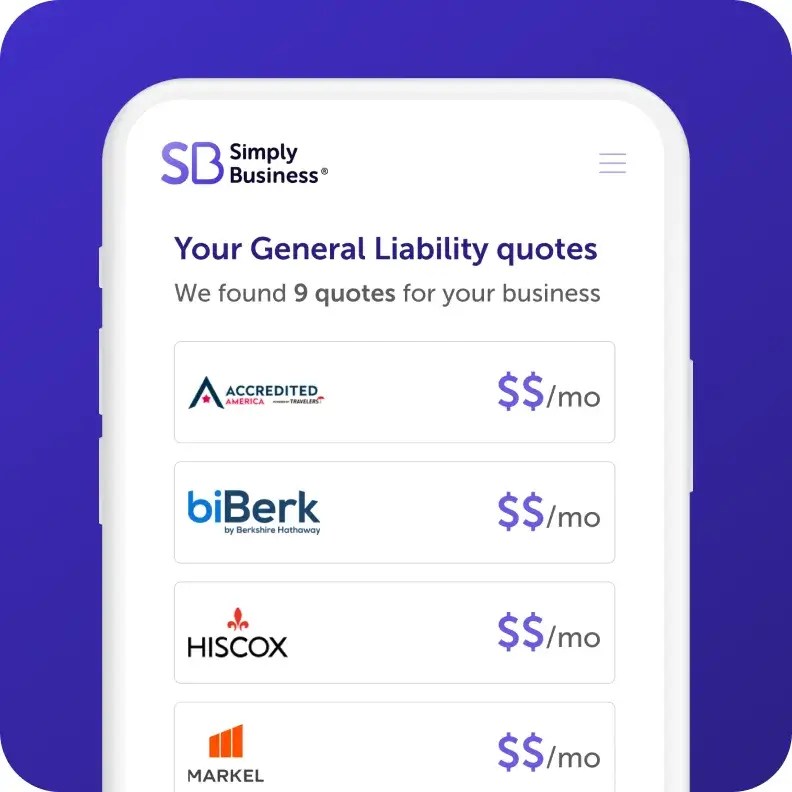
Review quotes
We’ll show you policies from top carriers so you can pick the coverage and price that work for you.

Get protected in minutes
Buy online in under 10 minutes. Download your certificate of insurance right away.

Frequently Asked Questions
Insurance for cleaning companies usually starts with general liability, which typically helps cover accidents and property damage. If you have employees, your state will likely require workers’ comp. From there, a BOP can help protect your equipment, commercial auto covers your work vehicles, and a janitorial bond can protect your clients from employee theft.
Many clients require both. Insurance protects your business if there’s an accident; a bond protects your client if an employee steals from them. Together, they show clients you’re a professional they can trust.
It depends on the work you do, the size of your team, your revenue, and your state, among other factors. A solo house cleaner will typically pay less than a commercial cleaning company with a crew. The fastest way to find out is to get a quote — it takes just minutes.
If you’re a sole proprietor with no employees, most states don’t require it. Many solo cleaners still choose coverage, though — personal health insurance often doesn’t cover work-related injuries, and some clients require proof of workers’ comp before hiring you. Learn more about workers’ comp for sole proprietors.
Often, yes. Commercial clients usually require higher liability limits and may ask to be added to your policy as an additional insured. If you’re moving into commercial work, it’s worth reviewing your coverage first.
Yes. When you buy a policy through Simply Business, you can download your certificate of insurance as soon as your purchase is complete — so when a new client asks for proof, your answer is ready the same day.
Our +1 million customers are big fans. And you will be too.

Fair price, explained everything. I was finished with Simply Business before any other companies answered.

Natalie B.
Housekeeping, Idaho
Site was easy to follow. Covered what i needed. Cost was reasonable and quick process.
Tracie R.
Janitorial services, North Carolina
Written by
Feel confident in your choice.
We partner with a range of top-rated carriers and use smart technology to match you with policies that fit your specific business, your risks, and budget.

400+
business types covered

1M+
customers worldwide

18
top-rated carriers



We’ve Got More Helpful Information

13-minute read
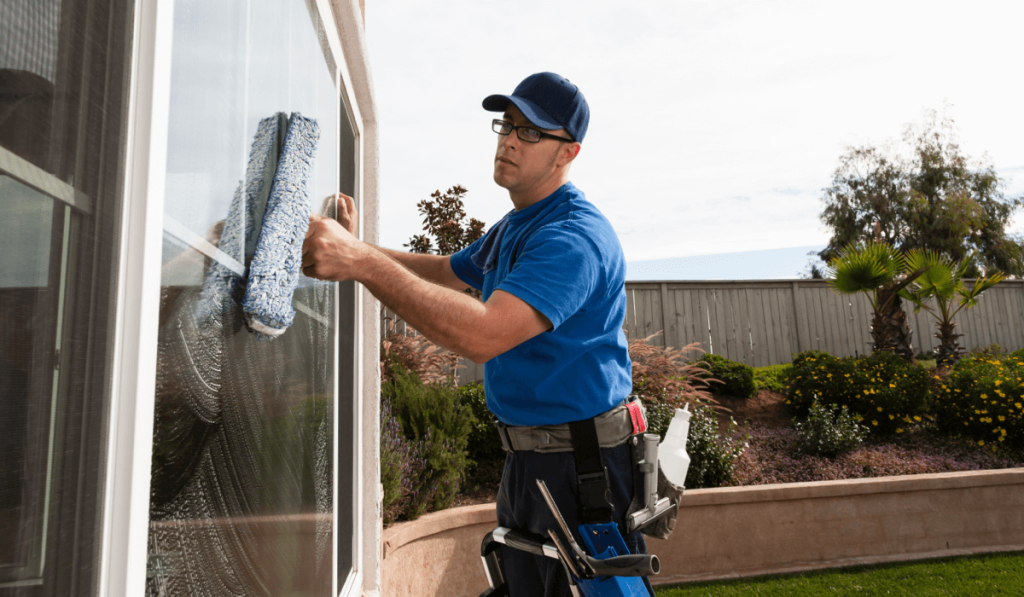
How To Start a Window Cleaning Business
*The displayed price for each product is a monthly estimate calculated from the 10th percentile of relevant policies sold by Simply Business (e.g., General Liability data is used for General Liability estimates). This estimate uses data from relevant policy sales between July–December 2025. Final price and payment terms, which may include an initial down payment, are subject to change based on your state, selected insurance provider, and specific business details.
Page last updated: