Small Business Insurance in Tennessee

Get a price estimate in just three steps
Rates as low as $20.75/month*
Get a price estimate in just three steps
Rates as low as $20.75/month*
Over 1 million customers worldwide.


Buy instantly online.

Written by
Tennessee Small Business Insurance
From the high-energy entertainment and healthcare hubs of Nashville to the massive shipping and transport networks in Memphis, Tennessee rewards entrepreneurial spirit. But in a state where things move fast — and local risks may evolve just as quickly — safeguarding that drive is essential.
Whether you’re handling construction licensing for a new build, managing a healthcare consultancy, or launching a venture in the state’s booming hospitality sector, one unexpected event shouldn’t derail your momentum. Between volatile weather patterns and evolving state regulatory deadlines, having the right protection in place can help keep your small business resilient.
In this Tennessee business insurance guide, we’ll cut through the noise to break down state-specific requirements, policies clients might expect, and what they typically cost so you can get covered with confidence.
What Types of Small Business Insurance Are Required in Tennessee?
Tennessee’s insurance requirements depend on your industry, workforce, and how your business operates.
Here’s a breakdown of the coverages you’ll most likely need:
Workers’ compensation can help cover medical bills, rehabilitation, and time away from work if an employee is injured on the job. In Tennessee, most small businesses are typically required to carry workers’ comp once they regularly employ five or more people, including full-time, part-time, and family members on the payroll.
However, if your business operates in the construction industry, state law mandates that you carry coverage from day one, as business owners themselves must be covered unless formally exempted.
One detail that trips up many small businesses: if you hire subcontractors who don’t carry their own workers’ comp coverage, you can be held responsible for their claims. That’s why it’s a good idea to request a Certificate of Insurance proving coverage before anyone sets foot on your job site. You can typically verify a subcontractor’s workers’ comp coverage status directly via the official Tennessee Workers’ Compensation Exemption Registry.
General liability insurance helps protect your small business against third-party claims, such as property damage and bodily injury.
With the exception of licensed contractors, Tennessee state law generally doesn’t mandate general liability for most businesses, but that doesn’t necessarily make it optional in practice. For example, proof of general liability is required for contractors seeking a license from the Tennessee Board for Licensing Contractors. Many Tennessee cities and counties may also require proof of coverage before issuing a local permit. And landlords and clients often request it before signing a lease or contract.
A BOP typically bundles general liability, commercial property protection, and business interruption coverage to help pay for damages, repairs, and lost income so you can get back to work quickly.
Many small businesses choose a BOP because it offers more protection than a stand-alone general liability policy without costing much more — a great option if you’re established or planning to grow.
Tennessee generally doesn’t mandate a BOP, but for local shops and restaurants, bundling property and liability is often the most cost-effective way to secure essential commercial property coverage against state-specific threats like nocturnal tornadoes.
Professional liability insurance, also known as errors and omissions (E&O) coverage, helps protect you from claims of negligence, missed deadlines, errors, or omissions in the work you deliver. It can also help cover legal defense costs, settlements, and judgments if a client files a formal legal claim against you.
Tennessee generally doesn’t require E&O depending on your business type, but it may be a smart choice for anyone paid for their advice or expertise such as accountants, real estate agents, marketing consultants, and IT firms. Many local client contracts won’t move forward without proof of this coverage and it can serve as an essential safety net, especially since a single claim of faulty work may cost far more than years of premiums.
Any vehicle your business owns and registers in Tennessee must carry liability coverage. To comply with the state’s Financial Responsibility Law, a Tennessee commercial auto policy must meet or exceed the mandatory minimum liability limits of $25,000 per person for bodily injury, $50,000 for all persons injured in a single accident, and $25,000 for property damage.
You can review guidelines and compliance rules directly via the official Tennessee Department of Revenue Financial Responsibility Law Portal or look up general commercial policies through the Tennessee Department of Commerce and Insurance.
As of the date of this article, Simply Business doesn’t offer commercial auto insurance in Tennessee, but our licensed insurance agents can help you find trusted providers that do.
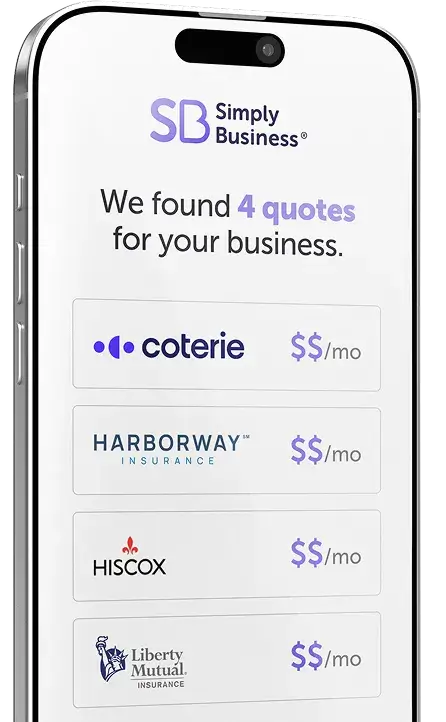
Get free Tennessee business insurance quotes in 10 minutes or less.
Simply Business provides customized coverage options from top-rated small business insurers — all in just 10 minutes. We do all the leg work so you can sit back, compare quotes, and save.
How Much Does Business Insurance Cost in Tennessee?
Here are the median monthly costs1 for common small business insurance policies in Tennessee:
Median Monthly Costs1
| Workers’ compensation | $97 |
| General Liability | $41 |
| Business Owner’s Policy | $47 |
| Professional Liability | $41 |
1Data from Simply Business customers located in TN, who purchased at least one or a combination of BOP, general liability, professional liability, and workers’ compensation policies from July 1, 2025 to December 31, 2025. The median costs shown are for illustrative purposes only; actual premiums vary by state, coverage limits, and individual business risk.
The cost of business insurance in Tennessee depends on several factors, and pricing can vary from one business to the next.
Some factors that affect your premium include:
- Payroll: Workers’ comp is tied to your total payroll, so a larger team usually means a higher premium.
- Industry risk: A tree service crew in Knoxville carries a very different risk profile than a digital marketing consultant in Nashville, and rates reflect that.
- Location: Businesses in West Tennessee near the New Madrid Seismic Zone or companies operating in regions prone to severe nocturnal tornadoes often pay more for specialized property and disaster coverage than operations in more shielded parts of the state — distinct environmental exposure is a big reason why.
- Claims history: A clean record helps; past claims can push your rate up at renewal. Opting for a higher deductible can also lower your premium.
State-Specific Risks for Businesses in Tennessee
As you grow your small business in Tennessee, you also need to account for regional hazards and regulatory requirements that standard insurance policies may not automatically cover. Here’s what to watch for to help keep your business resilient.

Nocturnal Tornadoes and Severe Weather
Tornadoes strike differently in Tennessee. The state frequently experiences nocturnal tornadoes — storms that touch down late at night when visibility is zero and businesses are closed. Both Middle and West Tennessee are especially vulnerable to these systems. And the historic March 2020 tornado outbreak caused over $1.6 billion in structural damage across Nashville and surrounding counties, demonstrating how quickly local operations can be disrupted.
A Business Owner’s Policy (BOP) that includes business interruption coverage can help replace lost income and keeps your payroll funded while your doors are closed.

Statewide Flooding Risk
From major commercial corridors in Nashville, Clarksville, and Chattanooga to smaller rural communities, heavy rainfall can cause massive disruptions. The 2010 Nashville flood alone devastated hundreds of local businesses and caused over $2 billion in property damage. Flooding is also a constant threat for business owners located near the Cumberland and Tennessee Rivers.
Because standard commercial property insurance typically excludes flood damage, you may want to consider a flood insurance policy with a private insurer or the National Flood Insurance Program (NFIP). You can also find disaster prep resources through the Tennessee Emergency Management Agency.

West Tennessee Earthquake Risk
If you operate anywhere in West Tennessee, including the greater Memphis area, your business is located directly inside the New Madrid Seismic Zone. Geologists widely view a major earthquake here as a matter of “when, not if,” posing a structural threat to the entire region. Like flooding, standard property policies do not cover earthquake damage. If a tremor cracks your foundation or destroys your inventory, a business without this specific coverage must cover those losses out of pocket. For firms in West Tennessee, adding a specific earthquake endorsement to your property coverage may be a practical safety net.
Data Breach
Tennessee has some of the strictest data privacy and breach laws in the country. Under Tennessee law (Tenn. Code § 47-18-2107), if your business experiences a digital security breach involving unencrypted personal information, you are legally required to notify affected state residents within a strict 45-day deadline of discovering the incident.
For a small business, navigating a data breach on your own can be complex and financially devastating. Cyber liability insurance can help cover the costs of client notification campaigns, mandatory credit monitoring, and regulatory legal defense fees, up to policy limits.

Who Needs Tennessee Small Business Insurance?
Best Tennessee Business Insurance for Your Industry
Every industry carries its own risks, and Tennessee’s diverse economy means no two coverage needs look alike. Here’s where the state’s biggest sectors tend to focus.
Tennessee’s construction boom means plenty of work for local contractors, but busy project pipelines bring real risks. Proof of general liability is required just to obtain a license from the Tennessee Board for Licensing Contractors, and state law mandates carrying workers’ compensation from your very first employee.
Additionally, local hazards like Tennessee’s unique nocturnal tornado risks make a Business Owner’s Policy (BOP) a cost-effective way to bundle your property, liability, and business interruption coverage. An inland marine policy can also help safeguard the expensive tools and materials you haul between job sites.
With Nashville ranking as one of the country’s premier music, entertainment, and tourism economies, local hospitality businesses face unique operational demands. For bars, restaurants, event venues, and music businesses, a Business Owner’s Policy (BOP) can be a smart way to combine essential general liability and commercial property coverage in one convenient package.
To fully protect your operations, establishments serving alcohol can round out their coverage with liquor liability insurance, while venues hosting large gatherings should consider special event liability to safely manage large crowd exposures.
Nashville stands as one of the top healthcare industry hubs in the United States, driving a massive network of specialized consultants, advisors, and corporate services. For anyone paid for their expertise in this space, professional liability (E&O) insurance can help shield your business against claims of missed deadlines or costly mistakes in your work.
Given the healthcare sector’s strict data security obligations under HIPAA and Tennessee’s strict 45-day data breach notification deadline, cyber liability insurance can serve as a vital safety net for any professional firm handling sensitive client information, medical records, or proprietary digital data.
How to get a Certificate of Insurance in Tennessee
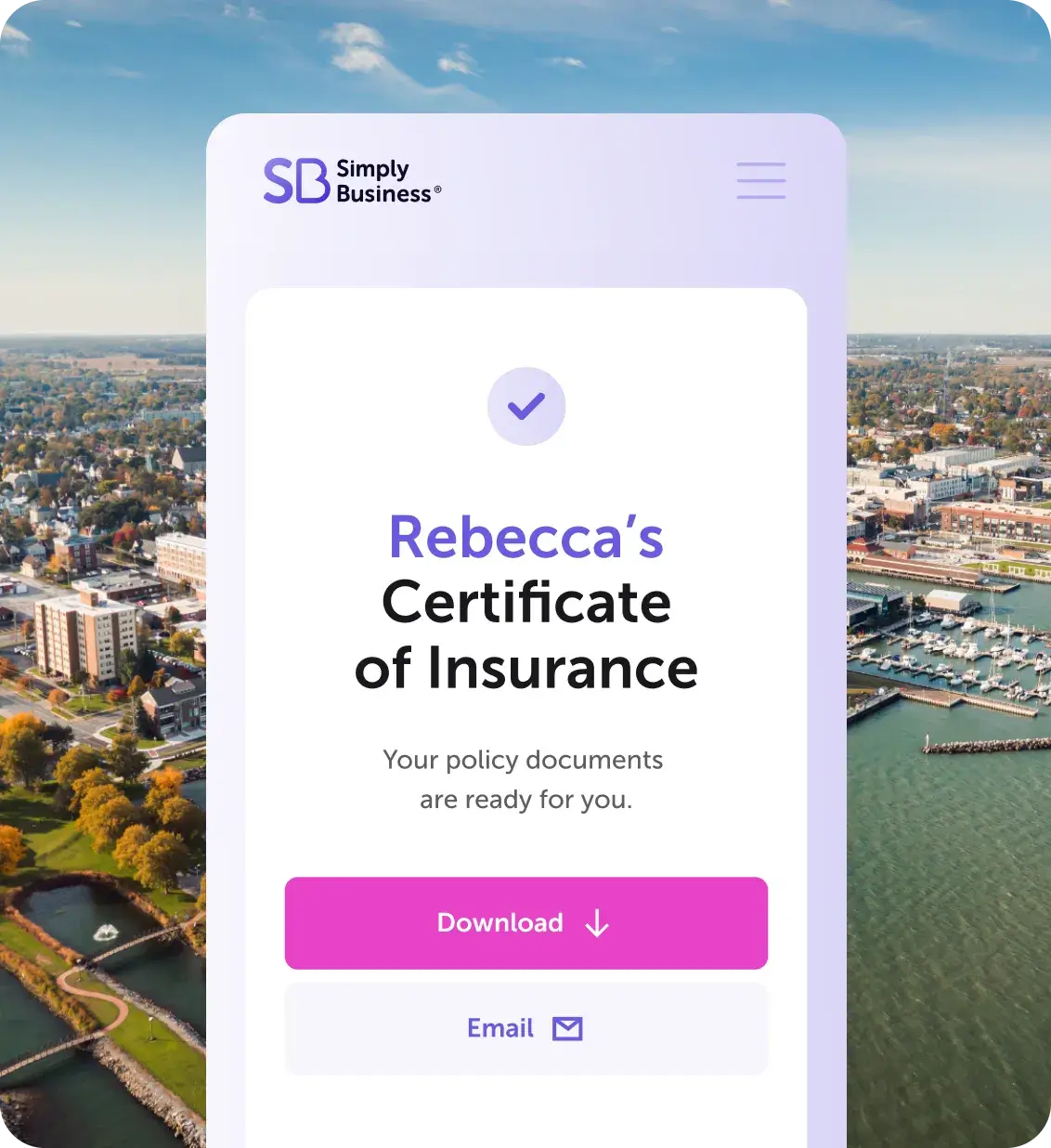
A Certificate of Insurance (COI) shows that your business has active coverage. In Tennessee, you may need a COI before you can bid on contracts, sign a commercial lease, or get hired as a subcontractor.
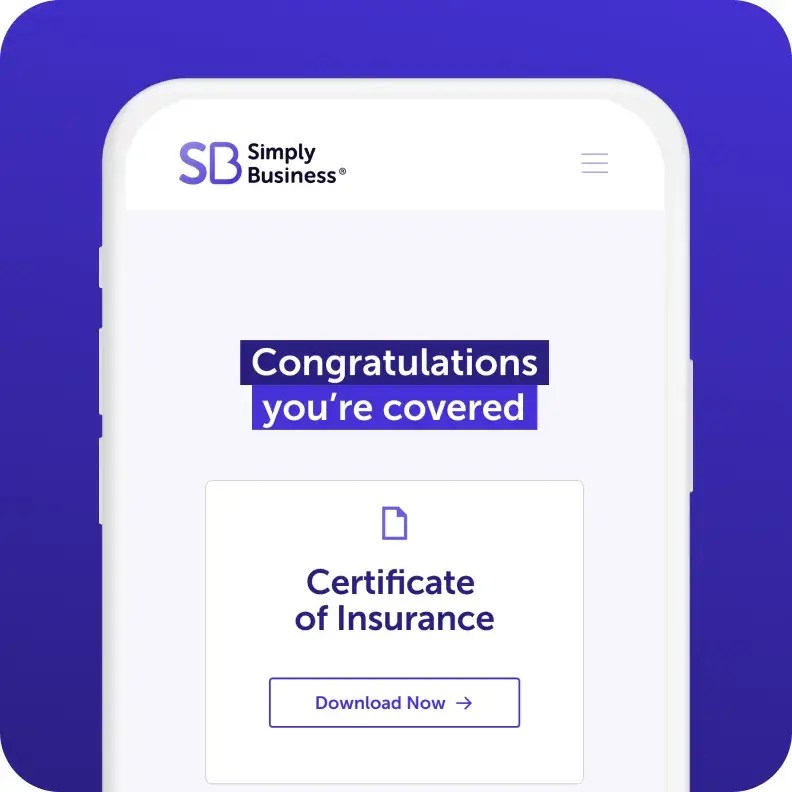
Simply Business lets you request and manage your COI through your online account once your policy is active, including adding additional insureds.
Frequently Asked Questions (FAQs)
Answers to More Questions About Tennessee Small Business Insurance
No, general liability is typically not required for most small businesses. However, it is a mandatory requirement if you’re seeking a license from the Tennessee Board for Licensing Contractors. Commercial landlords, clients, and local municipalities may also request a Certificate of Insurance to prove coverage before you can sign a lease, secure a local business permit, or win a contract.
Generally, no. For most small businesses, the Tennessee Bureau of Workers’ Compensation only mandates coverage once you regularly employ five or more people. However, if your business operates in the construction industry, state law requires you to carry workers’ comp for everyone including the business owners.
In Tennessee, corporate officers and LLC members do count as employees when calculating whether your business hits the five-employee threshold for mandatory workers’ compensation coverage. However, non-construction businesses can choose to exclude up to five corporate officers or LLC members from the actual coverage by filing an exemption form with the Tennessee Bureau of Workers’ Compensation. Keep in mind that this exemption does not apply if you operate in the construction industry, where coverage is required for everyone from day one.
No. Standard commercial property insurance or a business owner’s policy (BOP) typically excludes rising surface water and seismic movement. To protect your building and inventory, you will need a separate flood policy through the National Flood Insurance Program (NFIP) or a private insurer, along with a dedicated earthquake endorsement.
Under Tenn. Code § 47-18-2107, Tennessee enforces a strict data breach notification deadline: businesses must notify affected state residents within 45 days from the date the breach is discovered.
Yes. The IRS and the Tennessee Department of Revenue generally allow small business owners to deduct business insurance premiums as an ordinary and necessary business expense. To qualify for the deduction, the coverage must be directly tied to your regular trade or business operations rather than personal vehicle or property use. It is best to confirm with your tax accountant on what applies to your specific business.
Our Tennessee customers are big fans. And you will be too.
It was a very simple process and very affordable!
Kensey L.
Housekeeping
Basically provided the same policy content as all the others, yet it was the cheapest one there!
Daniel G.
Handyperson
Very easy to get insurance at a good price.
Dakota S.
Painting and wall covering
Additional Information and State Resources for Tennessee Small Business Owners

Written by

Why Choose Simply Business
Small business insurance is what we do. Whether it’s covering you for accidents and errors, meeting workers’ comp requirements, or financially protecting your business from the unexpected, we can help find the coverage you need for your business.

Start your quote
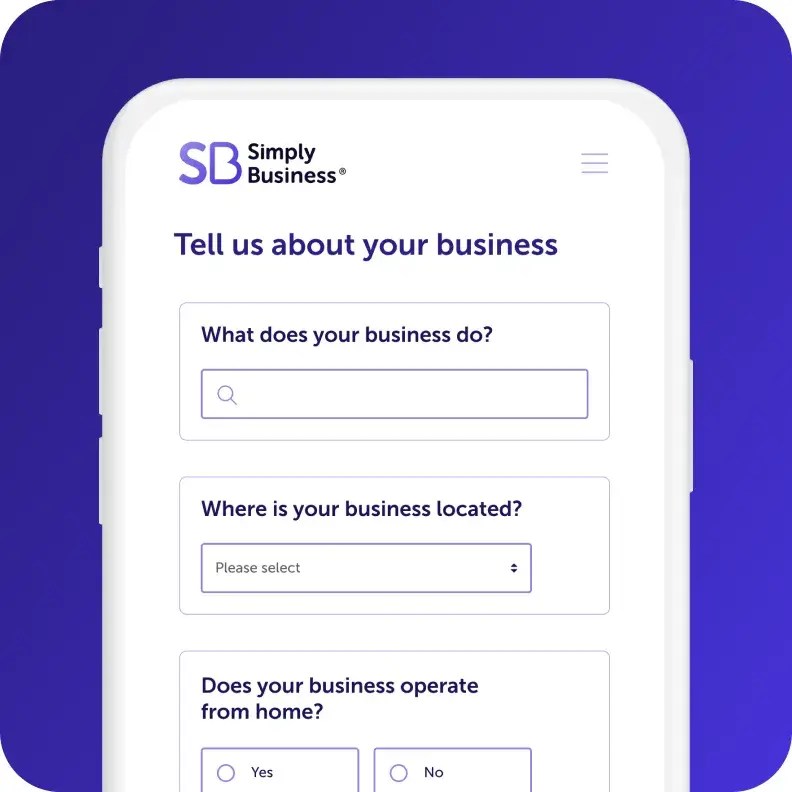
Answer a few questions about
your business in one form.

Review quotes
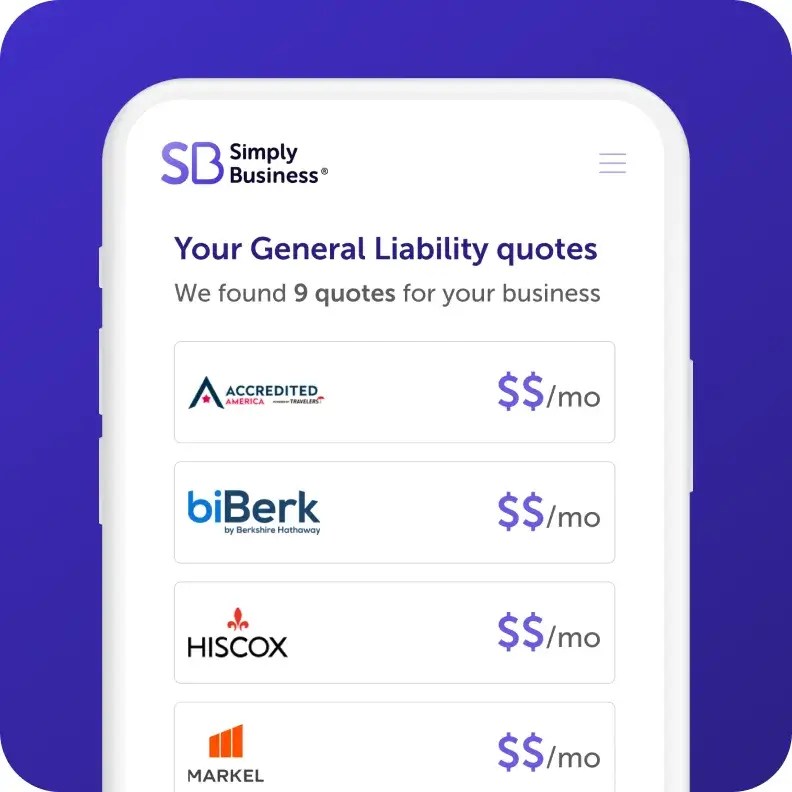
Compare quotes side by side from top-rated insurers and customize your coverage.

Get protected in minutes
Choose your policy, and get instant proof of insurance – all online, and all within 10 minutes.
Feel confident in your choice.
We partner with a range of top-rated carriers and use smart technology to match you with policies that fit your specific business, your risks, and budget.

400+
business types covered

1M+
customers worldwide

18
top-rated carriers

*The displayed price for each product is a monthly estimate calculated from the 10th percentile of relevant policies sold by Simply Business (e.g., General Liability data is used for General Liability estimates). This estimate uses data from relevant policy sales between July–December 2025. Final price and payment terms, which may include an initial down payment, are subject to change based on your state, selected insurance provider, and specific business details.
Page last updated: