Small Business Insurance in Texas

Get a price estimate in just three steps
Rates as low as $20.75/month*
Get a price estimate in just three steps
Rates as low as $20.75/month*

Over 1 million customers worldwide.


Buy instantly online.

Written by
Texas Small Business Insurance
From Austin cafés to Dallas contractors, running a small business in the Lone Star State can come with some unique risks. Most notably, Texas is the only state where private employers can completely opt out of workers’ compensation insurance.
Whether you choose to protect your team with coverage or navigate the state’s “non-subscriber” system, finding the right mix of coverage is critical.
In this Texas business insurance guide, we’ll break down what’s typically required, the policies clients might expect, and what they typically cost so you can get covered with confidence.
What Types of Small Business Insurance Are Required in Texas?
Texas business insurance requirements depend on your industry, location, contracts, and how your business operates.
Here’s what to know about each policy.
Workers’ compensation can help cover medical bills, rehabilitation, and time away from work if an employee is injured on the job. Many Texas businesses choose this coverage to protect their employees, manage injury-related costs, and satisfy client or government contract requirements.
While workers’ comp is mandatory in most states, Texas is the exception. According to Texas Labor Code § 406.002, coverage is generally elective for most private employers. But opting out doesn’t necessarily mean opting out of responsibility — and it may open the door to significant risk.
In Texas, private employers that choose not to carry workers’ comp are known as non-subscribers. Non-subscribers generally must notify the Texas Division of Workers’ Compensation, post workplace notices, and file DWC Form-005 every year. And if an injured employee sues, a non-subscriber may lose important legal defenses, including arguments that the employee was negligent or knew the risks.
Even if you choose to opt out, you may still be forced to carry coverage in certain situations. For example, if you take on a government building or construction contract, you must typically certify that all employees working on that public project are covered by workers’ comp.
General liability insurance helps protect your small business against third-party claims, such as property damage and bodily injury.
Texas doesn’t require general liability for most businesses — but the people you work with often will. Landlords may ask for proof of coverage before approving a lease. General contractors may require a Certificate of Insurance before a subcontractor can start work. And clients may want coverage written into the contract before they sign.
Local requirements matter too. A contractor pulling permits in Houston, Dallas, Fort Worth, Austin, San Antonio, or another Texas municipality may need to meet city or county licensing rules, which can include proof of liability insurance, a construction bond, or both.
A BOP typically bundles general liability, commercial property protection, and business interruption coverage to help pay for damages, repairs, and lost income so you can get back to work quickly after a claim. Many small businesses choose a BOP because it offers more protection than a stand-alone general liability policy without costing much more.
Texas doesn’t require a BOP, but it can be a practical fit for restaurants, retail stores, salons, and service businesses with property to protect. It can also be helpful after a covered event that forces you to temporarily close, such as a fire, a burst pipe, or covered storm damage.
One caveat that matters in Texas: standard commercial property and BOP policies don’t cover flood damage from rising water. Along the Gulf Coast, around Houston, and in other low-lying areas, separate flood insurance may be worth considering.
When clients pay your business for professional expertise, a single oversight can lead to a major dispute. Professional liability insurance, also known as errors and omissions (E&O) coverage, helps protect you from claims of negligence, missed deadlines, errors, or omissions in your deliverables. It can also help cover legal defense costs, settlements, and judgments if a client files a formal legal claim against you.
Texas doesn’t require professional liability for most businesses, but if clients hire you for your professional services, it’s worth strong consideration. One unhappy client claiming your advice cost them money — or that your work contained a costly error — can trigger a lawsuit, even if the claim is baseless.
For consultants, IT firms, accountants, designers, and other service providers, E&O is often written right into client contracts. And depending on your field, Texas state licensing boards may even require it to keep your license active.
If your business owns or operates vehicles, your personal auto policy typically won’t cover accidents that happen during business use. A separate Texas commercial auto policy can cover business driving, such as trips to job sites, deliveries, client visits, or hauling tools and equipment.
Texas requires drivers to be able to pay for accidents they cause, and the state minimum liability limits are commonly known as 30/60/25 coverage: $30,000 for bodily injury per person, $60,000 total bodily injury coverage per accident, and $25,000 for property damage. Some operations need more — motor carriers, heavier vehicles, passenger transport, hazmat haulers, and businesses driving across state lines can face higher state or federal requirements.
While Simply Business doesn’t currently offer commercial auto insurance in Texas, our licensed insurance agents can help you find trusted providers that do.
Get free Texas business insurance quotes in 10 minutes or less.
Simply Business provides customized coverage options from top-rated small business insurers — all in just 10 minutes. We do all the leg work so you can sit back, compare quotes, and save.
How Much Does Business Insurance Cost in Texas?
Here are the median monthly costs1 for common small business insurance policies in Texas:
Median Monthly Costs1
| Workers’ Compensation | $66 |
| General Liability | $43 |
| Business Owner’s Policy | $55 |
| Professional Liability | $38 |
1Data from Simply Business customers located in Texas, who purchased at least one or a combination of Workers’ Compensation, General Liability, BOP, and Professional Liability policies from July 1, 2025 to December 31, 2025. The median costs shown are for illustrative purposes only; actual premiums vary by state, coverage limits, and individual business risk.
The cost of business insurance in Texas depends on several factors, and pricing can vary from one business to the next.
Some factors that affect your premium can include:
- Payroll: Workers’ comp premiums are tied to payroll, job classification, and claims history. If you add employees or move into higher-risk work, your premium may increase.
- Industry risk: A roofing contractor in Dallas, an oilfield service business in Midland, and a bookkeeper in Plano all carry different risk profiles.
- Location: A Gulf Coast business may need to plan for hurricanes and flood exposure, while a North Texas business may be more focused on hail, wind, and commercial auto risk.
- Claims history: A clean claims record can help keep costs lower. Past claims may increase your rates at renewal.
- Coverage limits and deductible: Higher limits generally cost more, while choosing a higher deductible may lower your premium.
State-Specific Risks for Businesses in Texas
Texas risk is not one-size-fits-all. A café in Galveston, a warehouse outside Houston, an IT firm in Austin, and an oilfield service business in West Texas can encounter a wide range of hazards.
Here are some of the major risks Texas small business owners should understand and how to stay protected.

Hurricanes & Coastal Storm Surge
For businesses along the Gulf Coast, hurricane season is not necessarily an abstract risk. When Hurricane Harvey stalled over Texas, communities like Houston, Galveston, Corpus Christi, and Beaumont faced catastrophic flooding, wind damage, road closures, widespread power outages, and weeks of business disruption.
A BOP or commercial property policy may help with covered wind damage, repairs, and business interruption, but they usually exclude flood damage from rising surface water. To cover that risk, you generally need a separate flood policy through the National Flood Insurance Program (NFIP) or a private insurer.

Hailstorms & Severe Weather
Hail can be brutal on Texas businesses. A single storm can damage commercial roofs, windows, work trucks, inventory, and equipment left outside or in transit.
Dallas-Fort Worth, San Antonio, Central Texas, and the Hill Country are particularly prone to severe thunderstorms and hail. A BOP or commercial property policy with appropriate wind and hail coverage can help with covered property damage inland, but coastal business owners typically purchase a separate windstorm policy (such as through the Texas Windstorm Insurance Association), as standard policies in coastal areas usually exclude wind and hail entirely.

Winter Storms & Power Outages
Winter Storm Uri made clear that Texas businesses also need to think about extreme cold. Burst pipes, power outages, icy roads, supply delays, spoiled inventory, and closed storefronts can affect businesses far beyond the first day of bad weather.
A BOP may include business interruption, but coverage usually depends on whether the impact is tied to a covered cause of loss. Businesses that rely on refrigeration, specialized machinery, or steady in-person traffic may want to ask about coverage for equipment breakdowns, utility interruptions, spoilage, and extra expenses.

Data Breach & Cyber Risk
Texas has specific data breach notification rules under the Texas Identity Theft Enforcement and Protection Act (ITEPA). Under Texas Business & Commerce Code § 521.053, businesses generally must notify affected individuals without unreasonable delay and no later than 60 days after determining that a breach occurred.
Cyber liability insurance can help cover expenses such as notification, legal support, credit monitoring, regulatory response, and other costs associated with a data breach.

Who Needs Texas Small Business Insurance?
Best Texas Business Insurance for Your Industry
Every industry carries its own risks, and Texas’s diverse economy means no two coverage needs look alike.
Here’s where the state’s biggest sectors tend to focus.
Texas contractors and energy service businesses often work on active job sites with subcontractors, heavy equipment, expensive tools, and tight project timelines. That complexity can create several layers of risk at once.
General liability insurance is often the starting point, especially when a client, landlord, general contractor, or local permitting office requires proof of coverage. Contractors also may need a bond, depending on the trade and municipality.
Workers’ compensation is recommended for construction, oil and gas, and field service businesses because workplace injuries can be costly. And workers’ comp coverage may be required for public construction projects and certain government contracts.
Commercial auto and inland marine insurance can also be important coverage, with inland marine specifically protecting the tools, machinery, and materials themselves while in transit or stored at job sites.
Texas retail and restaurants depend on equipment, inventory, employees, and steady customer traffic to keep their businesses humming. And a burst pipe, kitchen fire, storm loss, customer injury, or equipment damage can quickly interrupt your operations.
A business owner’s policy (BOP) is often a practical foundation because it typically bundles general liability, commercial property, and business interruption coverage into a single policy. Gulf Coast and Houston-area businesses should also review flood coverage with the National Flood Insurance Program (NFIP) or a private insurer, and owners across Texas should ensure wind and hail coverage aligns with their locations.
Austin’s tech corridor gets a lot of attention, but Dallas-Fort Worth, Houston, San Antonio are home to thriving IT firms, financial service providers, designers, and other knowledge-based businesses.
Professional liability insurance can help protect your small business if a client claims an error, missed deadline, or bad recommendation caused financial harm. And given Texas’s data breach notification laws, cyber liability insurance can be smart coverage, especially for anyone handling sensitive client data.
How to get a Certificate of Insurance in Texas
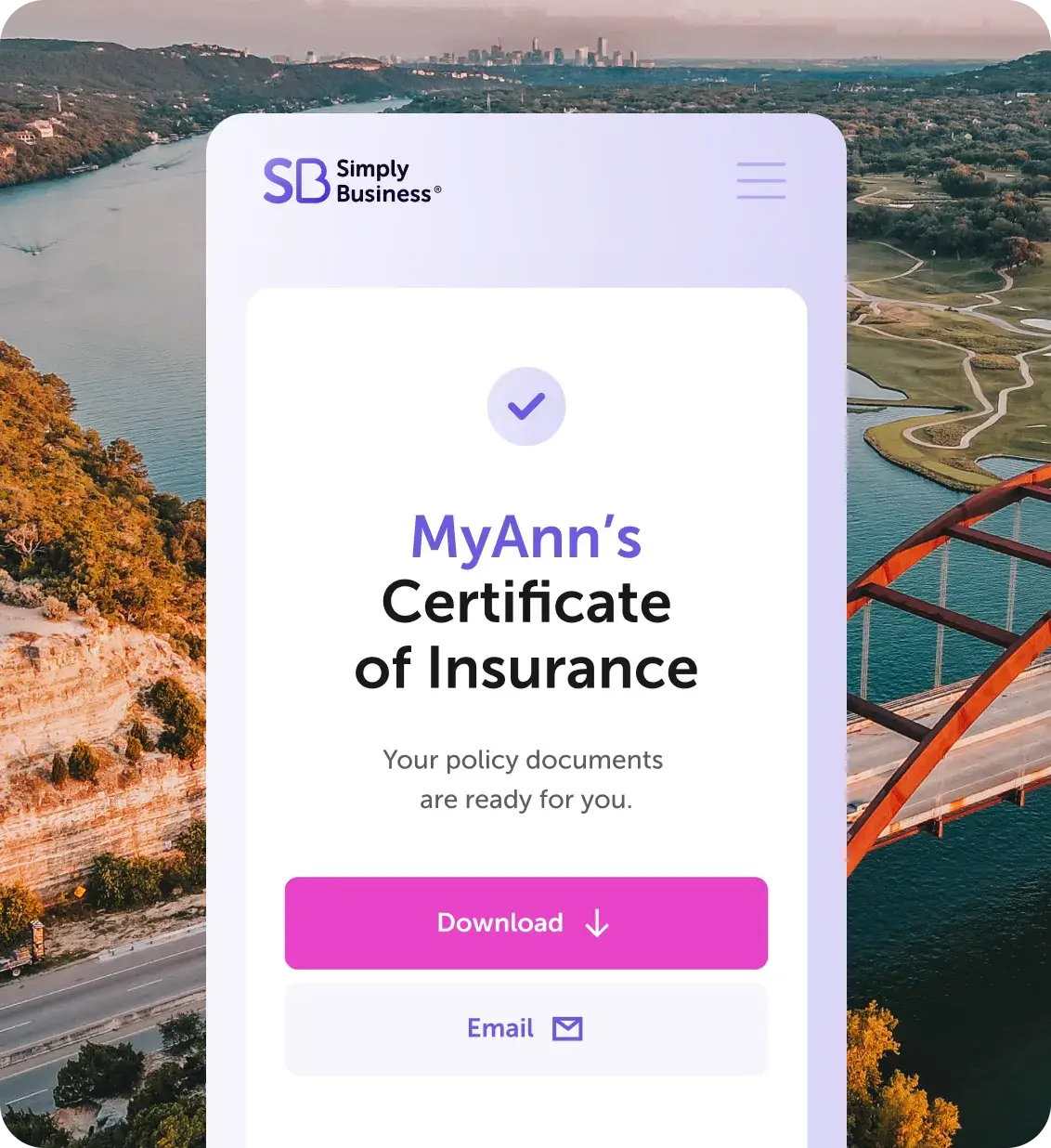
A Certificate of Insurance (COI) shows that your business has active coverage. In Texas, you may need a COI before you can bid on contracts, sign a commercial lease, or get hired as a subcontractor.
Simply Business lets you request and manage your COI through your online account once your policy is active, including adding additional insureds.
FAQs About Texas Business Insurance
The Texas Department of Insurance regulates business insurance in the state, while its Division of Workers’ Compensation regulates workplace injury coverage.
Workers’ compensation insurance is generally not required for most private employers in Texas. However, public employers must carry coverage, and Workers’ Comp may be required for public construction projects or government contracts.
If you choose not to carry workers’ compensation insurance in Texas, your business becomes a non-subscriber. Non-subscribers must meet certain notice and reporting obligations, and they may lose important legal defenses if an injured employee sues.
A non-subscriber is a Texas employer that does not provide workers’ compensation coverage to employees. Non-subscribers are permitted under Texas law for private employers, but they must comply with state notice and reporting requirements and may face greater legal risk after a workplace injury.
General liability, also known as commercial general liability (CGL) insurance, is not required by Texas state law for most businesses. However, your landlord, client, lender, general contractor, or local permitting authority may require it before you can sign a lease, start a project, or provide a Certificate of Insurance.
You likely need commercial auto insurance if your business owns vehicles or regularly uses vehicles for work. Personal auto policies often exclude business use, and Texas requires vehicles to meet minimum liability insurance requirements.
Your Texas business may need flood insurance if it’s located in a flood-prone area or if a lender, landlord, or contract requires it. Standard commercial property and BOP policies typically exclude flood damage from rising surface water, so businesses usually need a separate NFIP or private flood policy for that protection.
It can be. Business insurance premiums are generally deductible as ordinary and necessary business expenses if the coverage is for your trade or business. A tax professional can help confirm how the deduction applies to your specific business, though.
Additional Information and State Resources for Texas Small Business Owners

Written by
Our +1 million customers are big fans. And you will be too.

It was quick. easy, and included cost comparisons that were better than I had found outside of SB.

Richard R.
Management Consulting, TX
Agent was very helpful and offered what we needed to protect our business.
Pervaiz A.
Restaurant, TX
Very easy process. No agent hounding me. Affordable.
Richard F.
Handyperson, TX

Why Choose Simply Business
Small business insurance is what we do. Whether it’s covering you for accidents and errors, meeting workers’ comp requirements, or financially protecting your business from the unexpected, we can help find the coverage you need for your business.

Start your quote
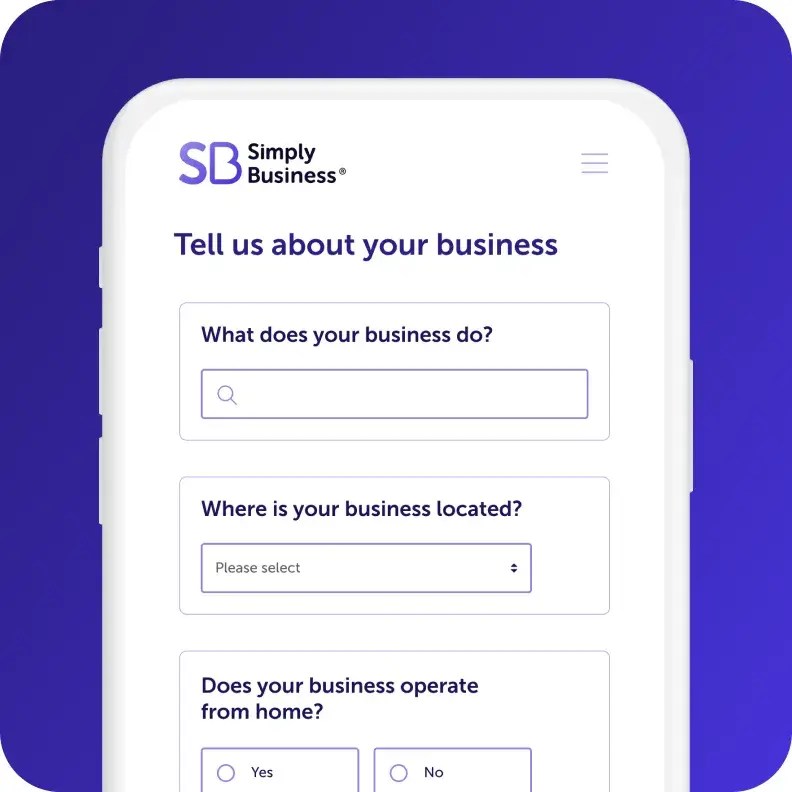
Answer a few questions about
your business in one form.

Review quotes
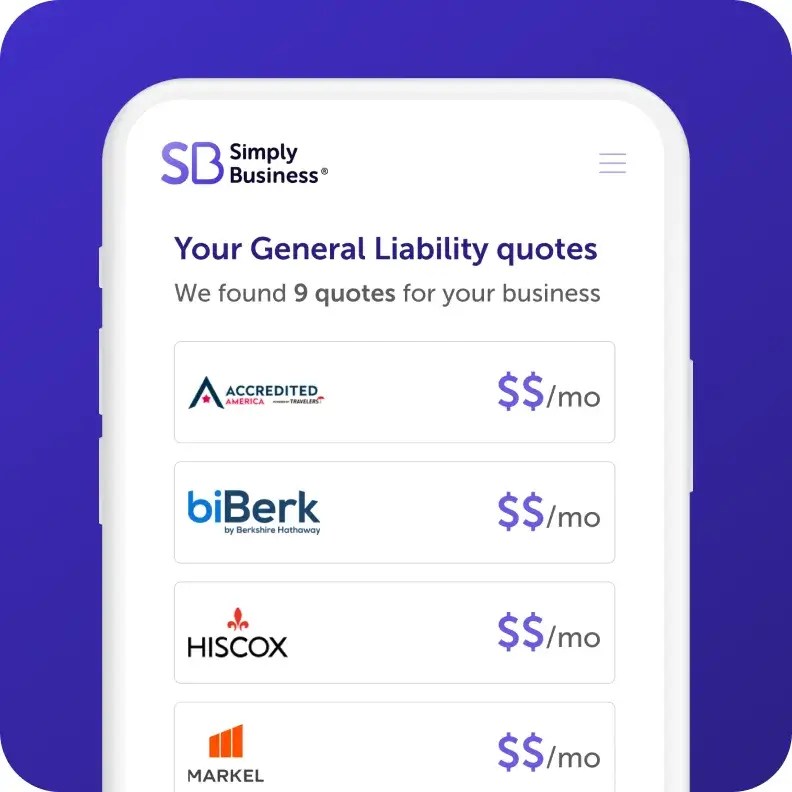
Compare quotes side by side from top-rated insurers and customize your coverage.

Get protected in minutes
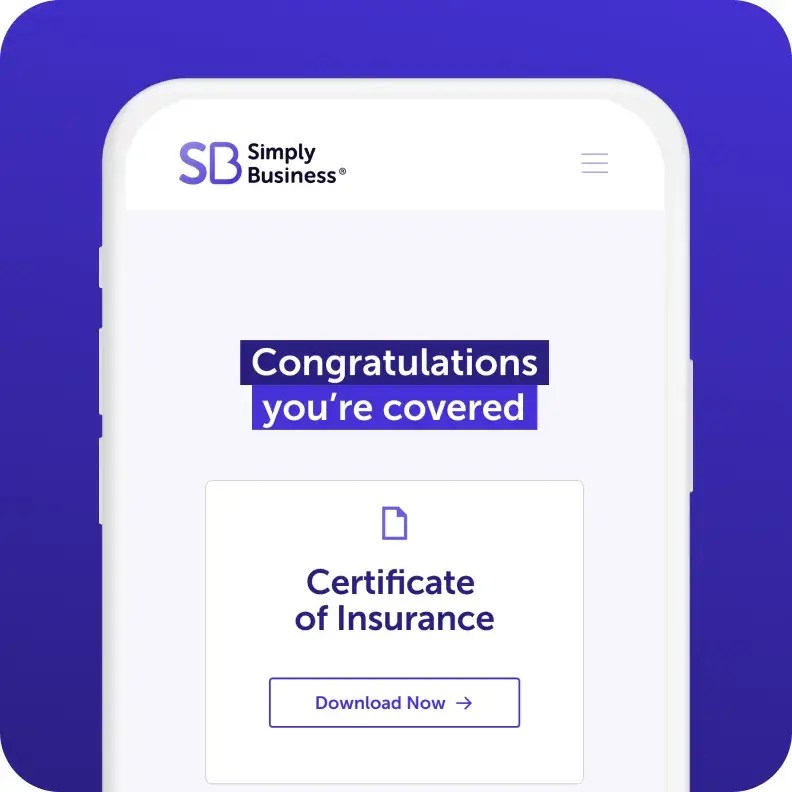
Choose your policy, and get instant proof of insurance – all online, and all within 10 minutes.
Feel confident in your choice.
We partner with a range of top-rated carriers and use smart technology to match you with policies that fit your specific business, your risks, and budget.

400+
business types covered

1M+
customers worldwide

18
top-rated carriers



*The displayed price for each product is a monthly estimate calculated from the 10th percentile of relevant policies sold by Simply Business (e.g., General Liability data is used for General Liability estimates). This estimate uses data from relevant policy sales between July–December 2025. Final price and payment terms, which may include an initial down payment, are subject to change based on your state, selected insurance provider, and specific business details.
Page last updated: