Inland Marine Insurance
for Small Businesses
This coverage can financially protect equipment and inventory that’s in transport or stored offsite. Get affordable protection for your tools and equipment today, starting at $20.83/mo.‡
Over 1 million customers worldwide.


Buy instantly online.

Written by
What Is Inland Marine Insurance?
Inland marine insurance, also known as contractor’s tools & equipment coverage, is coverage for property that moves — your equipment, your tools, your goods in transit.
However, the name throws people off. It sounds like something you’d buy for a boat. It’s not.
The coverage started in the shipping industry, back when valuable goods moved by sea. As more business shifted to land, insurers stretched the coverage to follow. The name stuck around even after the boats dropped out of the picture.
You’ll also sometimes hear inland marine coverage called a “floater.” The coverage “floats” with your property instead of staying tied to one location. Terms like “tool floater,” “equipment floater,” or “installation floater” usually refer to specialized inland marine forms or endorsements built for specific situations, although some carriers offer them as standalone policies.
If your work depends on gear that leaves your shop or office, this is coverage worth knowing about.
Simply Business gives you access to top insurance carriers.
















What Does Inland Marine Insurance Cover?
Here’s what you can typically expect your policy to include:
If you ship products you own to customers, inland marine can cover those products while they’re on the way. So if a delivery is lost or damaged before it gets there, you’re not stuck with the bill.
Some businesses hold onto things that belong to other people — a tailor with a client’s wedding dress, a repair shop with someone’s laptop, a jeweler resizing a ring. If something happens to that item while it’s with you, inland marine can help cover the loss. If that’s your setup, the policy needs to be sized to match. Start a quote and we can help you find the right fit.
This is the main thing. Whether you’re a contractor relying on the power tools in your truck, a photographer taking cameras on a shoot, or a mobile groomer transporting your gear — inland marine provides broad protection for your essential equipment, giving you the confidence to take your work anywhere.
Standard commercial property insurance usually stops at your front door. Inland marine picks up where it leaves off.
If you’re a contractor, this one matters. An installation floater is a type of inland marine coverage that protects materials — pipes, flooring, fixtures, whatever you’re putting in — from the time they leave the supplier until they’re permanently installed. Materials sitting on a job site aren’t built in yet, which makes them more prone to damage or theft. The floater is designed to fill that window.
There is also related coverage called builders risk insurance. An installation floater and business risk insurance are often confused for each other, but they cover different things. Builders risk covers the entire building or structure under construction, and it’s usually carried by the property owner or general contractor. An installation floater covers the specific materials a subcontractor is installing. If you’re a plumber, electrician, or HVAC contractor, an installation floater is probably what you’re looking for.
What Isn’t Covered
A few things to know:
- Inland marine doesn’t cover normal wear and tear. That’s just the cost of using your equipment over time.
- It also doesn’t cover your truck or van. Vehicles need a commercial auto policy. Inland marine covers what’s in the vehicle, not the vehicle itself.
Who Needs Inland Marine Insurance?
If your tools earn you a living and they leave your premises, the answer is probably yes, you need inland marine insurance.
There’s also a practical reason a lot of business owners get this coverage even when they’re not sure they need it: bigger jobs often require it. General contractors and commercial clients frequently ask for proof of insurance before they’ll bring you onto a project. Having a certificate of insurance (COI) ready can be the difference between getting the contract and watching it go to someone else.
Inland Marine vs. Commercial Property Insurance
These two get confused a lot, so here’s the short version. If your tools get stolen out of your truck overnight, commercial property won’t help. Inland marine generally will. Most businesses with mobile equipment end up needing both.

Commercial property insurance is location-based.
It protects your building and what’s inside it. The moment your tools leave your business location, the coverage stops.

Inland marine is movement-based.
It generally covers your equipment in transit, via land only. It also tends to be broader in what it protects against — most inland marine policies are “all-risk,” meaning they cover any cause of loss that isn’t specifically excluded, rather than only the specific perils some property policies list.
How Much Does Inland Marine Insurance Cost?
The average price for inland marine coverage is $32/mo., according to Simply Business customers that purchased this type of coverage between July 1, 2025 and December 31, 2025.
Coverage cost depends on what you’re insuring — the type of equipment, what it’s worth, how it’s used, among other factors. Most mobile equipment policies come in at a price that’s surprisingly manageable, especially when bundled with other coverages.
What Some Customers are Paying for Inland Marine2
Florida
Carpenter
- Sole proprietorship
- Limit: $20,000 (large equipment)
- Extra Limits: $2,500 (small equipment)
- Deductible: $500
- Quoted May 2026
$40
/month
Georgia
Lawn Care
- S-Corp
- Limit: $15,000 (large equipment)
- Extra Limits: $2,500 (small equipment)
- Deductible: $250
- Quoted May 2026
$37
/month
Colorado
Handyperson
- Sole proprietorship
- Limit: $5,000 (large equipment)
- Extra Limits: $5,000 (small equipment)
- Deductible: $500
- Quoted May 2026
$29
/month
2These examples are real insurance quotes generated on the dates above. They are for illustration purposes only. Your coverage options and pricing may differ based on the information you provide us about your particular business, the state you operate in, the number of employees, and other factors.
What Other Types of Insurance Do I Need?
Business insurance usually refers to one or more coverages suited to your type of small business. Here are the foundational insurance policies we most often recommend, and how they can help protect your small business:

General LiabilityFrom $20.75/month*

Professional LiabilityFrom $25.83/month*

Business Owner’s Policy From $33.75/month*

Workers’ CompFrom $38.91/month*
Business Personal PropertyFrom $25.83/month*
Errors & OmissionsFrom $33.75/month*
How to Get Inland Marine Online
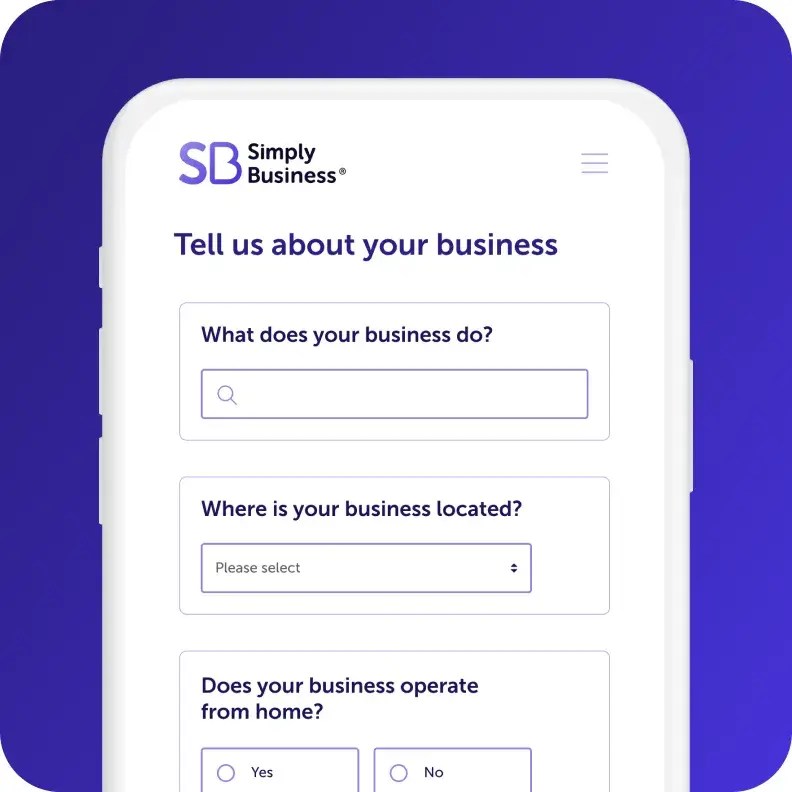

Start your quote
Answer a few questions about your business in one form.
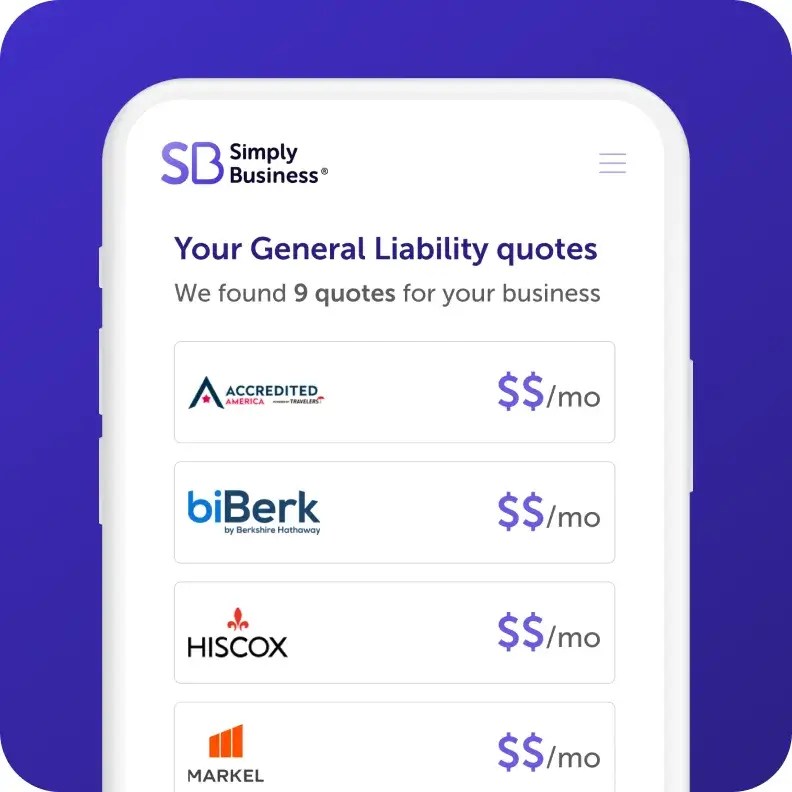

Review quotes
Compare quotes side by side from top-rated insurers and customize your coverage.
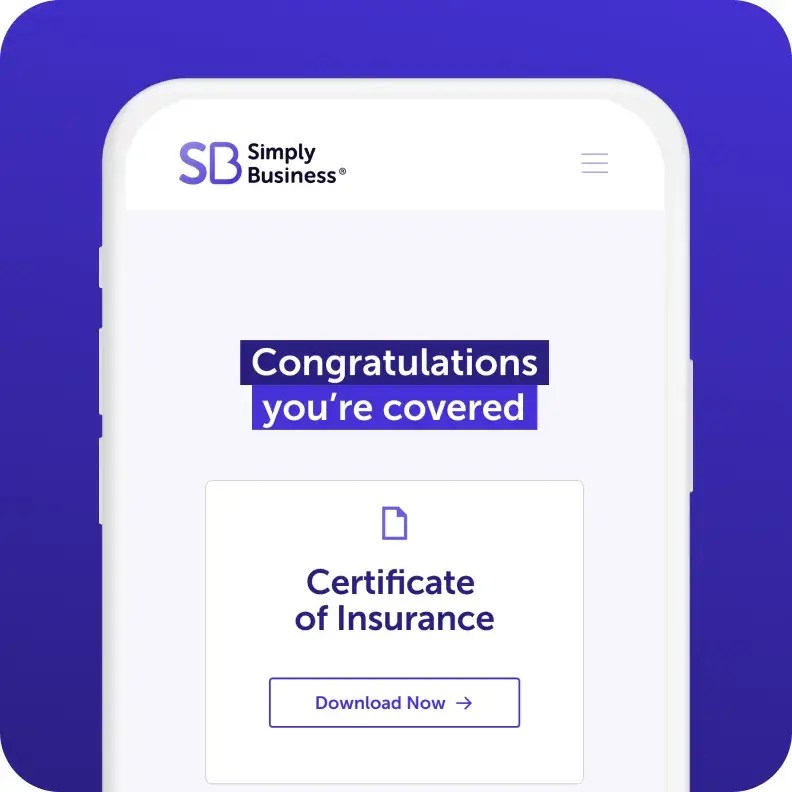

Get protected in minutes
Choose your policy, and get instant proof of insurance – all online, and all within 10 minutes.
Inland Marine FAQs
The coverage started with sea shipping, then expanded to cover goods moving over land. The name “inland marine” just hung around.
No. General liability covers third-party claims — someone gets hurt on your job site, you damage a client’s property, that kind of thing. It doesn’t cover your own equipment. For that, you need inland marine.
Typically, yes. Provided your vehicle is securely locked. Most inland marine policies feature a locked vehicle warranty, meaning coverage only applies if the tools are stolen from a locked vehicle with visible signs of forced entry.
No. Your vehicle needs a commercial auto policy. Inland marine covers the gear inside.
It’s a type of inland marine coverage — sometimes called a “floater” because it follows your materials wherever they go. It protects things like flooring, pipes, or fixtures from the time they leave the supplier until they’re permanently installed on the job site. If they’re stolen or damaged before installation, the floater covers them.
That depends on how the policy is written, and it’s worth asking before you buy. There are typically three ways a claim can be settled:
- Replacement cost pays what it costs to replace the item with a similar one at today’s prices.
- Actual cash value (ACV) pays the replacement cost minus depreciation — so an older tool gets you less than a new one would cost.
- Agreed value is a fixed amount you and the insurer agree on when the policy is written, often used for unique or hard-to-value items.
Replacement cost generally gets you closer to whole after a loss. ACV usually means a lower premium but a smaller payout. Knowing which one you have matters.
State Business Insurance Guides
Find out what’s required in the state or states where you operate:
Written by
‡ Displayed price is based on the lowest available coverage limit for Equipment and Small Tools policies.