Small Business Insurance in Colorado

Get a price estimate in just three steps
Rates as low as $20.75/month*
Get a price estimate in just three steps
Rates as low as $20.75/month*

Over 1 million customers worldwide.


Buy instantly online.

Written by
Colorado Small Business Insurance
The Colorado Secretary of State lists getting insurance as an essential step on their Checklist for New Businesses. Colorado business insurance can help you attract customers and employees, secure funding, and lease office space.
Coverage requirements in Colorado vary, based on your workforce, where you operate, and the type of work you do. Some policies are mandated by state law, and others may be required before you can sign a lease or land a contract.
Understanding business insurance in Colorado can help you determine which coverage best fits your needs.
On this page
Find the information you need quickly
Is Business Insurance Required in Colorado?
Colorado business insurance requirements can vary, depending on your industry, workforce, and how your business operates. Colorado commercial insurance covers everything from workers’ compensation to general liability, and some policies are required by state law while others are often required by the contracts and leases you sign.
If you have one or more employees, including part-time, full-time, or paid family members, workers’ compensation insurance in Colorado is required by law. Commercial auto insurance is required for any vehicle used for business purposes, and businesses licensed to sell or serve alcohol are required to carry liquor liability insurance.
Professional liability and general liability, also known as GL insurance, typically aren’t required by state law for most businesses, but they’re frequently required by contracts, landlords, and licensing boards.
What Types of Small Business Insurance Are Required in Colorado?
Colorado’s insurance requirements depend on your industry, location, and workforce. Plus, some counties and cities have their own rules on top of state law. Make sure you check the requirements specific to your business and location. Here’s how some of the most common policies break down.
Workers’ Compensation Insurance in Colorado
If you have employees, you need workers’ compensation. Colorado law requires workers’ compensation insurance for any business with one or more employees. This includes part-time, full-time, and even paid family members.
Workers’ compensation can help cover medical bills and lost wages for employees injured on the job. Having a policy can help protect you from large, unexpected bills.
There are a few exemptions to Colorado’s workers’ compensation rules:
- Large companies can self-insure if they’ve been in business for at least five years and have either 300 full-time employees or assets of at least $100 million.
- Independent contractors are assumed to be employees unless they can show they run their own business doing that work, and they aren’t controlled in how they do the work. Being paid on a 1099 isn’t enough to be classified as an independent contractor.
- Real estate agents working on commission only, with no base salary, are typically exempt from workers’ compensation.
- If an independent contractor (even a sole proprietor with no employees) performs construction work, they are not automatically exempt. The hiring entity is liable for its workers’ compensation unless the contractor provides a Certificate of Insurance or a State-certified Rejection of Coverage (Form WC-43).
To find answers to any of your other Colorado workers’ compensation insurance questions, check out the Colorado Department of Labor and Employment’s website.
General Liability Insurance in Colorado
General liability insurance protects against common risks to your business. General liability insurance isn’t typically required by law in Colorado, but many commercial landlords and clients require proof of coverage before signing a lease or contract.
Most policies cover bodily injury, property damage, third-party accidents (such as with your clients and vendors), and reputational damage. These seemingly small accidents can seriously impact your bank account. Nationwide, the average costs for insurance claims that small business owners face include $45,000 for customer injury and $35,000 for reputational harm.
Colorado doesn’t require GL coverage statewide, but many local jurisdictions have their own requirements. Most counties that require registration for General Contractors (like Douglas, Arapahoe, or Jefferson) have standardized at around $1,000,000 per occurrence, with lower limits (around $500,000) sometimes allowed for smaller residential jobs.
Professional Liability Insurance (E&O) in Colorado
Professional liability insurance, also named errors and omissions (E&O), can help cover claims relating to negligence, errors and omissions. If you provide advice, consulting, or professional services to clients, this policy can come in handy, whether you believe you actually made a mistake or not.
Colorado professional liability insurance requirements vary by job type. Specific professions have their own rules. For example, chiropractors can’t practice without professional liability insurance in Colorado, and real estate agents need to provide proof of an errors and omissions policy of at least $100,000 per claim and $300,000 annual aggregate.
Even without a state mandate, many clients and firms won’t sign a contract until they see proof of E&O coverage. It’s common for architects, engineers, consultants, accountants, and tax preparers.
Commercial Auto Insurance in Colorado
If you use a motor vehicle for your business, whether it’s a catering van or a construction truck, you may need commercial auto insurance in Colorado. This is different from a personal auto policy and is required by state law for any vehicle used for business purposes.
Colorado mandates minimum liability limits of $25,000 for bodily injury per person, $50,000 for bodily injury per accident, and $15,000 for property damage. If you have an accident while driving to a jobsite, your personal auto insurance may not cover you.
Simply Business doesn’t currently offer commercial auto insurance. Contact our licensed agents to help connect you with a provider.
Liquor Liability Insurance in Colorado
While the Colorado Liquor Enforcement Division (LED) and local municipalities (like Denver) may require proof of financial responsibility (often insurance) during the licensing process, there is no state statute that mandates a specific liquor liability insurance policy for all licensees. However, businesses are held strictly liable, making the insurance a de facto requirement for survival, even if not a statutory one.This applies to bars, restaurants, breweries, wineries, and any establishment with a Colorado liquor license.
Although it may not be required to have this specific coverage for your business, small business owners may be required to carry this coverage in order to obtain a liquor license. Liquor liability insurance in Colorado can help protect your business if a customer causes harm to themselves or others after being served at your establishment. These claims can be expensive, so make sure you understand Colorado liquor liability insurance requirements before applying for your liquor license.
Get free Colorado business insurance quotes in 10 minutes or less.
Simply Business provides customized coverage options from top-rated small business insurers — all in just 10 minutes. We do all the leg work so you can sit back, compare quotes, and save.
How Much Does Business Insurance Cost in Colorado?
Here are median monthly cost ranges for common small business insurance policies in Colorado:
Median Monthly Costs1
| General liability | $44 |
| Professional liability | $42 |
| Workers’ compensation | $126 |
| Business owner’s policy | $48 |
1Data from Simply Business customers located in CO, who purchased at least one or a combination of BOP, general liability, professional liability, and workers’ compensation policies from July 1, 2025 to December 31, 2025. The median costs shown are for illustrative purposes only; actual premiums vary by state, coverage limits, and individual business risk.
Colorado business insurance costs depend on several factors, and pricing can vary from one business to the next.
- Payroll: Workers’ compensation premiums in Colorado are tied to your payroll size and headcount.
- Industry risk: An HVAC contractor will pay more than an IT consultant since the risk of injury and property damage claims is higher.
- Location: Operating in a major metro area, such as Denver, can increase your premium compared to a smaller city or rural area.
- Claims history: If your business has filed claims in the past, you may see a higher rate from your insurer.
Compare Colorado business insurance quotes from top-rated insurers. Get a quote.

Who Needs Colorado Small Business Insurance?
State-Specific Risks for Businesses in Colorado
Colorado businesses face risks that look a bit different from those in other states, and the right insurance coverage can help protect against them.

Wildfires & Smoke
Wildfire and smoke are an increasing threat to Colorado businesses, making commercial property and business interruption coverage critical in fire-prone areas.

Severe Weather (Hail & Snow)
Colorado’s frequent hailstorms account for millions of dollars in insured losses in busy storm years, which can drive up commercial property claims for damaged roofs, siding, and vehicles across the Front Range. It is important to note that many Colorado policies now include a percentage of the building value as a deductible for Wind/Hail rather than a flat dollar amount. This is a critical distinction for a Colorado business owner’s budget.

At-Will Employment & Labor Claims
Colorado is an at-will employment state, which means you can generally hire and fire as needed. Many Colorado employers add employment practices liability insurance (EPLI) to help protect their businesses from legal and financial fallout of these claims.
Some employers also carry cyber liability insurance in Colorado to protect against costs associated with data breaches involving employee records and sensitive business data.
How to Get a Certificate of Insurance in Colorado
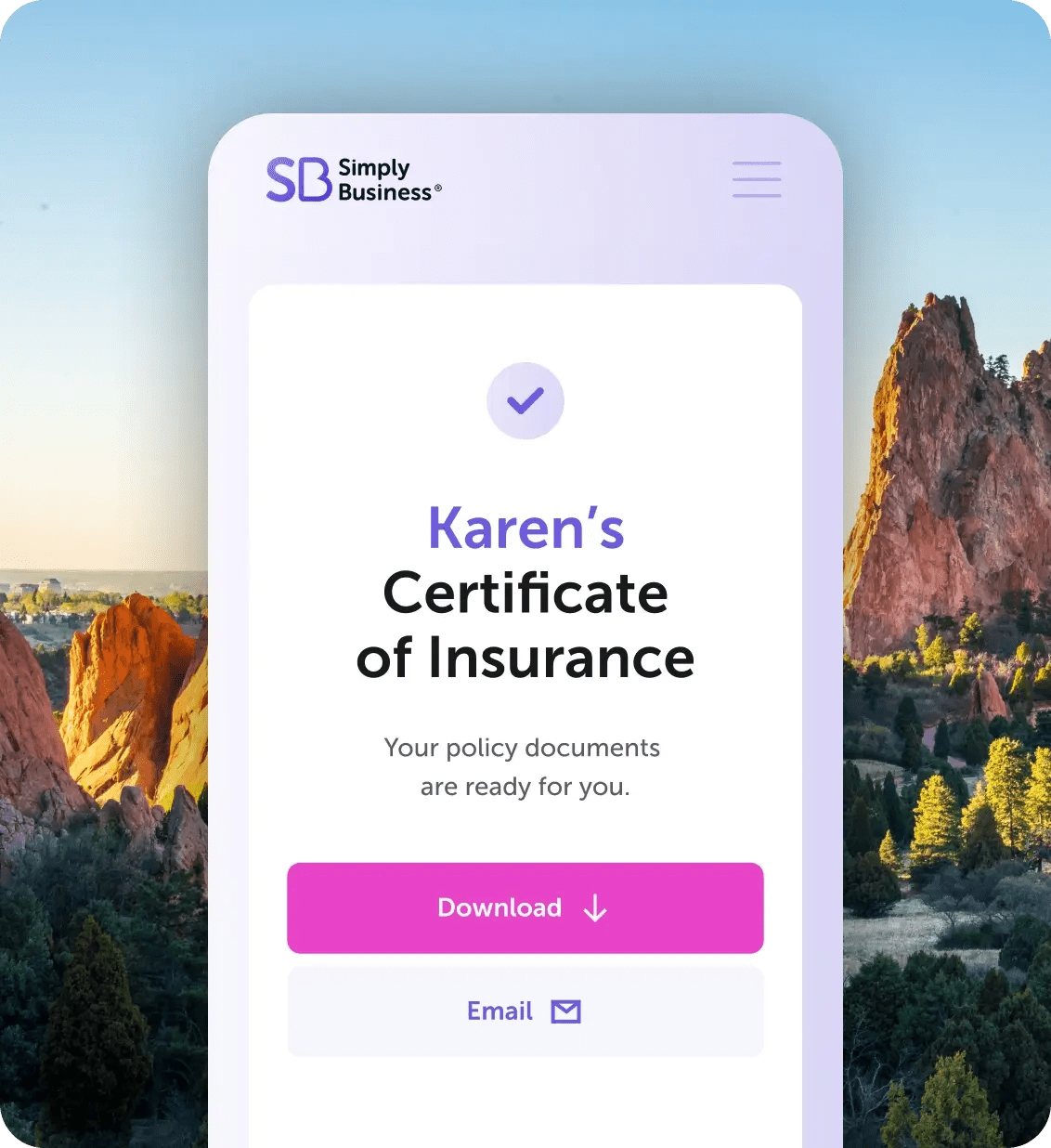
A Certificate of Insurance (COI) confirms your coverage is active, lists your policy limits, and shows any additional insureds. It’s one of the first things a commercial landlord, client, or general contractor may ask for before signing a lease or starting a project.
Once you’ve purchased a policy, you usually can download a COI from your insurer’s or broker’s online portal in a few minutes. You also can request a custom version that lists a landlord, client, or project owner as an additional insured.
FAQs About Colorado Business Insurance
What insurance is required for small businesses in Colorado?
Colorado requires workers’ compensation insurance for almost any business with at least one employee, whether they’re full-time, part-time, or a family member on payroll. Sole proprietors and some business owners can opt out for themselves but must carry coverage once they hire employees.
General liability insurance typically isn’t mandated by state law, but many leases, contracts, and local licensing bodies require proof of coverage before you can operate.
How much is workers’ compensation in Colorado?
Workers’ compensation costs in Colorado depend on your industry classification, payroll, and claims history. So higher-risk trades such as construction, roofing, and trucking usually pay more than lower-risk businesses. If you add employees or move into riskier work, your costs could increase.
Do sole proprietors need insurance in Colorado?
Colorado generally doesn’t require sole proprietors without employees to have workers’ compensation, though owners in construction and similar fields may need to carry coverage or formally opt out.
General liability and professional liability insurance in Colorado aren’t typically required for sole proprietors, but many clients or commercial landlords may require proof of coverage before they’ll sign a contract or lease.
What business insurance do I need in Colorado?
Colorado requires workers’ compensation for any business with employees and commercial auto insurance for business vehicles. Businesses that sell or serve alcohol are required to carry liquor liability insurance. General liability and professional liability aren’t typically required by state law but are often required by contracts and leases.
Who regulates business insurance in Colorado?
The Colorado Division of Insurance, part of the Department of Regulatory Agencies (DORA), oversees insurance in the state. That includes licensing insurers and agents, as well as handling consumer complaints. You can verify an insurer or producer’s license and check for any regulatory actions through the DORA/Division of Insurance website.
Additional Information and State Resources for Colorado Small Business Owners
Colorado Secretary of State’s office: Checklist for new businesses
Colorado Department of Regulatory Agencies: Division of insurance
Colorado Department of Labor and Employment
Colorado General Assembly: Mandatory automobile insurance in Colorado
Department of Regulatory Agencies: Rules regarding real estate brokers
Our customers are big fans. And you will be too.
Process was easy; rates were reasonable; advice was invaluable.
Janice S.
Business consulting
The sales representative was very informative and took time to explain things to me. Honestly I was not going to purchase a policy, but he changed my mind.
Ashleyann R.
Janitorial services
Easy website for comparing of different companies. I talked to a representative and she was absolutely amazing.
Patrick P.
Handyman
Written by