Small Business Insurance in Utah

Get a price estimate in just three steps
Rates as low as $20.75/month*
Get a price estimate in just three steps
Rates as low as $20.75/month*

Over 1 million customers worldwide.


Buy instantly online.

Written by
Utah Small Business Insurance
Utah’s business community is as diverse as its famous terrain. From tech startups scaling the Silicon Slopes to boutique shops in Park City, small business owners drive the state’s economy accounting for over 99% of all Utah companies. Whether you’re running a retail storefront in Ogden, managing a team in Provo, or launching a new venture in Salt Lake City, having the right coverage can help keep you compliant with local regulations and safeguard your hard work.
In this Utah business insurance guide, we’ll unpack what’s required, the policies clients expect, and what they typically cost so you can get covered with confidence.
What Types of Small Business Insurance Are Required in Utah?
Utah’s insurance requirements depend on your industry, workforce, and how your business operates.
Here’s a breakdown of the coverages you’ll most likely need:
Workers’ compensation can help cover medical bills, rehabilitation, and time away from work if an employee suffers a work-related injury or illness.
Under the state’s Workers’ Compensation Act (Utah Code s. 34A-2-201), the Utah Labor Commission requires employers to provide workers’ comp coverage to all employees. This mandate applies to even one full-time, part-time, or seasonal worker. If you operate as a sole proprietor with no employees but work as a subcontractor for other businesses, your clients may ask you to file an official Workers’ Compensation Coverage Waiver with the state to prove you are exempt.
One detail that trips up contractors: if you hire subcontractors who don’t carry their own workers’ comp coverage, you could be held responsible for their workers’ compensation claims arising from the work they performed for you. That’s why it’s a good idea to request a Certificate of Insurance proving coverage before anyone sets foot on your job site.
General liability insurance helps protect your small business against third-party claims, such as property damage and bodily injury.
Utah mandates general liability insurance for all licensed contractors and registered handymen. To obtain or renew a contractor license, the Utah Division of Occupational and Professional Licensing (DOPL) requires proof of General Liability insurance with minimum limits of $1,000,000 per occurrence and $2,000,000 in the aggregate.
For most other business owners, General Liability is not required by state law, but some commercial landlords, city permit offices, and client contracts will expect you to show a Certificate of Insurance before you can sign a lease or start a project.
A BOP typically bundles general liability, commercial property protection, and business interruption coverage to help pay for damages, repairs, and lost income so you can get back to work quickly.
Many small businesses choose a BOP because it offers more protection than a stand-alone General Liability policy without costing much more — a great option if you’re established or planning to grow.
Utah doesn’t require a BOP, but for shops, restaurants, and any business with a physical location and equipment to protect, it’s often the most cost-effective way to cover property and liability in one package.
Professional liability insurance, also known as errors and omissions (E&O) coverage, protects you from claims of negligence, missed deadlines, errors, or omissions in the work you deliver. It can also help cover legal defense costs, settlements, and judgments if a client files a legal claim against you.
Though not legally required in Utah, professional liability insurance can be essential coverage if your business is paid for its expertise or advice. And in tech hubs like Silicon Slopes, clients routinely expect you to carry this protection before a contract is signed.
Utah requires any vehicle your business owns and registers in the state to carry liability coverage. Under state law, your policy needs to meet the following minimum limits:
- $30,000 per person for bodily injury
- $65,000 per accident for bodily injury
- $25,000 per accident for property damage
Additionally, because Utah is a no-fault state, your business auto policy must also include a minimum amount of Personal Injury Protection (PIP) to handle immediate medical expenses, regardless of who caused an accident.
As of the date of this article, Simply Business doesn’t offer commercial auto insurance in Utah, but our licensed insurance agents can help you find trusted providers that do.
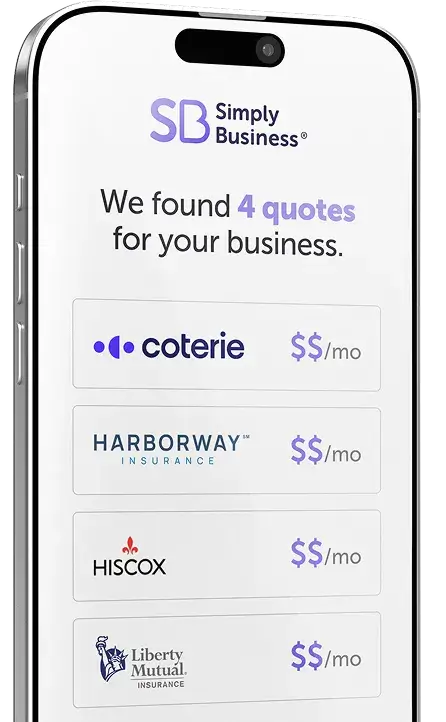
Get free Utah business insurance quotes in 10 minutes or less.
Simply Business provides customized coverage options from top-rated small business insurers — all in just 10 minutes. We do all the leg work so you can sit back, compare quotes, and save.
How Much Does Business Insurance Cost in Utah?
Here are the median monthly costs for common small business insurance policies in Utah:
Median Monthly Costs1
| Workers’ compensation | $100 |
| General liability | $41 |
| Business owner’s policy | $47 |
| Professional Liability | $41 |
1Data from Simply Business customers located in Utah, who purchased at least one or a combination of Workers’ Compensation, General Liability, BOP, and Professional Liability policies from July 1, 2025 to December 31, 2025. The median costs shown are for illustrative purposes only; actual premiums vary by state, coverage limits, and individual business risk.
The cost of business insurance in Utah depends on several factors, and pricing can vary from one business to the next.
Some factors that can affect your premium include, but are not limited to:
- Payroll: Workers’ Comp is tied to your total payroll, so a larger team usually means a higher premium.
- Industry risk: A framing crew in Salt Lake City carries a very different risk profile than a software developer in Lehi, and rates typically reflect that.
- Location: A storefront situated near the Wasatch earthquake fault line or a Main Street boutique in Park City carries a much higher property risk profile than a standard office in Logan, and rates reflect those local earthquake and weather exposures.
- Claims history: A clean record helps; past claims can push your rate up at renewal. Opting for a higher deductible can also lower your premium.
State-Specific Risks for Businesses in Utah
In Utah, geography and local regulations are a critical part of your risk profile. The same rugged landscape and thriving economy that drive business also bring earthquake hazards, wildfires, and liability exposures that standard policies don’t always cover. Here’s what to watch and how the right coverage helps.

Wasatch Fault Earthquake Risk
One of Utah’s most pressing and underinsured risks lies right beneath the Salt Lake City metro area, home to the majority of Utah’s businesses.
According to a Utah Geological Survey, there is a 43% chance of a magnitude 6.75 or greater earthquake along the Wasatch Fault in the next 40 years. That probability jumps to over 90% for a magnitude 5 or greater earthquake during the same time period. Because most standard commercial property policies exclude earthquake damage, a separate earthquake endorsement or standalone policy may be essential for Wasatch Front exposed business.

Wildfire Risk
Utah’s dry desert climate and expanding wildland-urban interface create significant wildfire exposure for businesses in the Wasatch Back, southern Utah, and communities bordering national forests. If a fire forces you to evacuate or damages your storefront, closing your doors for weeks can be devastating. A BOP can help businesses near fire-prone areas repair damaged property and replace lost income while operations are paused.

Data Breach
If your business experiences a data breach affecting personal information, the Utah Protection of Personal Information Act (Utah Code 13-44-101) requires you to notify every affected Utah resident. If the incident impacts 500 or more people, you must also notify the Utah Attorney General’s office and the Utah Cyber Center. And penalties for non-compliance can reach $2,500 per consumer violation. Cyber liability insurance can help cover your notification costs and regulatory response, helping you manage the financial costs of your regulatory response.

Outdoor Recreation & Specialized Liability
Utah’s world-class ski resorts, national parks, and adventure tourism sector create specialized liability exposures. Businesses tied to outdoor recreation face elevated on-property accident risks, equipment liability, and participant injuries that standard General Liability policies may not fully address without proper endorsements.
To avoid devastating out-of-pocket claims, outdoor operators should work with a specialized broker to customize their coverage with equipment rental floaters and robust umbrella protection.

Who Needs Utah Small Business Insurance?
Best Utah Business Insurance for Your Industry
Every industry carries its own risks, and Utah’s fast-growing economy means no two coverage needs look exactly alike. Here is where the state’s biggest sectors tend to focus to protect their bottom line.
From the commercial hubs along the Wasatch Front to residential builds in St. George, Utah’s construction boom shows no signs of slowing down. But keeping up with demand means managing serious on-site risks. Securing protection is an essential first step and the Utah Division of Occupational and Professional Licensing (DOPL) mandates general liability insurance before issuing a contractor license.
Hiring help changes your requirements too, as Utah law triggers mandatory workers’ compensation insurance the moment you bring on your very first employee.
Beyond standard coverage, local geography introduces unique hazards. Because the Salt Lake City, Provo, and Ogden metro areas sit directly on major fault lines, adding an earthquake endorsement to your BOP or commercial property protection can be a smart way to shield your structural assets from seismic damage.
Utah’s legendary terrain draws millions of visitors each year, fueling a massive outdoor recreation economy. Whether you are running ski rentals in Park City or guiding tourists through Zion Canyon, high-adventure services come with unique liability exposures. A business owner’s policy (BOP) paired with a premises liability endorsement offers a cost-effective baseline defense for guest-heavy properties, ensuring injuries on the premises are covered.
And if your business relies on expensive tools and equipment, inland marine coverage can be vital to protect your gear while it’s in transit or out on the trails or rivers.
The Silicon Slopes corridor stretching through Utah County and Salt Lake City has solidified its reputation as a powerhouse national tech hub. And for the area’s consultants, developers, and financial advisors, digital mistakes can be just as costly as physical accidents. Professional liability insurance, also known as errors and omissions (E&O) coverage, can help shield your firm if a client claims your advice or software caused them a financial loss.
Data security is equally critical. And Utah’s data breach notification law features a strict dual-reporting mandate. If a breach occurs, businesses must notify both the Attorney General and the Utah Cyber Center. Cyber liability insurance can help you manage a data breach, regulatory responses, and recovery costs.
How to get a Certificate of Insurance in Utah
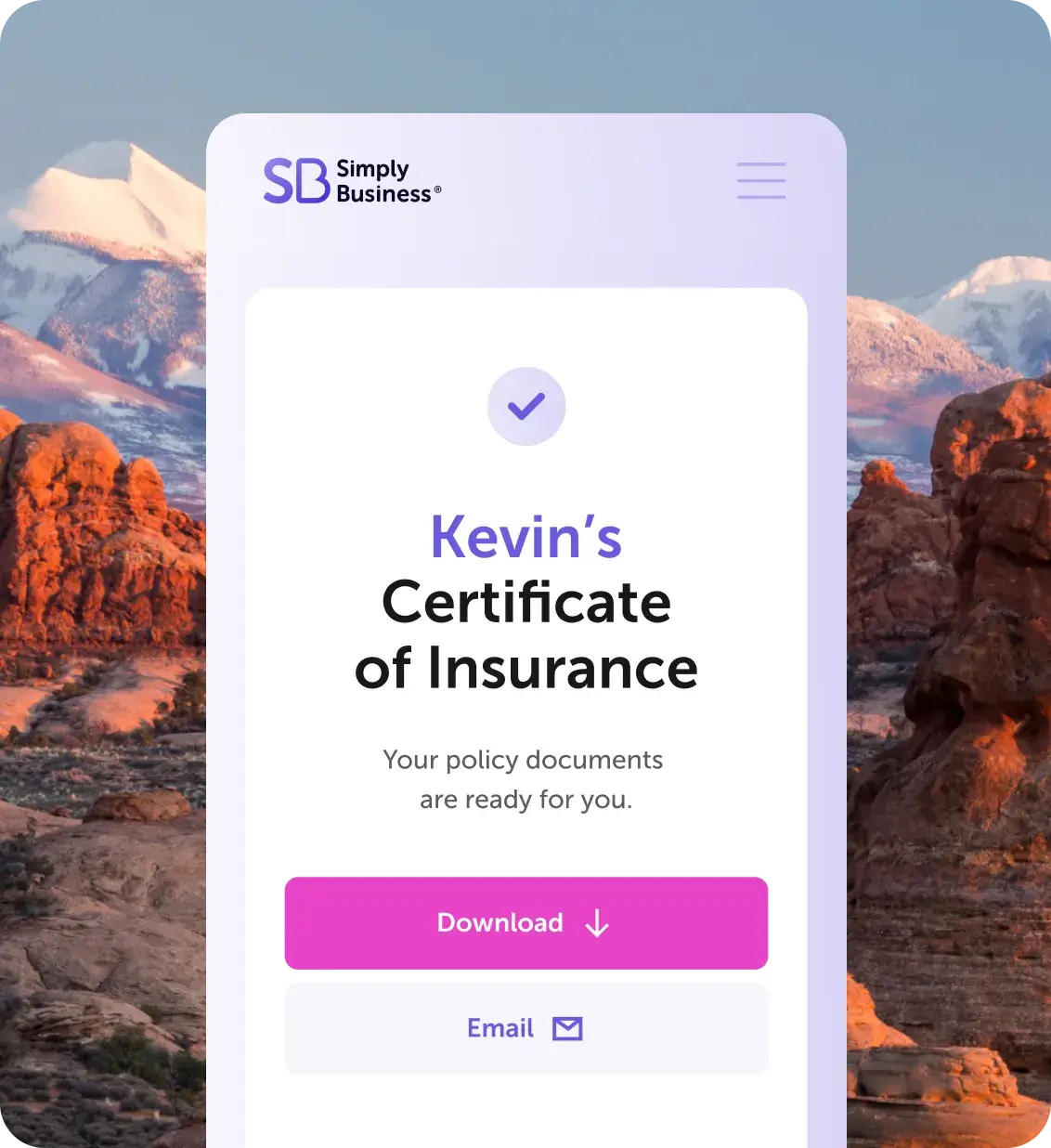
A Certificate of Insurance (COI) shows that your business has a valid policy in place and lists the coverage limits. Landlords, clients, and general contractors in Utah often ask for one before you can move forward with a lease, project, or subcontract.
Once your policy is active with Simply Business, you can generate a COI from your online customer account in a few minutes. You can also add additional insureds online whenever a new client or landlord requires it.
Frequently Asked Questions (FAQs)
FAQs About Utah Business Insurance
Utah state law does not mandate general liability insurance for most small businesses. However, general liability is required to obtain or renew a contractor’s license through the Utah Division of Occupational and Professional Licensing (DOPL). Additionally, commercial landlords, local municipalities, and corporate clients across Utah may request proof of active coverage before signing a lease or onboarding you as a vendor.
Utah operates under a strict “day-one” coverage mandate. According to Utah Code 34A-2-201, employers must secure workers’ compensation insurance the moment your business hires its very first employee, including full-time, part-time, seasonal, and temporary workers.
Yes. Utah law requires a valid workers’ compensation policy as soon as you have one person on your payroll, regardless of their total working hours or employment status.
Sole proprietors, partners, and single-member LLCs with no employees are exempt from purchasing workers’ comp for themselves. However, if you operate as a subcontractor, businesses that hire you may demand proof of coverage before allowing you onto a job site. To officially prove your exempt status, you can apply for a Workers’ Compensation Coverage Waiver (WCCW) through the Utah Labor Commission’s online portal for a $50 processing fee.
f you hire an uninsured subcontractor in Utah, your business could be held responsible for the subcontractor’s workers’ comp obligations under state law because the injured subcontractor or their crew will be legally classified as your “statutory employees” during a claims investigation. This means your insurance carrier will be responsible for handling their workplace injuries, which can drastically spike your future premiums. Always request a valid Certificate of Insurance (COI) to verify active coverage before any work begins.
Failing to maintain required worker’s comp coverage is a serious offense aggressively monitored by the Industrial Accidents Division of the Utah Labor Commission. Penalties for non-compliance include:
Direct Lawsuits: You may lose standard employer legal protections. This means an injured worker can sue your business directly in civil court for damages, and you will have to pay for your own legal defense and any settlements out of pocket
Monetary Fines: A mandatory minimum statutory penalty of $1,000.
Business Closure: The state can issue a restraining order that forces you to shut down all business operations immediately until you secure a valid policy.
No. A Business Owner’s Policy (BOP) and commercial property insurance typically exclude earthquakes and earth movement damage. Adding a dedicated earthquake endorsement or purchasing a standalone commercial earthquake policy can help protect your physical structures and inventory in the event of a seismic event.
Under Utah state law, the state increased its mandatory minimum limits for commercial auto liability insurance to 30/65/25. If your business chooses to carry the state-required minimums, your policy must now provide at least $30,000 for bodily injury per person, $65,000 for bodily injury per accident, and $25,000 for property damage.
All commercial insurance carriers, agents, policies, and rates are strictly overseen by the Utah Insurance Department.
Typically, yes. The IRS and the Utah State Tax Commission, under certain circumstances, allow small business owners to write off commercial insurance premiums as a fully deductible, ordinary, and necessary business expense. To qualify, the coverage must serve a clear, legitimate business or trade purpose.
Our Utah customers are big fans. And you will be too.
The process was simple and it was nice to have multiple quotes at one time to compare.
Timothy M.
Handyperson
It was an easy and efficient process to get insurance.
Roger D.
Landscaping
Great rates and a very simple buying process.
Stephanie B.
Consulting services
Additional Information and State Resources for Utah Small Business Owners

Written by

Why Choose Simply Business
Small business insurance is what we do. Whether it’s covering you for accidents and errors, meeting workers’ comp requirements, or financially protecting your business from the unexpected, we can help find the coverage you need for your business.

Start your quote
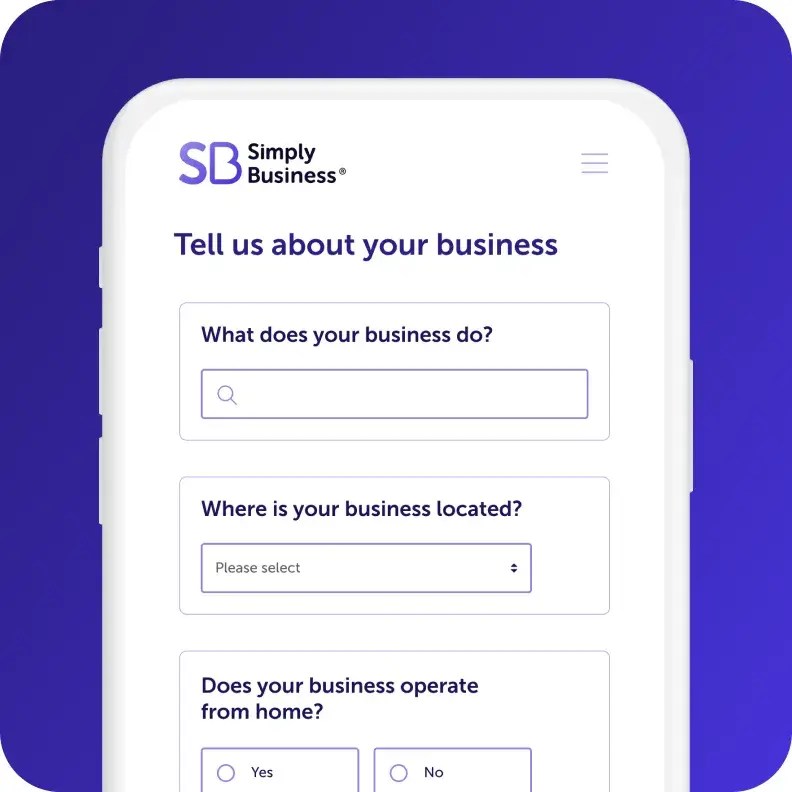
Answer a few questions about
your business in one form.

Review quotes
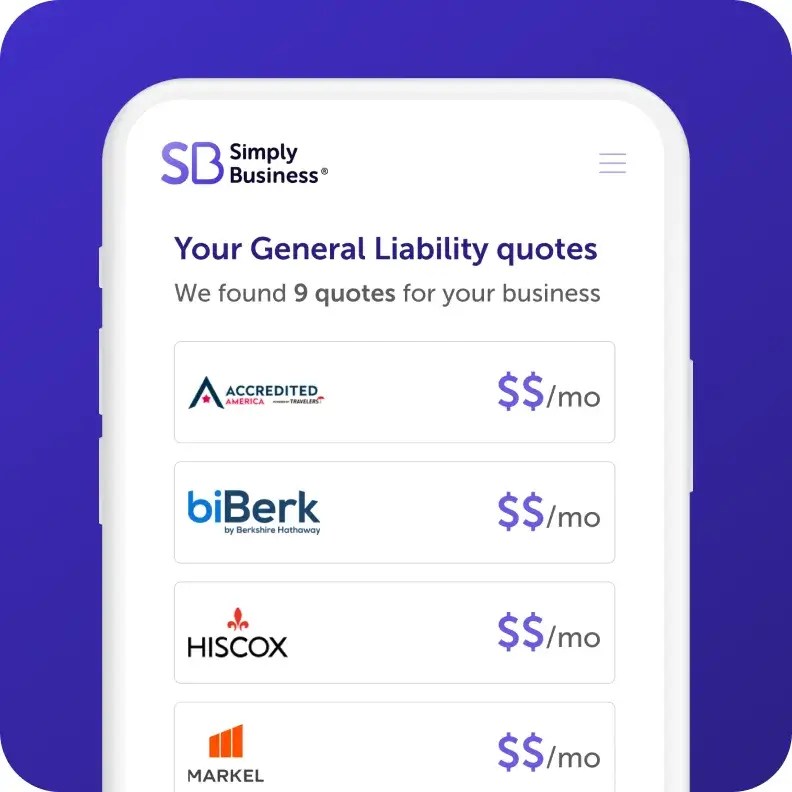
Compare quotes side by side from top-rated insurers and customize your coverage.

Get protected in minutes
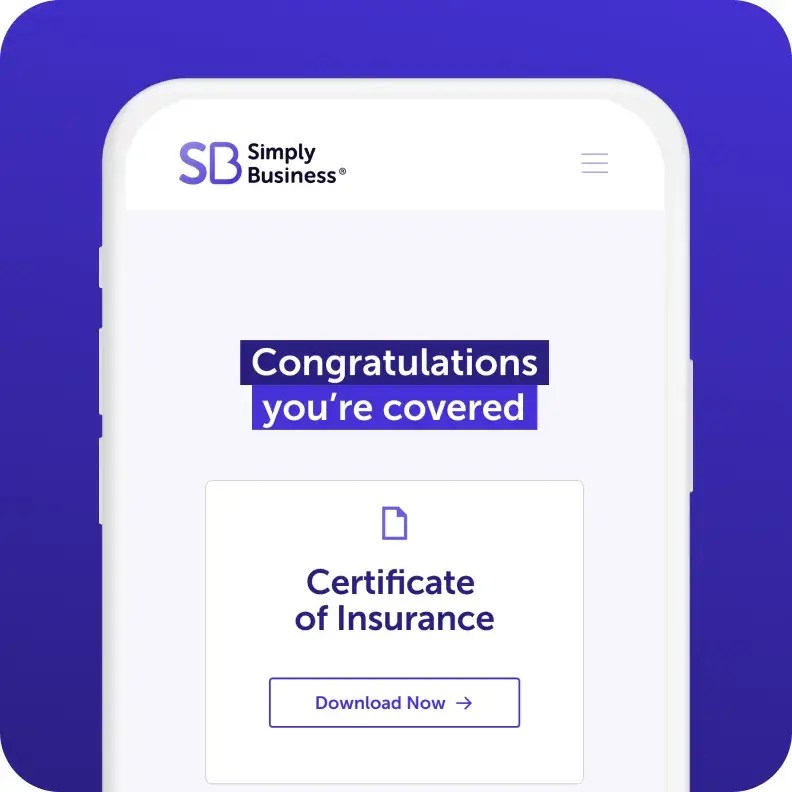
Choose your policy, and get instant proof of insurance – all online, and all within 10 minutes.
Feel confident in your choice.
We partner with a range of top-rated carriers and use smart technology to match you with policies that fit your specific business, your risks, and budget.

400+
business types covered

1M+
customers worldwide

18
top-rated carriers

*The displayed price for each product is a monthly estimate calculated from the 10th percentile of relevant policies sold by Simply Business (e.g., General Liability data is used for General Liability estimates). This estimate uses data from relevant policy sales between July–December 2025. Final price and payment terms, which may include an initial down payment, are subject to change based on your state, selected insurance provider, and specific business details.