Small Business Insurance in South Carolina

Get a price estimate in just three steps
Rates as low as $20.75/month*
Get a price estimate in just three steps
Rates as low as $20.75/month*

Over 1 million customers worldwide.


Buy instantly online.

Written by
South Carolina Small Business Insurance
From coastal seafood markets and beachfront restaurants to construction crews and family-run shops inland, South Carolina runs on small businesses. Whether you’re pouring drinks in Myrtle Beach, framing houses outside Greenville, or consulting from a home office in Columbia, the right coverage can help protect your hard work when the unexpected hits.
In this South Carolina business insurance guide, we’ll unpack what’s typically required, the policies clients usually expect, and what they typically cost so you can get covered with confidence.
What Types of Small Business Insurance Are Required in South Carolina?
South Carolina’s insurance requirements depend on your industry, workforce, and how your business operates.
Here’s a breakdown of the coverages you’ll most likely need:
Workers’ compensation can help cover medical bills, rehabilitation, and time away from work if an employee is injured on the job.
In South Carolina, you’re required to carry workers’ comp once you regularly employ four or more people, including full-time, part-time, and family members on your payroll. The South Carolina Workers’ Compensation Commission enforces the rule under the state’s Workers’ Compensation Act (Title 42), and a few categories are exempt — certain agricultural and railroad workers, casual employees such as a handyman hired to fix a broken window, and businesses with an annual payroll under $3,000.
One detail that trips up some contractors: if you hire subcontractors who don’t carry their own workers’ comp coverage, you can be held responsible for their claims. That’s why it’s a good idea to request a Certificate of Insurance proving coverage before anyone sets foot on your job site.
General liability insurance helps protect your small business against third-party claims, such as property damage and bodily injury.
South Carolina state law doesn’t require general liability, but that doesn’t make it optional in practice. Many cities and counties — and most general contractors or clients — expect proof of coverage before issuing a local permit or letting you on a job site, and landlords and clients routinely request it in a lease or contract.
If a customer slips in your shop or you damage a client’s property on a job, that’s exactly the kind of third-party claim general liability helps cover.
A BOP typically bundles general liability, commercial property protection, and business interruption coverage to help pay for damages, repairs, and lost income so you can get back to work quickly.
Many small businesses choose a BOP because it offers more protection than a stand-alone general liability policy without costing much more — a great option if you’re established or planning to grow.
South Carolina doesn’t require a BOP, but for shops, restaurants, and any business with a physical location and equipment to protect, it’s often the most cost-effective way to cover property and liability in one package.
Professional liability insurance, also known as errors and omissions (E&O) coverage, helps protect you from claims of negligence, missed deadlines, errors, or omissions in the work you deliver. It can also help cover legal defense costs, settlements, and judgments if a client files a formal legal claim against you, up to your policy limits.
South Carolina doesn’t require E&O by law, but for anyone who’s paid for their advice or expertise — accountants, real estate agents, marketing consultants, IT firms, photographers — it can be essential coverage. Many client contracts won’t move forward without it, and a single claim of faulty work can cost far more than years of premiums.
If your business owns or operates vehicles, your personal auto policy typically won’t cover accidents that happen during business use. A separate South Carolina commercial auto policy covers that business driving — heading to job sites, making deliveries, or hauling equipment to clients.
Any vehicle your business owns and registers in South Carolina must carry liability coverage, and the state sets the minimum limits. You can find the current required amounts on the South Carolina Department of Motor Vehicles (SCDMV) website.
As of the date of this article, Simply Business doesn’t offer commercial auto insurance in South Carolina, but our licensed insurance agents can help you find trusted providers that do.
Get free South Carolina business insurance quotes in 10 minutes or less.
Simply Business provides customized coverage options from top-rated small business insurers — all in just 10 minutes. We do all the leg work so you can sit back, compare quotes, and save.
How Much Does Business Insurance Cost in South Carolina?
Here are the median monthly costs1 for common small business insurance policies in South Carolina:
Median Monthly Costs1
| Workers’ Compensation | $128 |
| General Liability | $43 |
| Business Owner’s Policy | $48 |
| Professional Liability | $42 |
1Data from Simply Business customers located in SC, who purchased at least one or a combination of Workers’ Compensation, General Liability, BOP, and Professional Liability policies from July 1, 2025 to December 31, 2025. The median costs shown are for illustrative purposes only; actual premiums vary by state, coverage limits, and individual business risk.
The cost of business insurance in South Carolina depends on several factors, and pricing can vary from one business to the next.
Some factors that affect your premium can include:
- Payroll: Workers’ comp is tied to your total payroll, so a larger team usually means a higher premium.
- Industry risk: A roofing crew in Charleston carries a very different risk profile than an accountant in Columbia, and rates reflect that.
- Location: Coastal businesses in Charleston, Myrtle Beach, and Hilton Head often pay more for property coverage than inland operations in Columbia or Greenville — storm and wind exposure is a big reason why.
- Claims history: A clean record helps; past claims can push your rate up at renewal. Opting for a higher deductible can also lower your premium.
State-Specific Risks for Businesses in South Carolina
In South Carolina, geography is part of your risk profile. The same coastline and tourism economy that drives business also bring hurricanes, flooding, and liability exposures that standard policies don’t always cover. Here’s what to watch and how the right coverage helps.

Hurricanes & Coastal Storm Surge
From Charleston to Myrtle Beach, coastal businesses sit directly in the path of Atlantic storms. Recent hurricanes like Matthew, Florence, and Helene proved that wind and storm surge can close your doors for weeks. While a separate flood policy covers storm surge water, a BOP typically covers damage to physical property caused by a hurricane or windstorm. It can cover business interruption if your business needs to close due to property damage caused by the storm. Typically business interruption coverage will only kick in if there’s a covered property damage claim; it may not kick in if you have to close your business during a storm.

Statewide Flooding Risk
Flooding isn’t just a coastal problem in South Carolina. When Hurricane Helene hit the Upstate, it brought widespread flood damage to Greenville, Spartanburg, and Anderson counties. The catch: standard BOPs exclude flood damage completely. As the South Carolina Department of Insurance notes, you will need a separate flood policy through the National Flood Insurance Program (NFIP) or a private insurer to stay covered.

Data Breach – SC Code § 39-1-90
If your business faces a data breach, South Carolina law requires notifying affected residents without unreasonable delay. Breaches impacting 1,000 or more residents must also be reported to the SC Department of Consumer Affairs and major credit bureaus. Ignoring these rules can trigger fines up to $1,000 per affected resident. Cyber liability insurance can help cover notification, credit monitoring, and regulatory defense costs.

Tourism & Liquor Liability
South Carolina’s massive hospitality scene carries strict liquor liability risks. Under state dram shop rules, your business can be held responsible if an over-served patron causes harm. Venues serving alcohol for on-premises consumption past 5 p.m. face a baseline $1 million coverage mandate. However, businesses may reduce their insurance coverage requirement by adopting state-approved risk mitigation steps such as mandatory server training or closing by midnight.

Who Needs South Carolina Small Business Insurance?
Best South Carolina Business Insurance for Your Industry
Every industry carries its own risks, and South Carolina’s diverse economy means no two coverage needs look alike. Here’s where the state’s biggest sectors tend to focus.
South Carolina’s building boom keeps contractors busy from the coast to the Upstate — and busy job sites come with real exposure. Many local cities and counties require general liability just to issue a local business permit, and once you hire subcontractors, you’ll need proof that each one carries workers’ comp. High-limit general liability and workers’ compensation are the foundation; commercial auto and inland marine coverage rounds it out for crews hauling tools and materials between sites.
Tourism is one of South Carolina’s largest industries, an estimated $31 billion dollar industry, according to the SC Department of Parks, Recreation & Tourism. For restaurants, bars, hotels, and event venues that power it, a BOP can be a cost-effective way to bundle general liability, commercial property, and business interruption coverage in one simplified package.
Liquor liability coverage rules apply to venues serving alcohol for on-premises consumption after 5 p.m. Coastal businesses should also consider a separate flood policy.
Charleston and Greenville have grown into legitimate tech hubs, and professional services firms are thriving across the state. For consultants, IT providers, and financial firms, professional liability (E&O) guards against claims that your work caused a client harm. And given South Carolina’s data breach notification laws, cyber liability insurance can be smart coverage, especially for anyone handling sensitive client data.
How to get a Certificate of Insurance in South Carolina
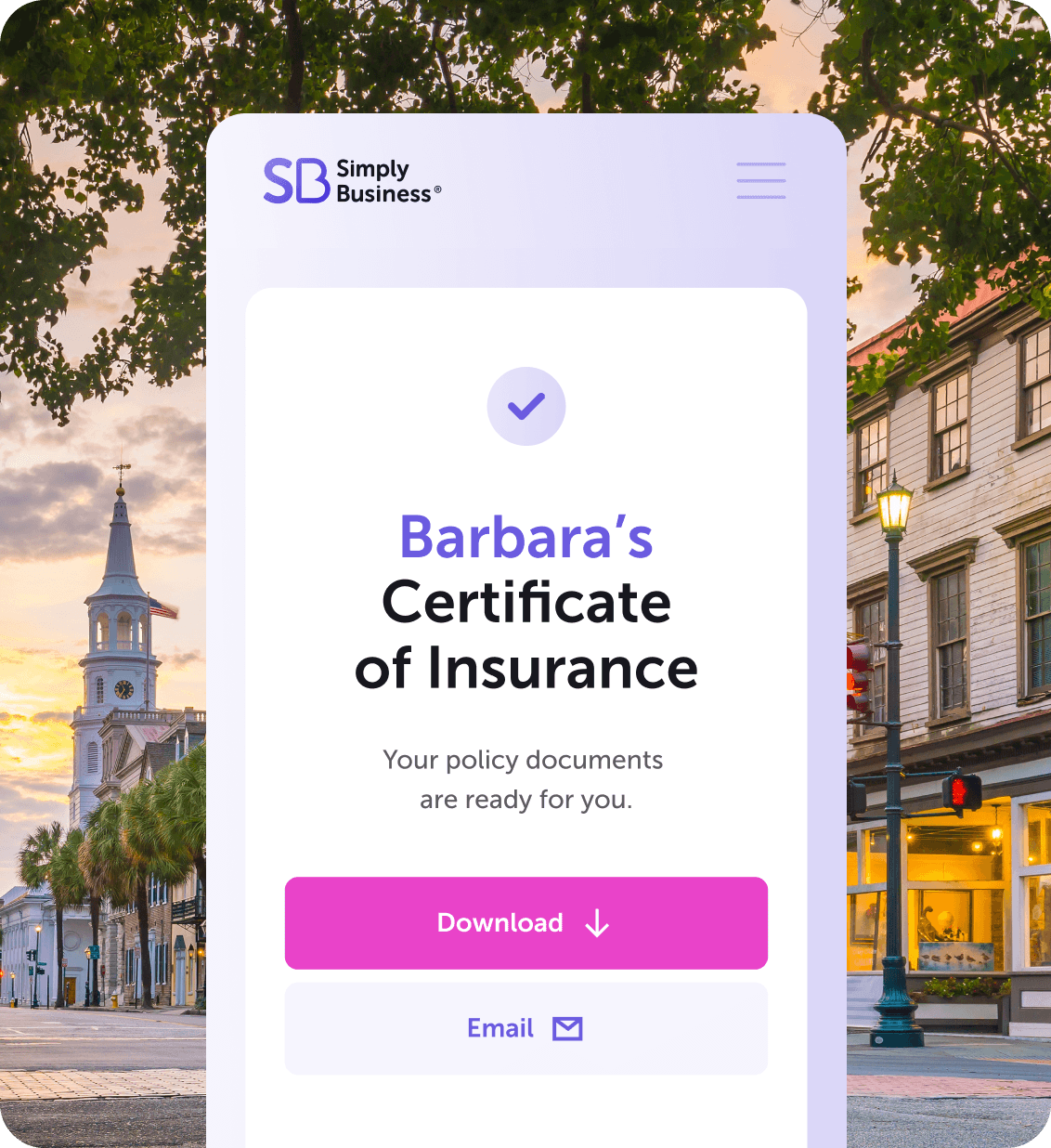
A Certificate of Insurance (COI) shows that your business has active coverage. In South Carolina, you may need a COI before you can bid on contracts, sign a commercial lease, or get hired as a subcontractor.
Simply Business lets you request and manage your COI through your online account once your policy is active, including adding additional insureds.
FAQs About South Carolina Business Insurance
General liability is not required by South Carolina state law but commercial landlords, clients, and local municipalities will often ask for proof of coverage before you can sign a lease, secure a business permit, or win a contract.
Workers’ comp coverage becomes mandatory when you regularly reach a headcount of four or more workers — including full-time, part-time, or paid family members. Your business must also meet a baseline annual payroll of more than $3,000 to trigger the requirement.
The South Carolina Workers’ Compensation Commission can take formal action to halt your operations and impose administrative fines of up to $100 per day if you fail to comply with their requirements. Without proper coverage, you may also be on the hook for an injured worker’s medical bills and lost wages out of pocket — a risk that can dwarf the cost of a policy.
Sole proprietors, partners, and LLC members are automatically excluded from counting toward the four-employee threshold in South Carolina. However, corporate officers count as employees unless they formally file a form to reject coverage.
Yes, you must obtain a commercial auto policy if your business owns the vehicles. Personal auto policies exclude business use, meaning accidents during work deliveries or client visits could face claim denials without a dedicated commercial vehicle policy.
It’s not legally required for most businesses, but flood insurance is strongly recommended statewide. Because standard commercial property and BOP policies exclude rising surface water, you’d need a separate NFIP or private flood policy to be covered.
It’s a law that can hold a business that serves alcohol responsible for harm caused by a patron it over-served. In South Carolina, venues serving alcohol on-premises past 5 p.m. face a baseline $1 million Liquor Liability mandate, though owners can legally lower their required limit with these state-approved risk mitigation strategies.
It can be. The IRS and the South Carolina Department of Revenue allow small businesses to deduct business insurance premiums as a necessary business expense, provided the coverage is strictly used for trade or business operations. It’s best to confirm with a tax professional regarding what applies to your specific business, though.
Additional Information and State Resources for South Carolina Small Business Owners

Written by
Our +1 million customers are big fans. And you will be too.

The process went smooth. Needed to add additional things to the policy and everything was explained and taken care of.

Samuel R.
Handyperson, SC
Fast, good service. And reasonable price for the coverage.
Derek M.
Ecommerce & online retailer, SC
The process to get coverage was easy to do and fairly priced.
Kristoffer L.
Housekeeping, SC

Why Choose Simply Business
Small business insurance is what we do. Whether it’s covering you for accidents and errors, meeting workers’ comp requirements, or financially protecting your business from the unexpected, we can help find the coverage you need for your business.

Start your quote
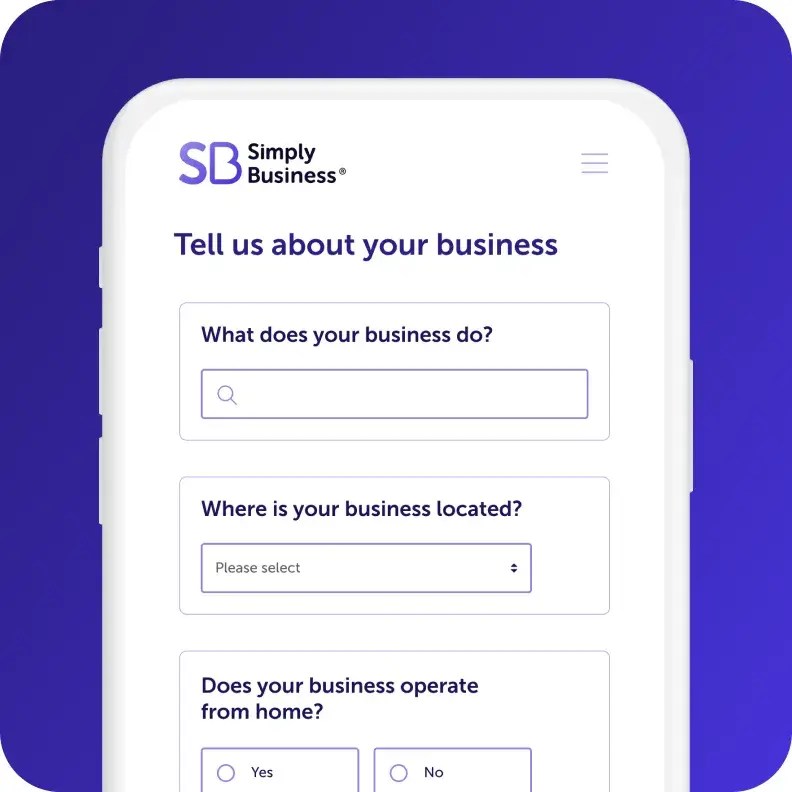
Answer a few questions about
your business in one form.

Review quotes
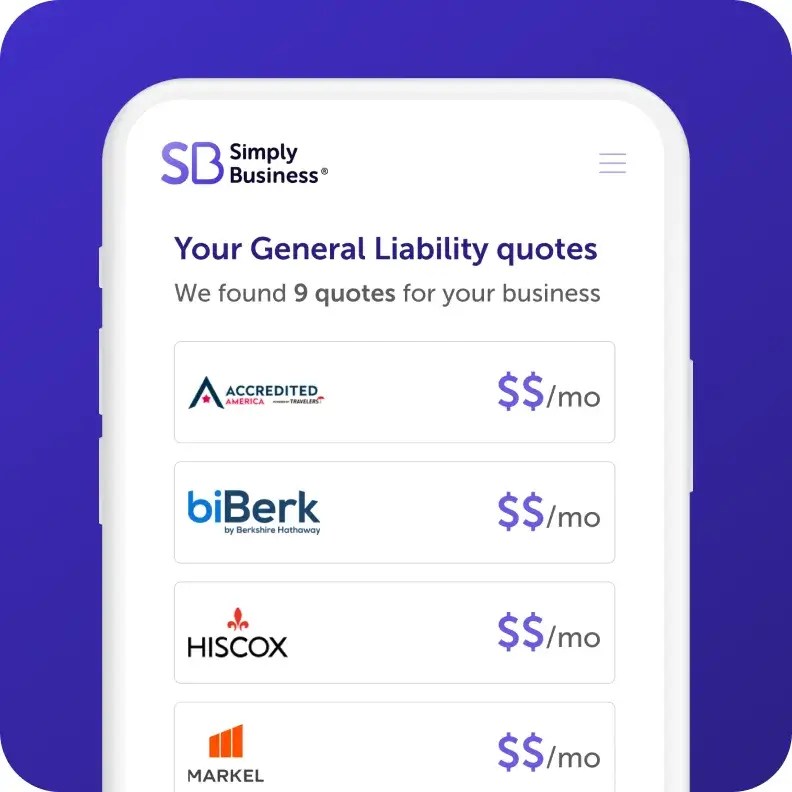
Compare quotes side by side from top-rated insurers and customize your coverage.

Get protected in minutes
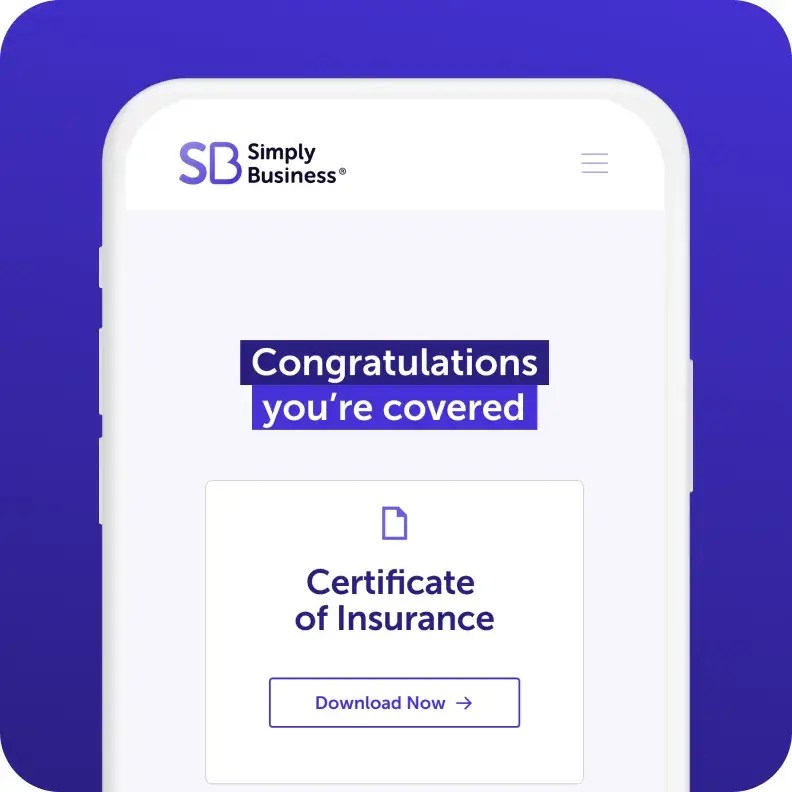
Choose your policy, and get instant proof of insurance – all online, and all within 10 minutes.
Feel confident in your choice.
We partner with a range of top-rated carriers and use smart technology to match you with policies that fit your specific business, your risks, and budget.

400+
business types covered

1M+
customers worldwide

18
top-rated carriers









*The displayed price for each product is a monthly estimate calculated from the 10th percentile of relevant policies sold by Simply Business (e.g., General Liability data is used for General Liability estimates). This estimate uses data from relevant policy sales between July–December 2025. Final price and payment terms, which may include an initial down payment, are subject to change based on your state, selected insurance provider, and specific business details.
Page last updated: