Business Personal Property (BPP) Insurance for Small Businesses
Your equipment, inventory, and furniture keep your business running. Business Personal Property insurance helps replace them when something goes wrong — so you can get back to work fast. Get started with rates as low as 20.83*
Over 1 million customers worldwide.


Buy instantly online.

Written by
What Is Business Personal Property Insurance?
Think of it this way: if you could pick up your building and turn it upside down, everything that falls out is your business personal property. Everything that stays put — walls, floors, plumbing, the roof — is the building itself.
Business personal property (BPP) insurance covers the movable stuff that makes your business work. Your laptop, your tools, your inventory, your desk, your espresso machine — if it’s not permanently attached to the building, BPP is what protects it.
It’s one of the most practical coverages a small business can carry, and it’s often included as part of a broader policy like a business owner’s policy (BOP).
Simply Business gives you access to top insurance carriers.
















What Does BPP Insurance Cover?
BPP coverage protects your physical business assets from things like fire, theft, vandalism, and certain weather events. Here’s what falls under the four main categories.
Office furniture and fixtures
This includes the things that fill your space and help you serve customers:
- Desks, chairs, and shelving
- Display cases and counters
- Filing cabinets
- Lighting fixtures (the freestanding kind)
- Rugs, decor, and signage inside your space
A quick note on signs: outdoor signs are usually not covered under standard BPP. If your shop has a sign out front, you’ll likely need to add it to your policy specifically.
Example: A coffee shop owner comes in to find a burst pipe has soaked the seating area, ruining chairs, tables, and the front counter. BPP helps cover the cost to replace it all.
Inventory and supplies
If you sell products, your inventory is probably one of your biggest assets. BPP covers:
- Products you have for sale
- Raw materials used to make those products
- Packaging and shipping supplies
- Office supplies and consumables
One important limit to know about: BPP usually doesn’t cover inventory while it’s in transit. If you ship products to customers or move stock between locations, that’s typically handled by a separate coverage called inland marine insurance.
Example: A boutique owner discovers a break-in overnight. Racks of clothing inventory are gone. BPP helps cover the cost of restocking.
High-value equipment and tech
For most small businesses, this is where the real money sits:
- Computers, laptops, and tablets
- Cameras, audio gear, and production equipment
- Power tools and trade-specific equipment
- Kitchen appliances and commercial machinery
- Point-of-sale systems
Like inventory, equipment you regularly take off-site has its own rules. A laptop you carry to client meetings or a camera you bring on shoots may need inland marine coverage to be fully protected away from your business location.
Example: A graphic designer’s office is broken into and her iMac, drawing tablet, and backup drives are stolen. BPP helps her replace everything so she can get back to client work.
Who Needs Business Personal Property Insurance?
Short answer: almost any business with physical stuff worth protecting. That includes:
- Retail shops and restaurants
- Tradespeople with tools and equipment
- Photographers, designers, and other creatives
- Personal trainers, beauticians, and lifestyle businesses
- Consultants, real estate agents, and other professionals
- Home-based businesses (yes, really — keep reading)
The home-based business gap
Here’s something a lot of home-based business owners don’t realize: your homeowners’ insurance probably won’t cover your business stuff.
Most standard homeowners’ policies cap business property coverage at around $2,500 — and some policies exclude it entirely. That means if your home office gets hit by a fire or break-in, your $4,000 laptop, your $3,000 camera kit, and your inventory could be on you.
If you run a business from your home, business personal property insurance fills that gap. It’s one of the simplest, most affordable ways to protect what you’ve built.
Replacement Cost vs. Actual Cash Value: Which Is Better?
When you file a claim, your policy pays out one of two ways. Knowing the difference matters.
Replacement Cost (RC)
pays what it costs to buy a new version of what you lost, today. If your three-year-old laptop is stolen, RC pays for a comparable new laptop at current prices.
Actual Cash Value (ACV)
pays what your item was worth at the time of the loss — meaning the original price minus depreciation. That same three-year-old laptop? You’d get a check for what a used three-year-old laptop is worth.
One thing worth knowing about Replacement Cost
Most Replacement Cost policies have a catch: you actually have to replace the item to get the full payout. If you decide not to replace it, the insurer pays the depreciated (ACV) value instead.
This isn’t a gotcha — it’s how insurers keep Replacement Cost coverage affordable for everyone. Paying full replacement value on items people don’t actually replace would push premiums up for everyone.
The practical takeaway: if something’s covered and gets damaged or stolen, replace it and submit your receipts. That’s how you get the full benefit of the policy you’re paying for.
For most small businesses, Replacement Cost is the better choice. It costs a bit more upfront, but it means you’re not paying out of pocket to get your business running again.
Note that for most professional liability policies, legal costs and fees may impact your policy limits. Talk with your broker or agent if you have questions.
Why this matters more than ever
Material and equipment costs have climbed noticeably over the last several years. Almost everything a small business depends on — tools, equipment, furniture, inventory — costs more to replace today than it did to buy.
That’s why adequate property valuations are so important. If you insure your business contents based on what they cost five years ago, you could be significantly underinsured when you actually need to file a claim.
Take a few minutes each year to update your numbers. Walk through your space, look at what you actually own, and check current replacement prices. It’s the single best way to make sure your coverage keeps up with reality.
BPP vs. BOP: The Key Differences
This is a common point of confusion, so let’s keep it simple.
Think of BPP as one ingredient. A BOP is the full meal. Many small businesses end up with a BOP because it’s a cost-effective way to get multiple protections at once.

Business Personal Property (BPP)
is a specific coverage — it protects your movable business assets.

A Business Owner’s Policy (BOP)
is a bundle — it combines several coverages into one convenient policy, usually including general liability, commercial property (which covers your building if you own it), and BPP.
These two policies protect different risks, and many businesses need both.
Note that for most professional liability policies, legal costs and fees may impact your policy limits. Talk with your broker or agent if you have questions.
Here’s a simple way to think about it:
- Advice or service issue? Professional liability
- Physical accident? General liability
They work together, not as replacements for each other.
How Much Does Business Personal Property Insurance Cost?
You can get business personal property coverage as part of a business owner’s policy (BOP) or commercial general liability (GL) policy for as low as $21/month. Final cost depends on a few things:
- The total value of your business property
- The type of business you run
- Your location
- The coverage limits and deductible you choose
- Whether you bundle BPP with other coverages
Here’s a tip that saves money over time: keep your property values accurate and up to date. When you give insurers a clear, current picture of what you own, your premiums tend to stay stable from year to year. Underestimating leaves you exposed at claim time. Overestimating means paying for coverage you don’t need.
A quick annual review is all it takes.
What Some Customers are Paying for BPP2
Connecticut
Videographer
- Limited Liability Company (LLC)
- Limit: $20,000
- Deductible: $500
- Quoted May 2026
$111
/month
Arizona
IT consultant
- Sole proprietorship
- Limit: $15,000
- Deductible: $500
- Quoted May 2026
$137
/month
Nevada
Nail technician
- Limited Liability Company (LLC)
- Limit: $25,000
- Deductible: $500
- Quoted May 2026
$95
/month
2These examples are real insurance quotes generated on the dates above. They are for illustration purposes only. Your coverage options and pricing may differ based on the information you provide us about your particular business, the state you operate in, the number of employees, and other factors.
What Other Types of Insurance Do I Need?
Business insurance usually refers to one or more coverages suited to your type of small business. Here are the foundational insurance policies we most often recommend, and how they can help protect your small business:

General LiabilityFrom $20.75/month*

Professional LiabilityFrom $25.83/month*
Business Owner’s Policy From $33.75/month*

Inland MarineFrom $20.83/month*

Workers’ CompFrom $38.91/month*
Errors & OmissionsFrom $33.75/month*
How to Get BPP Online
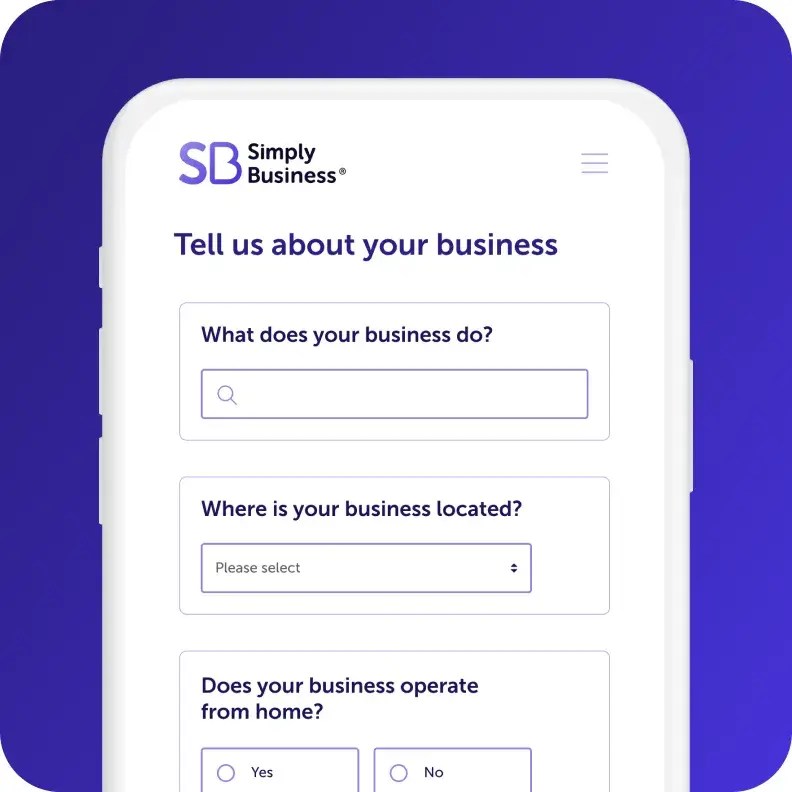

Start your quote
Answer a few questions about your business in one form.
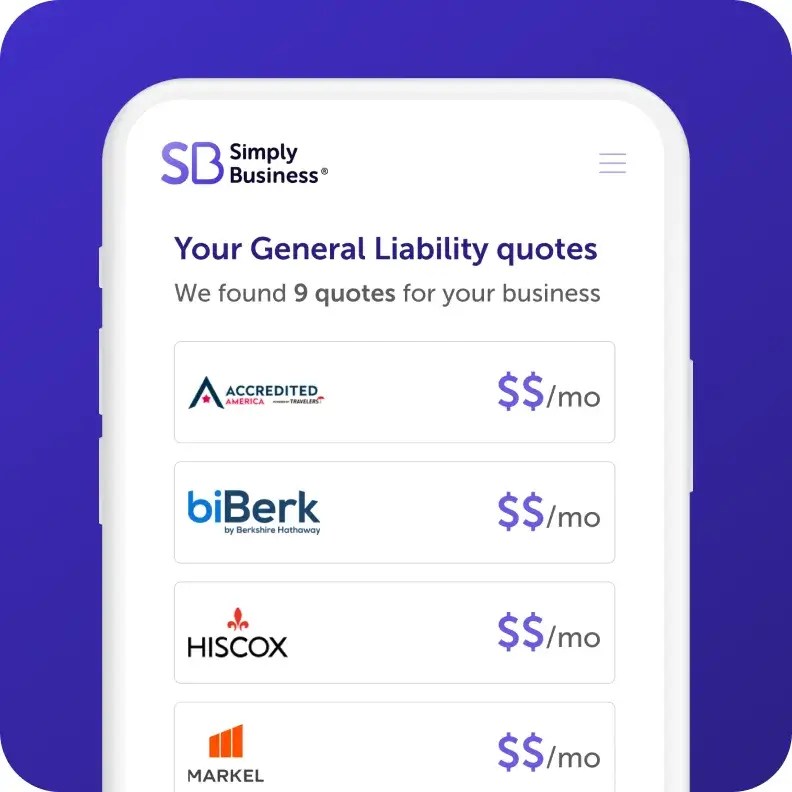

Review quotes
Compare quotes side by side from top-rated insurers and customize your coverage.
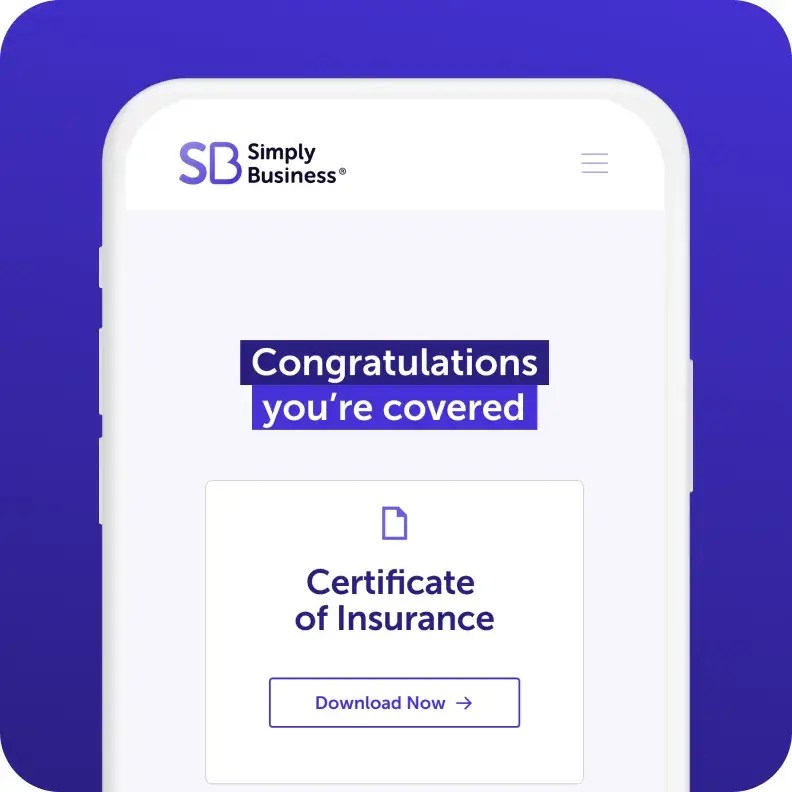

Get protected in minutes
Choose your policy, and get instant proof of insurance – all online, and all within 10 minutes.
Business Personal Property Insurance FAQs
In most cases, yes. Business insurance premiums — including BPP — are generally considered an ordinary and necessary business expense by the IRS, which makes them deductible. Tax rules vary by situation, so check with your accountant or tax advisor to confirm what applies to your business.
Probably not under standard BPP. Most business personal property policies cover property at your business location. Once your laptop leaves the premises, you typically need inland marine coverage to protect it. If you regularly work off-site, ask about adding it to your policy — it’s usually affordable and worth it.
It depends on how your policy is written. With Replacement Cost coverage, you’ll get enough to buy a comparable new item at today’s prices. With Actual Cash Value coverage, you’ll get the depreciated value — what your item was worth at the time it was stolen. Replacement Cost generally costs a bit more but pays off when you need it.
Usually no. Standard business personal property insurance covers inventory while it’s at your business location. Once it’s in transit — in your van, on a delivery truck, or in the mail — it falls under inland marine insurance. If shipping is part of your business, it’s worth adding.
Almost certainly, yes. Standard homeowners’ policies often limit business property coverage to around $2,500, and some don’t cover it at all. If your home office has a laptop, equipment, inventory, or anything else you use to make a living, BPP fills a gap your homeowners’ policy probably leaves wide open.
State Business Insurance Guides
Find out what’s required in the state or states where you operate:
How to Get a Business Insurance Quote
You can quotes for business insurance in just 10 minutes with our online quote tool.
Written by
*The displayed price for each product is a monthly estimate calculated from the 10th percentile of relevant policies sold by Simply Business (e.g., General Liability data is used for General Liability estimates). This estimate uses data from relevant policy sales between July–December 2025. Final price and payment terms, which may include an initial down payment, are subject to change based on your state, selected insurance provider, and specific business details.
Page last updated: