How to Understand Your General Liability Insurance Costs

Small Business information you can trust.
Updated August 2025 by Ed Grasso
Insuring over 1 million small business owners worldwide.


Buy instantly online. No junk mail. No spam calls.
Insuring over 1 million small businesses worldwide.
Buy instantly online. No junk mail. No spam calls.
What Factors Influence Your General Liability Premium?
What you pay for general liability insurance depends on a few key things, including: your industry, location, and how much coverage you choose. But most small businesses will pay less than $95 per month.
Here’s a snapshot of what our customers typically pay for general liability insurance:
Monthly General Liability Insurance Costs1
Under $25
18% of customers
$25 to $95
67% of customers
Over $95
15% of customers
1Data from Simply Business customers who purchased a GL policy from July 1, 2024 to December 31, 2024.
These figures reflect actual policies purchased by our customers. However, finding a good price involves more than just the numbers — it’s about collaborating with a partner who understands your business. We work with a wide array of trusted insurers who specialize in the coverages small businesses need. We believe that can help you select a policy that meets your coverage needs and your budget.
What Else Can Affect My General Liability Premium?
The size and condition of your workspace.
The size and physical condition of your business location play a big role in your insurance cost. A larger space means there are more areas where accidents or damage could occur, especially if your business is open to the public.
The age of your building also matters. Newer buildings often mean lower rates because they’re generally safer. On the other hand, older buildings, especially those with outdated features or accessibility issues, can increase your rates because they’re seen as higher risk.
Insurance class codes.
Insurance companies group similar businesses together based on the kind of work they do and the risks they face. This helps them understand the typical claims and costs for specific types of businesses. Your business type, often called a class code by insurers, is a key factor.
This class code is then compared with other details like your total payroll, your annual sales, and the size and type of buildings you own or rent. All these factors help determine how much coverage you need and, in turn, your insurance price.
It’s also important to know that your business’s class code defines what your insurance typically covers. If you change or expand what your business does – for example, if you run a landscaping business and then decide to offer snow plowing during the winter, it may not be covered under your original insurance.
Your business operations and industry.
Not all businesses face the same level of risk. For instance, a roofing business is usually considered high-risk because there’s a greater chance of injuries or property damage. On the other hand, a graphic designer typically faces lower risks.
Generally, the riskier your industry or specific profession is, the higher your insurance cost will be. Many businesses and even some states (especially for fields like construction) require contractors to carry general liability insurance.
Annual business revenue.
How much money your business generates also influences the cost of your general liability policy. Usually, higher revenue means a higher insurance cost. However, how much the cost increases really depends on your industry.
For example, if your IT consulting firm sees a big jump in revenue, your insurance might only go up a little. This is because office-based businesses don’t typically face a major increase in third-party injuries or property damage just because they’re making more sales.
However, for a business like a commercial builder, small business insurance costs are much more sensitive to revenue increases. The more a builder makes, the more projects they are likely to take on. This can increase their exposure to on-the-job risks, which can lead to higher insurance costs.
Your experience.
Don’t be surprised if your insurance application asks about your years of business experience and the expertise of your company’s leaders. Generally, long-standing, stable businesses might see more favorable rates.
Number of employees.
The more employees you have, the more opportunities there are for them to accidentally cause damage to someone else’s property. That’s why your insurance cost will typically be higher if you have more employees.
Your application will usually ask for a breakdown of your full-time and part-time staff, as well as any subcontractors or consultants you use, so your insurance provider can accurately assess your risks.
Business location.
Where your business operates matters. Factors that can impact cost include:
- Amount of foot traffic (more chances for accidents)
- Local regulations
The state where you work or live can make a difference too. Rates vary a bit across the country, even for the same type of business.
Your claims history.
Having a past insurance claim doesn’t automatically mean your general liability cost will skyrocket, but it will likely influence your quote. The extent of the impact depends on your insurance company and what kind of claim it was, the size of the claim, and how long ago the claim was made and resolved. Many insurance companies review claims history on a case-by-case basis.
Average General Liability Insurance Costs for Small Businesses
As mentioned above, your line of work will affect the cost of your GL coverage. Here are what some of our customers pay for general liability insurance:
Profession
Median Monthly Cost2
General Contractor
$106
Remodellor
$89
Handyperson
$55
Painting contractor
$46
Janitorial services
$42
Landscaper
$37
E-commerce retailer
$27
Craft vendor
$25
1Data from Simply Business customers in the identified professions who purchased a GL policy from July 1, 2024 to December 31, 2024.
Tips to Reduce Your General Liability Premiums
Reduce your risks.
Fewer claims can mean lower rates. That’s why risk management should be a top priority:
- Train your team on safety procedures and best practices.
- Invest in security, like surveillance cameras or alarm systems.
- Create clear policies for workplace conduct, social media use, and customer interactions.
- Keep your space safe by minimizing risks like trip hazards.
- Weatherproof your business to protect it from rain, snow, or wind-related damages.
- Learn from past claims and put steps in place to prevent future mishaps.
Pay monthly.
Some carriers offer monthly payments, which you can take advantage of to spread the cost out over the year.
Shop around.
Simply Business provides customized coverage options from top-rated small business insurers — all in just 10 minutes. We do all the leg work so you can sit back, compare quotes, and save.
Frequently Asked Questions About General Liability Pricing
The Simply Business Difference
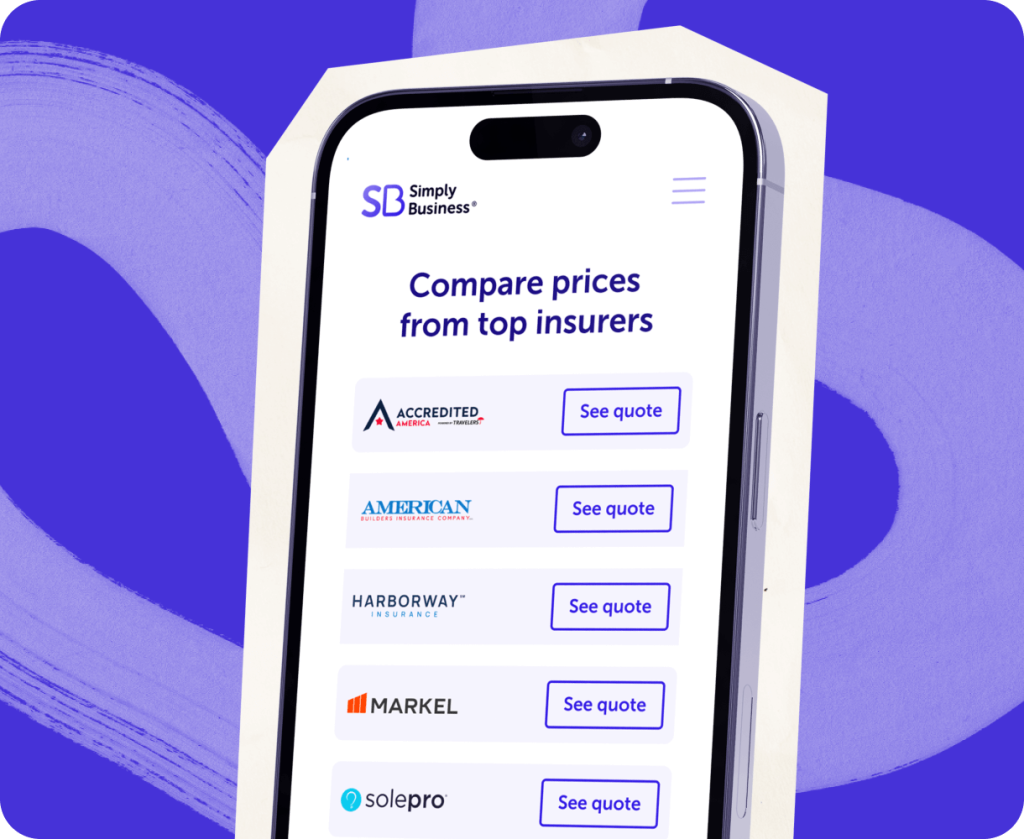
We make small business insurance simple — so you can get covered without the hassle. We’re a digital insurance brokerage. That means we’re not tied to one insurer. Instead, we partner with a range of top-rated carriers. With one easy form, you can compare quotes from top-rated insurers and choose coverage that fits your business, your risks, and your budget.
No hidden costs. No guesswork. Just clear, affordable options built for small business owners like you — so you can move forward with confidence, knowing you’re not overpaying.
Small business insurance made simple.

Search
Answer a few questions and get coverage recommendations for your business.

Compare
View custom quotes from top-rated small business insurers.

Save
Choose your policy, many with up to 20% savings.*
Feel confident in your choice.
We partner with a range of top-rated carriers and use smart technology to match you with policies that fit your specific business, your risks, and budget.

400+
business types covered

1M+
customers worldwide

18
top-rated carriers




We’ve Got More Helpful Information

6-minute read
What is Liability Insurance?

9-minute read
A General Liability Insurance Guide for Small Business

8-minute read