Professional Liability Insurance (E&O) for Small Businesses
When your business relies on expertise and advice, client expectations are high — and so are the risks. Get coverage to protect your reputation, your finances, and your peace of mind for as little as $25.83/month*.

Over 1 million customers worldwide.


Buy instantly online.

Written by
What Is Professional Liability Insurance?
Professional liability insurance protects you when a client says your work caused them some sort of harm, financial or equitable. We’re talking about advice, services, or deliverables that didn’t meet expectations, or cause client harm.
You also might hear it named Errors and Omissions (E&O) insurance. It’s the same thing: coverage for claims that you made a mistake, missed something important, or didn’t deliver what was promised.
This coverage is built for service-based businesses. If your work involves expertise, judgment, or recommendations, it’s worth understanding.
Simply Business gives you access to top insurance carriers.
















What Does Professional Liability Insurance Cover?
Professional liability focuses on claims tied to your work — not accidents or injuries. Here’s how it typically protects you:

Errors and Omissions
Protection against mistakes in your work
If a client claims you made an error — or left something out — E&O coverage can step in. For example, a consultant gives flawed advice that leads to lost revenue.
Even if the claim isn’t valid or is questionable, you still need to respond. That’s where E&O coverage matters.

Negligence
Defense against claims of failing to meet professional standards
Negligence claims center on expectations. A client may argue that your work didn’t meet industry standards, timelines, or the agreed-upon scope and, as a result, the client suffered damages.
This can include missed deadlines, incomplete work, or poor outcomes. E&O insurance helps you handle the fallout.

Legal Defense Costs
Coverage for lawyer fees and court settlements
Legal costs can add up quickly — even for small claims. Professional liability insurance helps cover:
- Attorney and legal fees
- Court costs
- Settlements or judgments
It’s not just about winning or losing, it’s about having the support to respond properly.
Professional Liability vs. General Liability: What’s the Difference?
Professional liability insurance
You recommend a strategy that doesn’t deliver results — the client claims financial loss. Even if your advice was reasonable, disputes can happen.

General liability insurance
A system failure, data issue, or missed deadline could disrupt a client’s operations, resulting in lost revenue and profits. That can turn quickly into a claim.
These two policies protect different risks, and many businesses need both.
Note that for most professional liability policies, legal costs and fees may impact your policy limits. Talk with your broker or agent if you have questions.
Here’s a simple way to think about it:
- Advice or service issue? Professional liability
- Physical accident? General liability
They work together, not as replacements for each other.
Who Needs Professional Liability Insurance?
If you provide expertise or services, there’s a good chance you need this coverage. Claims don’t just happen to large firms — small businesses often have negligence or malpractice claims brought against them, as well.
Here are a few common examples:

Consultants
You recommend a strategy that doesn’t deliver results — the client claims financial loss. Even if your advice was reasonable, disputes can happen.

IT professionals
A system failure, data issue, or missed deadline could disrupt a client’s operations, resulting in lost revenue and profits. That can turn quickly into a claim.

Real estate agents
An overlooked detail in your client’s home listing leads to a significantly lower sale price than your client expected or anticipated.
We can help find an E&O policy for many different types of businesses, including these:


How Much Does Professional Liability Insurance Cost?
Professional liability coverage starts at $25.83/month, based on Simply Business customers that purchased policies between July 1, 2025 and December 31, 2025.
A few factors that influence your premium:
- Claims history
- Your profession and risk level
- Coverage limits and excess
- Business size and revenue
What Some Customers are Paying for Professional Liability2
North Carolina
Esthetician
- Limited Liability Company (LLC)
- Occurrence limit: $1M
- Deductible: $500
- Quoted May 2026
$45
/month
Pennsylvania
Business consultant
- Sole proprietorship
- Occurrence limit: $500k
- Deductible: $1,000
- Quoted May 2026
$80
/month
Florida
Bookkeeper
- Sole proprietorship
- Occurrence limit: $100k
- Deductible: $0
- Quoted May 2026
$25
/month
2These examples are real insurance quotes generated on the dates above. They are for illustration purposes only. Your coverage options and pricing may differ based on the information you provide us about your particular business, the state you operate in, the number of employees, and other factors.
What Other Types of Insurance Do I Need?
Business insurance usually refers to one or more coverages suited to your type of small business. Here are the foundational insurance policies we most often recommend, and how they can help protect your small business:
General LiabilityFrom $20.75/month*

Workers’ CompFrom $38.91/month*

Business Owner’s Policy From $33.75/month*

Inland MarineFrom $20.83/month*

Business Personal PropertyFrom $25.83/month*
Errors & OmissionsFrom $33.75/month*
How to Get Professional Liability Insurance Online
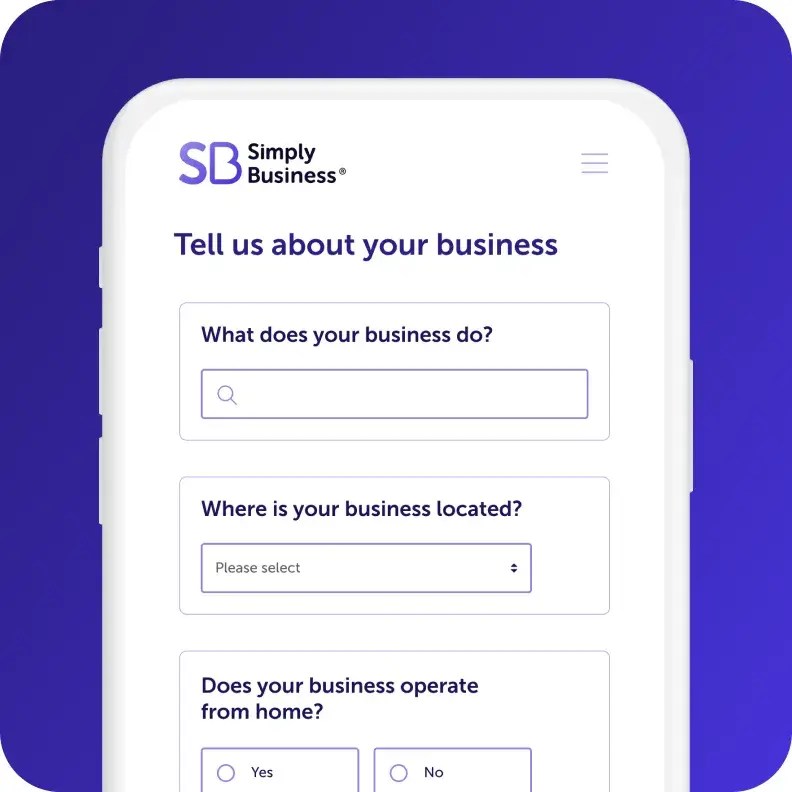

Start your quote
Answer a few questions about your business in one form.
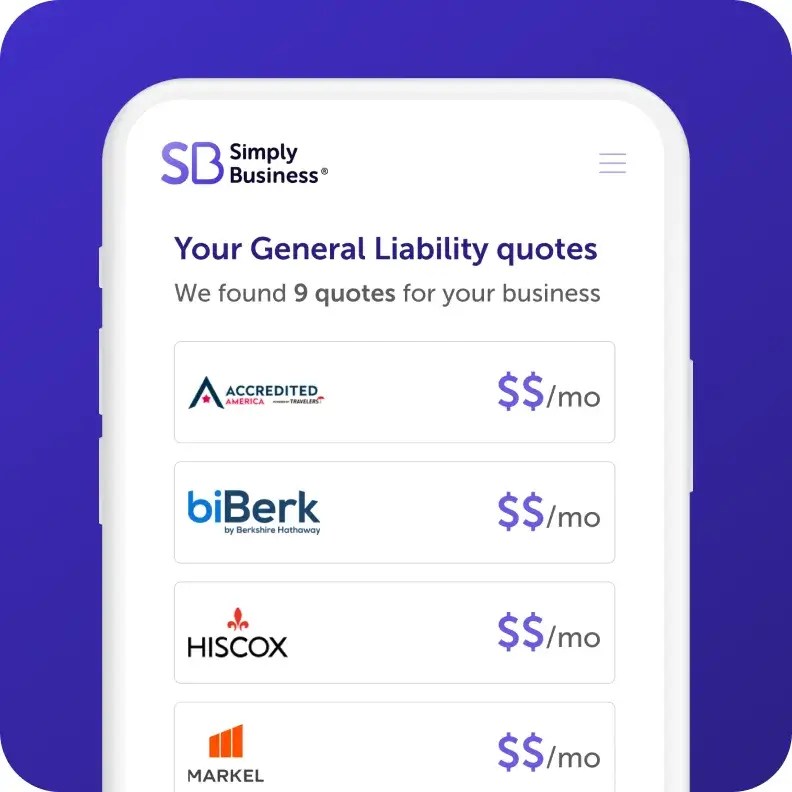

Review quotes
Compare quotes side by side from top-rated insurers and customize your coverage.
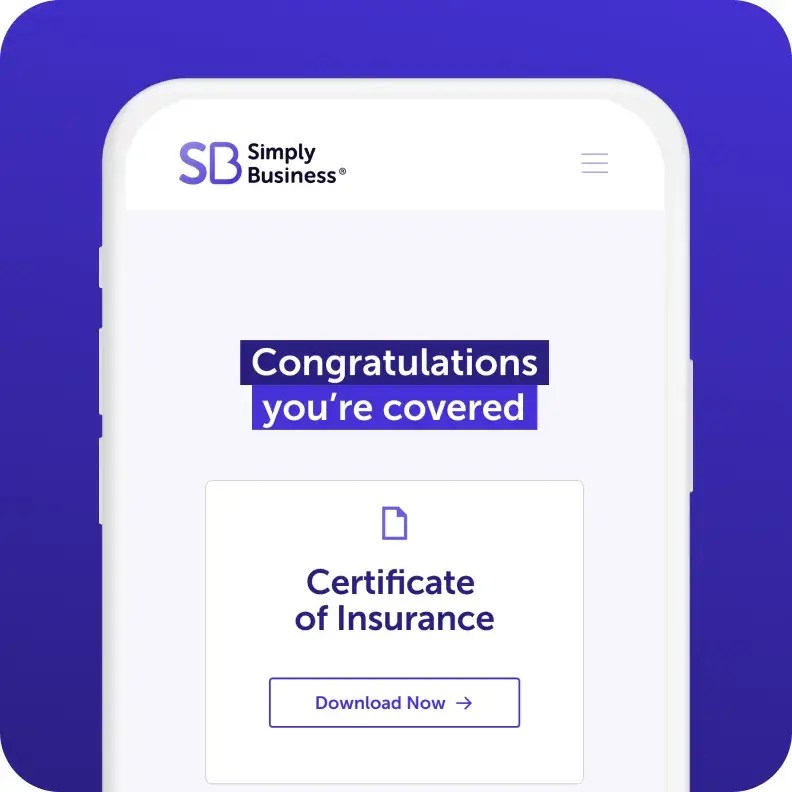

Get protected in minutes
Choose your policy, and get instant proof of insurance – all online, and all within 10 minutes.
Answers to More Professional Liability Insurance Questions
Yes — both names are for the same type of coverage. Professional liability insurance and E&O both help protect against claims tied to your work or advice.
No, for the most part. (There are rare exceptions for certain industries.) E&O insurance focuses on financial loss from your services.
For physical injuries or property damage — like a slip-and-fall accident — you would need general liability insurance.
Sometimes, yes. Certain clients — especially larger companies — may require you to have professional liability insurance before signing a contract.
Even when it’s not required, it still can be a smart safeguard.
Most professional liability policies are claims-made. That means if there is no retroactive date, the policy must be active at both the time the incident occurs and when the claim is made.
If a business owner closes their doors or switches to an “occurrence” policy, they need a “tail” or “tail coverage” to cover claims that come in later for work done in the past. Without this, you could be left legally and financially exposed.
The difference in coverage between a claims-made policy and an occurrence policy is when the claim arrives on your door.
For a claims-made policy, there must have been an active policy both (a) when the incident occurred and (b) when the claim was finally made. If one of those contingencies is not met, a claims-made policy likely will not respond. In order to have coverage, the policyholder would need either (i) a Prior Acts endorsement to cover anything that happened prior to the policy term, or (ii) a tail on the current policy, if you decide not to continue coverage after the current term.
In some cases, yes — but not always. A BOP typically bundles general liability and property coverage.
Professional liability is often purchased separately or included as an add-on, depending on the insurer and your business type.
State Business Insurance Guides
Find out what’s required in the state or states where you operate:
Written by
How to Get a Professional Liability Insurance Quote
You can quotes for professional liability coverage in just 10 minutes with our online quote tool.
*The displayed price for each product is a monthly estimate calculated from the 10th percentile of relevant policies sold by Simply Business (e.g., General Liability data is used for General Liability estimates). This estimate uses data from relevant policy sales between July–December 2025. Final price and payment terms, which may include an initial down payment, are subject to change based on your state, selected insurance provider, and specific business details.
Page last updated: