Trucking business insurance
One application, multiple quotes.
All in one place.
Essential Coverage
From
$29.17
/month*
Could help cover claims against your business for property damage and injuries to others.
What’s included:
General Liability
Coverage limits: $100K to $2M†

Get multiple quotes in less than 10 mins
Essential Coverage
From
$29.17
/month*
Could help cover claims against your business for property damage and injuries to others.
What’s included:
General Liability
Coverage limits: $100K to $2M†
Get multiple quotes in less than 10 mins
Would you rather pick and choose your coverage? Explore all options
Over 1 million customers worldwide.


Buy instantly online.

Written by
Trucking & Transportation Business Insurance
Trucking and transportation businesses face unique risks—from freight handoffs to on-site accidents. So, they’re often covered by a unique combination of insurance policies, rather than a single “trucking liability insurance” policy. These can include commercial auto liability, motor truck cargo, general liability, and more.
General liability coverage for truckers starts at $29.17/month* through Simply Business, which can help protect your business from third-party injury and property damage claims that occur outside your vehicle while you’re still on the job.
Why Does a Trucking & Transportation Business Need General Liability Insurance?
Trucking and transportation businesses need insurance because every delivery involves hand-offs, multiple locations, and the potential for injuries and damage to property —many of which fall outside the scope of standard commercial auto coverage.
From busy loading docks to customer drop-offs, even the most careful operators can face unexpected claims. A single incident—a customer injured during a delivery, or property damaged at a job site—can result in costly out-of-pocket expenses if you’re uninsured.
Trucking business insurance helps:
- Meet legal requirements in states that mandate coverage
- Protect your business from expensive third-party claims
- Cover damages caused by your business activities
- Provide proof of general liability (GL) coverage to carriers and customers
To be clear, the Federal Motor Carrier Safety Administration (FMCSA) requires primary commercial auto liability for your operating authority, but many brokers and shippers will also require proof of general liability coverage before awarding contracts.
How Does General Liability for Truckers Differ from Commercial Auto Insurance?
General liability insurance and commercial auto insurance cover different risks—and most trucking businesses need both.
This covers incidents that happen outside your truck while you’re still working. This includes:
- Bodily injury to a third party while on the job
- A customer getting injured during a delivery
- Property damage occurring at a truck stop or client location
Think of it this way: commercial auto for in the cab; general liability covers for outside of it.
As more carriers and employers require proof of GL coverage before awarding contracts, carrying trucking liability insurance is both a practical safeguard and a competitive advantage.
Think of it this way: commercial auto for in the cab; general liability covers for outside of it.
As more carriers and employers require proof of GL coverage before awarding contracts, carrying trucking liability insurance is both a practical safeguard and a competitive advantage.
What Type of Trucking & Transportation Business Insurance Do I Need?

General Liability
A foundational insurance coverage to help handle costs from third-party accidents, property damage, and bodily injury.
From
$29.17
/month*

Workers’ Comp
Coverage to help take care of employees who get sick or injured on the job. Most states require this coverage for small businesses with full- or part-time employees. It also can benefit business owners who don’t have employees.
From
$38.91
/month*
General Liability Insurance
General liability (GL) insurance is our most common policy for trucking businesses. It covers third-party bodily injury, property damage, and personal and advertising injury that occurs while you’re working—but not while driving your truck.
- Bodily injury to another person
- Third-party property damage
- Personal and advertising injury
- Medical expenses for third-party injuries
- Damage to your own property or equipment
- Professional services or errors
- Workers’ compensation or employee injuries
- Motor vehicles while in business use
- Intentional or expected injury or damage
GL coverage limits range from $100,000 to $2 million or more, depending on your needs.
Workers’ Compensation Insurance
Workers’ compensation insurance covers employees who are injured or become ill as a result of their job. Most states require workers’ comp for businesses with full- or part-time employees, and it can also benefit sole proprietors and owner-operators in certain states.
- Medical expenses for work-related injuries or illness
- Lost wages during recovery
- Rehabilitation costs
- Death benefits for qualifying dependents
Even if your state doesn’t require it, workers’ comp can help protect your business from costly employee claims that general liability won’t cover.
We specialize in commercial general liability and workers’ compensation only for the trucking industry. Please note that we do not provide primary commercial auto liability, motor truck cargo, or physical damage (comprehensive/collision) coverage, but can help refer you to partners and providers that do.
What other trucking insurance do I need?
We only specialize in commercial general liability and workers’ compensation for the trucking industry, but we can help refer you to partners and providers that offer some of the other common policies often needed by businesses in the trucking industry, including:
- Primary Commercial Auto Liability: This covers bodily injury and property damage to others if your truck is involved in an on-the-road accident. This is the core coverage legally mandated by the FMCSA to obtain and maintain your interstate trucking authority.
- Motor Truck Cargo: This covers the actual freight or commodities being transported in the event of theft, fire, or damage during transit.
- Physical Damage (Comprehensive/Collision) coverage: This is the equivalent of “comprehensive and collision” for personal autos. It pays to repair or replace the trucker’s own tractor or trailer after an accident, vandalism, theft, or severe weather.
Business insurance —
a quick explainer
Learn more about policies for small businesses, what they cover, why you might need them, and how we can help – all in just 60 seconds.
Business insurance is often made up of different types of policies to cover different things, similar to how your health insurance can be made up of medical dental and vision coverage. Here are some of the ones small business owners need. General liability is kind of the Swiss army knife of insurance. It can do a lot, like help handle costs from third party accidents, property damage, bodily injury, and more. Nobody’s perfect, right? That’s what professional liability is for. It could come in handy in the event of honest mistakes or claims of negligence. Workers’ comp can protect your business and help take care of employees who get sick or injured on the job. Small businesses are big targets for cyber criminals. Cyber Insurance can help cover costs associated with stolen customer data, cyber attacks, breaches, and fraud. BOP or a business owners policy combines different types of coverages like general liability and commercial property insurance. Putting them together for you is where we come in. You tell us a bit about your business online or on the phone, and we customize the coverage options for what you do and what you need. It’s your business, it should be your insurance as well. That’s why we’re here.
How Much Does Trucking & Transportation Business Insurance Cost?
General liability insurance for truckers through Simply Business starts at $29.17/month*, and workers’ comp starts at $38.91/month*. However, your actual premium will depend on several factors.
Some common factors that influence your trucking insurance cost:
- Business location: State regulations and risk levels vary. Some states have higher average premiums due to traffic density or local regulations.
- Number of employees: Payroll size is a key rating factor for both GL and workers’ comp policies.
- Annual revenue: Higher-revenue businesses typically carry more risk and may pay higher premiums.
- Type of cargo: Hauling hazardous materials or high-value freight increases your exposure and cost.
- Driving record: A clean record can help keep premiums lower.
- Coverage limits: Higher limits mean higher premiums, but also stronger protection.
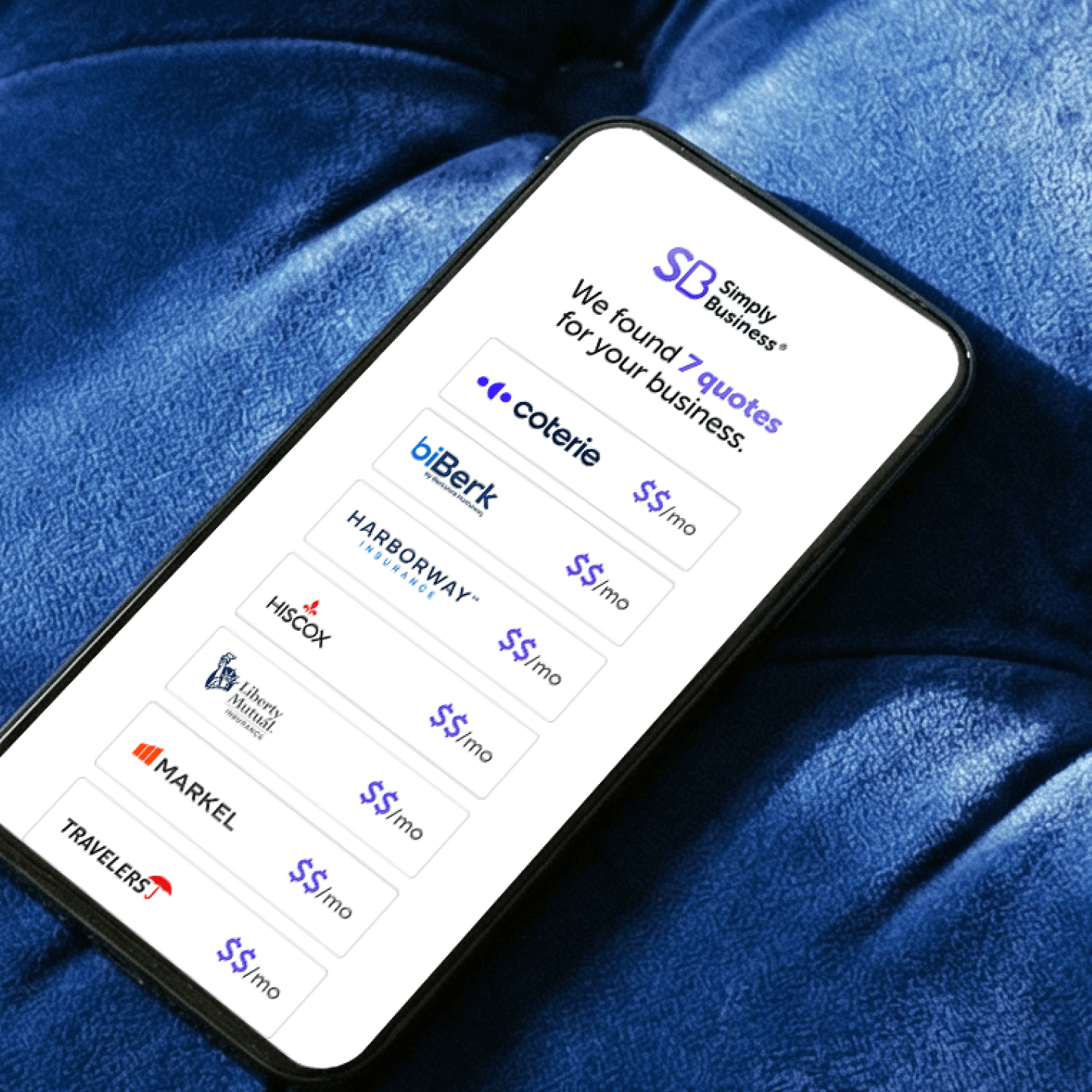
The fastest way to find out what you’ll pay is to compare quotes online. Simply Business lets you compare multiple insurers in under 10 minutes.

What Does Trucking & Transportation Insurance Cost
Try our insurance calculator.
Get a quick estimate in just 3 steps.
What Does General Liability for Trucking & Transportation Insurance Cover?
Trucking and transportation insurance covers a range of third-party risks that arise during your workday—particularly incidents that occur outside your vehicle.
General liability insurance for truckers typically covers:
- Bodily injury: A customer or third party is injured at a delivery location, and your policy helps cover their medical costs and any resulting legal fees.
- Third-party property damage: You accidentally damage a client’s property during a drop-off, and your GL policy helps pay for repairs or replacement.
- Personal and advertising injury: Claims related to libel, slander, or copyright infringement in your business advertising.
- Medical payments: Immediate medical expenses for a third party injured during your business operations, regardless of fault.
If your customer is unloading freight and somehow injures someone else at their or your facility, that would be bodily injury on GL. Your general liability insurance can help cover their medical bills and any legal costs if they file a claim against your business.
While maneuvering at a truck stop, you accidentally knock over and damage another business’s equipment. Your GL policy can help cover the cost of repairs.
What Does General Liability for a Trucking Business NOT Cover?
General liability insurance does not cover everything. Knowing the gaps helps you build a complete coverage plan.
What GL insurance typically does NOT cover:
- Damage to your own truck or equipment: You’ll need commercial auto insurance for vehicle damage while driving.
Example: Your truck is damaged in a collision. GL won’t cover repairs—but commercial auto policy should. - Employee injuries: Workers’ comp is a separate policy. Learn more about workers’ comp for truckers.
Example: A driver on your team injures their back loading freight. GL doesn’t cover their medical bills—workers’ comp does. - Professional errors or negligence: If a client claims you failed to deliver as agreed, you may need professional liability coverage.
Example: A client claims a delayed delivery caused them financial losses. GL won’t cover this claim. - Intentional damage: Any damage you or your employees caused intentionally is excluded from GL coverage.
- Your own business property: Damage to your own tools, equipment, or inventory requires separate coverage.
Not sure which policies you need? Speak to a Simply Business agent at 844-654-7272 or compare quotes online.
Answers to More Questions About Trucking Insurance
It depends on the carrier you work with. Some carriers require proof of general liability insurance before awarding you a job, while others don’t. Beyond carrier requirements, having your own GL policy can protect you financially from incidents that happen while you’re on the job but outside your truck—costs you’d otherwise pay out of pocket.
The Federal Motor Carrier Safety Administration (FMCSA) oversees interstate trucking permits and requires that trucking and transportation companies carry primary commercial auto liability insurance. However, brokers and shippers typically require you to also carry general liability insurance. Individual states may also have their own coverage requirements.
If you use trucks to move or haul cargo, you likely need general liability insurance. This includes independent truckers, owner-operators, and businesses that transport low-hazard commodities or dry goods.
Here’s what it covers: bodily injury or property damage your business causes to other people. It does not cover damage to your own truck, or accidents that happen while loading or unloading. For that, you’ll need a separate commercial auto policy.
Keep in mind, this coverage is for trucking operations that haul cargo—not for transporting people or running delivery services.
If you’re not sure whether it’s right for your business, we can help you find the coverage you need in just 10 minutes.
Business insurance premiums are generally considered a tax-deductible business expense. That said, tax rules vary by situation—consult a financial advisor or tax professional for guidance specific to your business.
Before purchasing a policy, we recommend the following:
- Work with an insurer that understands trucking risks specifically.
- Know the coverage limits required by your carriers and state.
- Compare multiple quotes to find the best rate for your situation. Simply Business lets you compare top insurers in one place.
Yes. Once you purchase a policy through Simply Business, your Certificate of Insurance (COI) is available to download immediately from your customer account. Many carriers also email your COI directly after purchase.
Standard general liability insurance does not cover damage to the cargo you’re hauling. Cargo insurance is a separate policy designed specifically to protect the freight you transport. If you regularly haul high-value or sensitive goods, speak with an agent about adding cargo coverage to your insurance plan.

Why Truckers Choose Simply Business
Small business insurance is what we do. Whether it’s covering you for accidents and errors, meeting workers’ comp requirements, or financially protecting your business from the unexpected, we can help find the coverage you need for your business.

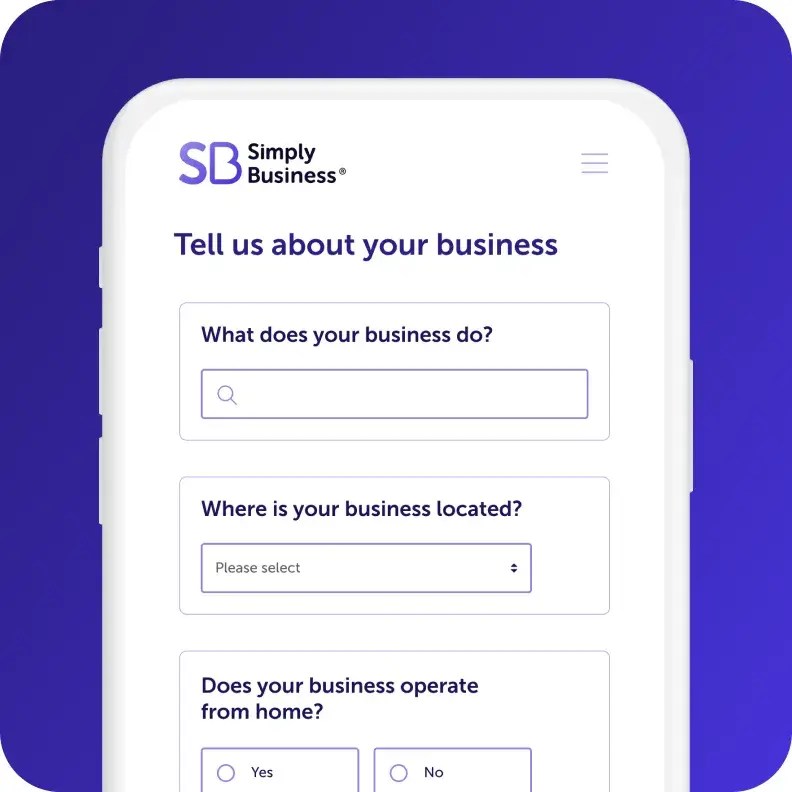
Start your quote
Answer a few questions about
your business in one form.

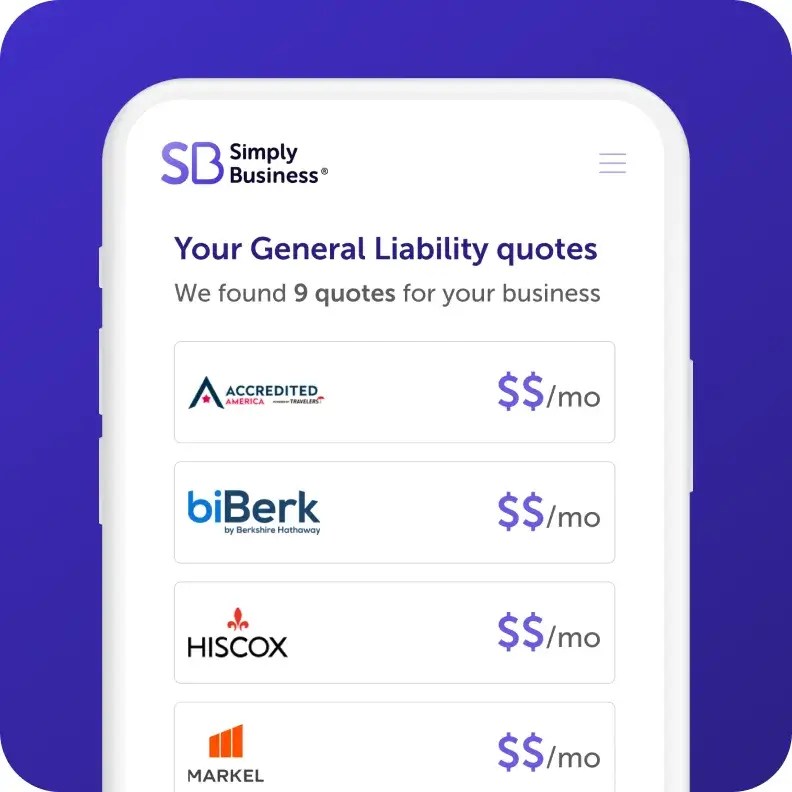
Review quotes
Compare quotes side by side from top-rated insurers and customize your coverage.

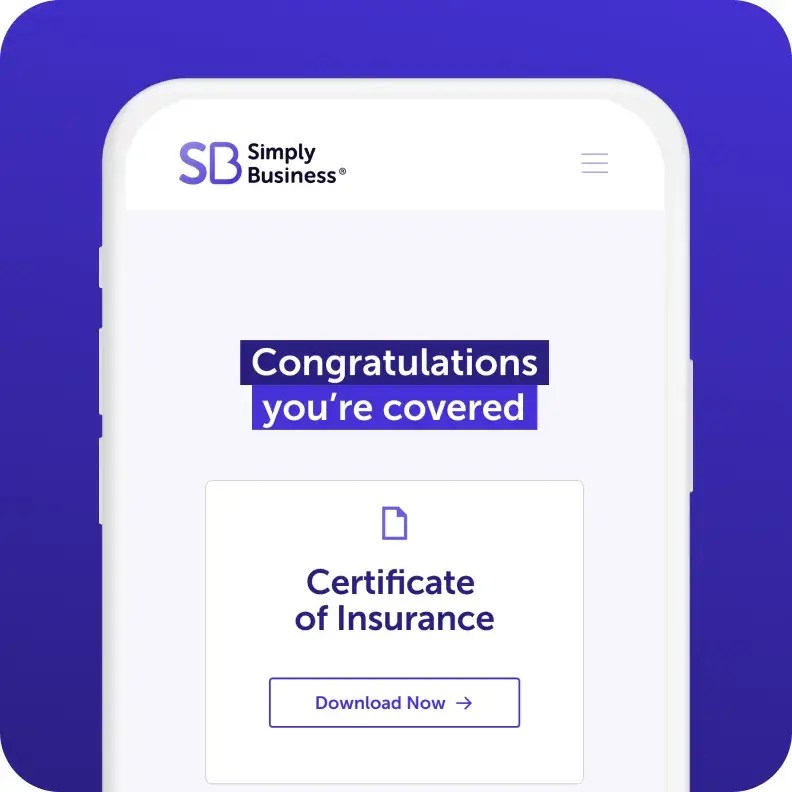
Get protected in minutes
Choose your policy, and get instant proof of insurance – all online, and all within 10 minutes.

Written by
Our +1 million customers worldwide are big fans. And you will be too.

I went online, looked around, and found Simply Business. The process was so seamless. I got my certificate within minutes. It was just phenomenal.

Karen
Owner of Tangaza Bath & Body Studio LLC
With Simply Business I know I can look at different carriers, but also see all my stuff in the same place… a lot of [insurance] providers don’t offer a variety of coverage, all in one place.

Jef
Owner of Bunker83 LLC
It wasn’t overwhelming to figure out what was covered and what wasn’t covered. And the cost was competitive.

Kim
Owner of Room to Breathe Professional Organizing
Feel confident in your choice.
We partner with a range of top-rated carriers and use smart technology to match you with policies that fit your specific business, your risks, and budget.

400+
business types covered

1M+
customers worldwide

18
top-rated carriers








We’ve Got More Helpful Information

9-minute read
A General Liability Insurance Guide for Small Business


13-minute read
The Real Costs of Not Having Business Insurance
*The displayed price for each product is a monthly estimate calculated from the 10th percentile of relevant policies sold by Simply Business (e.g., General Liability data is used for General Liability estimates). This estimate uses data from relevant policy sales between July–December 2025. Final price and payment terms, which may include an initial down payment, are subject to change based on your state, selected insurance provider, and specific business details.
† Limits may vary by state and nature of your business.
Page last updated: